


The most common advice about vitamin C foods for dogs makes it sound like every dog needs a produce bowl full of berries and peppers. That's backwards. Healthy dogs usually make their own vitamin C, so the actual question is not how to cram more into the diet, it's when food matters, when a supplement makes sense, and when the answer is to stop guessing and call a vet.
Table of Contents
- Why Vitamin C for Dogs Is Different From Humans
- How Dogs Make and Use Vitamin C
- Best Vitamin C Foods for Dogs and Safe Serving Sizes
- Vitamin C Density and Realistic Serving Sizes Compared
- Food Sources vs Supplements and Vet-Formulated Options
- Risks, Drug Interactions, and When to Call Your Vet
- Practical Action Plan and Common Questions Answered
Why Vitamin C for Dogs Is Different From Humans
Humans usually need to get vitamin C from food every day. Dogs generally do not. Their bodies make it internally from glucose in the liver, so true deficiency is described as extremely rare in dogs and healthy dogs on a complete diet usually produce enough on their own (Tufts Petfoodology). Major nutrition references also treat vitamin C as a non-essential nutrient for dogs, not something that standard feed rules require in a set allowance (PMC review).
That difference changes how vitamin C foods for dogs should be used. For a healthy dog eating a balanced commercial diet, vitamin C-rich foods are usually about variety and enrichment, not fixing a shortage. Broccoli, kale, strawberries, bell peppers, pumpkin, and sweet potatoes can still fit in small amounts, but they are optional extras, not must-have ingredients.
What that means in practice
A few chopped bell pepper pieces or a spoonful of steamed broccoli does not mean your dog is “missing” vitamin C. The body has already covered the baseline in most healthy dogs.
Practical rule: If your dog is healthy and eating a complete diet, treat vitamin C foods as a garnish, not a rescue plan.
That said, the picture can change with illness, recovery, chronic stress, or other health problems. In those cases, the right question is not how to add more produce by default, but whether food, a supplement, or veterinary guidance fits the situation best. The goal is to use produce as a small enrichment tool, not as a substitute for medical judgment.
How Dogs Make and Use Vitamin C
Dogs make vitamin C in the liver by converting glucose into L-ascorbic acid through the enzyme L-gulonolactone oxidase, an enzyme humans lack. That single difference explains why dogs and people handle this nutrient so differently. For a healthy dog on a complete diet, vitamin C from food is usually an extra, not a baseline need.
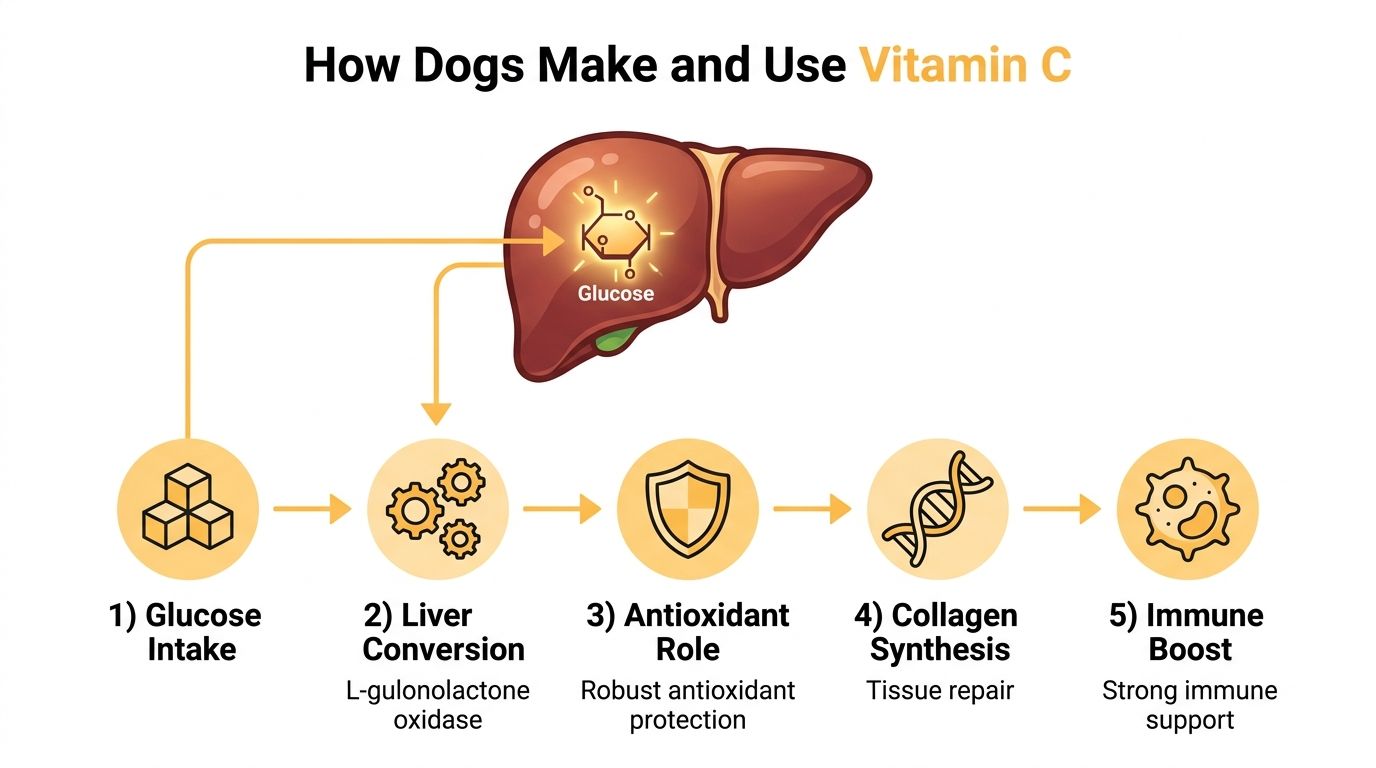
Once vitamin C is in the body, it still has clear jobs. It supports collagen synthesis, which matters for skin, joints, and blood vessels. It also helps with antioxidant recycling, including vitamin E support, and it plays a role in immune cell function and iron absorption.
Vitamin C is a maintenance nutrient, not a magic fix. In healthy dogs, internal production usually covers the routine workload, much like a house that already has its own power source.
When demand can rise
Some dogs may need more support than their usual production covers. Heavy exertion, chronic stress, illness, surgery recovery, trauma, and certain metabolic or liver conditions can shift that balance. In those cases, vitamin C from food is still not the first answer for most dogs, but it can fit into a broader nutrition plan.
Body size matters too. Endogenous production scales with the dog, so smaller dogs can have proportionally higher turnover than larger dogs. That does not mean every small dog needs produce every day, it means a single rule rarely fits every dog equally well.
A structured supplement can make more sense than trying to build a plan from scattered ingredients. DA-1™ Daily All-in-One - Senior Dog Support, Joints, Skin/Coat & More is described as a single-scoop formula with human-grade ingredients for multiple support goals. That is different from food-based enrichment, but it shows why some owners prefer one routine over guessing with separate add-ons.
If a dog is sick, recovering, or already on medication, the question changes from “what produce should I add” to “what support fits this dog.” That is the point where veterinary guidance matters most.
Best Vitamin C Foods for Dogs and Safe Serving Sizes
The best vitamin C foods for dogs are the ones you can portion, prep, and repeat without upsetting the stomach. For home-cooked feeders, that usually means simple dog-safe produce, cut small, served in modest amounts, and treated as enrichment rather than a daily requirement.
Start with the foods that give the most vitamin C in a small bite. Bell peppers sit at the top of the verified data at 183.5 mg per 100 g. Red peppers are easy to dice, and a few tiny raw pieces or lightly steamed strips usually work well once the seeds and stem are removed.
Kale follows at 120 mg per 100 g. It works better as a light mix-in than as a big serving, so chop it finely or steam it lightly. Brussels sprouts and broccoli also provide vitamin C, at 85 mg and 65 mg per 100 g, but gas can make them a poor fit if you give too much.
Fruit can fill the same role, just in smaller amounts. Oranges provide 53.2 mg per 100 g, but citrus should stay occasional because the acidity and sugar may bother some dogs. Peel it, remove seeds, and offer only a small segment or two. Mango and blueberries are lower in vitamin C density, at 36.4 mg and 9.7 mg per 100 g, so they are more useful for variety than for meaningful vitamin C support.
The same source notes that strawberries are easy to portion, with moderation examples of 1–2 pieces for small dogs and 3–4 strawberries for larger dogs, introduced gradually and kept as food-based treats (DogFriendlyScene). Watermelon and cantaloupe can also fit as refreshing extras, as long as you remove seeds and skip the rind. A good serving is one your dog eats happily, then tolerates just as well the next day.
Lower-density foods still have a place. Pumpkin at 9 mg per 100 g, carrots at 5.9 mg per 100 g, and sweet potatoes at 2.4 mg per 100 g are not vitamin C heavyweights, but they can add texture and variety. In practice, they work best as kibble toppers or home-cooked meal components, not as primary vitamin C sources.
Keep the safety rules simple. Grapes and raisins are toxic, onions and garlic are toxic, and any fruit with pits, seeds, or hard rind needs prep before serving. Extra produce also adds calories and fiber, so if you offer it often, reduce the main meal a little instead of stacking treats on top of everything.
Vitamin C Density and Realistic Serving Sizes Compared
標籤上的數字,或是生食表上的數字,只說明了一半。真正要看的,是狗實際會吃多少,因為少量的高密度食物,往往比大量的低密度食物更有意義。
| Food | Vitamin C (mg per 100 g) | Typical Dog Serving | Vitamin C Delivered | Takeaway for a 10–15 kg Dog |
|---|---|---|---|---|
| Bell pepper | 183.5 | A few small diced pieces | Small but noticeable | Meaningful contribution for a topper |
| Kale | 120 | Finely chopped, small sprinkle | Small amount | Modest contribution, use sparingly |
| Brussels sprouts | 85 | 1 small cooked piece | Small amount | Modest, but gas can limit usefulness |
| Broccoli | 65 | A few florets or stems | Small amount | Practical, but not dense |
| Orange | 53.2 | 1 small segment | Small amount | Moderate, occasional treat only |
| Cauliflower | 48.2 | Small cooked piece | Small amount | Mild contribution, mostly variety |
| Peas | 40 | A spoonful mixed into food | Small amount | Handy in mixed meals |
| Mango | 36.4 | 1 small cube | Small amount | More of a fruit treat than a source |
| Blueberries | 9.7 | A few berries | Very small amount | Negligible to modest contribution |
| Pumpkin | 9 | 1 spoonful | Very small amount | Texture first, vitamin C second |
| Carrots | 5.9 | A few slices | Very small amount | Good snack, not a vitamin C source |
| Sweet potato | 2.4 | Small cooked piece | Very small amount | Mostly a fiber and carb food |
這張表也解釋了,為什麼有些清單會讓人誤會。食物可以在一般意義上算是「富含維生素 C」,但放到狗真正吃下去的份量裡,最後得到的量可能只是中等,甚至更少。對一隻中型犬來說,像甜椒這種高密度食物,每一口的貢獻遠比藍莓或花椰菜高;後兩者比較容易日常加入餐裡,但單次提供的維生素 C 仍有限。
有些營養建議會用體重來談劑量,這也是容易混淆的地方。當你把「每 100 克含量」換成「實際餵食份量」時,多數日常加料都只算是小補充,不是完整解法。狗狗的維生素 C 食物,最適合被當成零食變化或餐點點綴,而不是把食物表當成精準劑量表。若你想靠食物做支持,先看的是能不能安全入口、份量是否合適,再看它到底能提供多少。
像這樣看待,選擇就會清楚很多。高密度食物適合少量點綴,低密度食物適合增加口感和多樣性。兩者都能用,但功能不同。
Food Sources vs Supplements and Vet-Formulated Options
Whole foods, standalone supplements, and vet-formulated blends solve different problems. If you want a bit of enrichment, food can do that. If you need precise dose control, a supplement may be more practical. If your dog has a real health need, a vet-guided blend is usually a better starting point than improvising with human products.
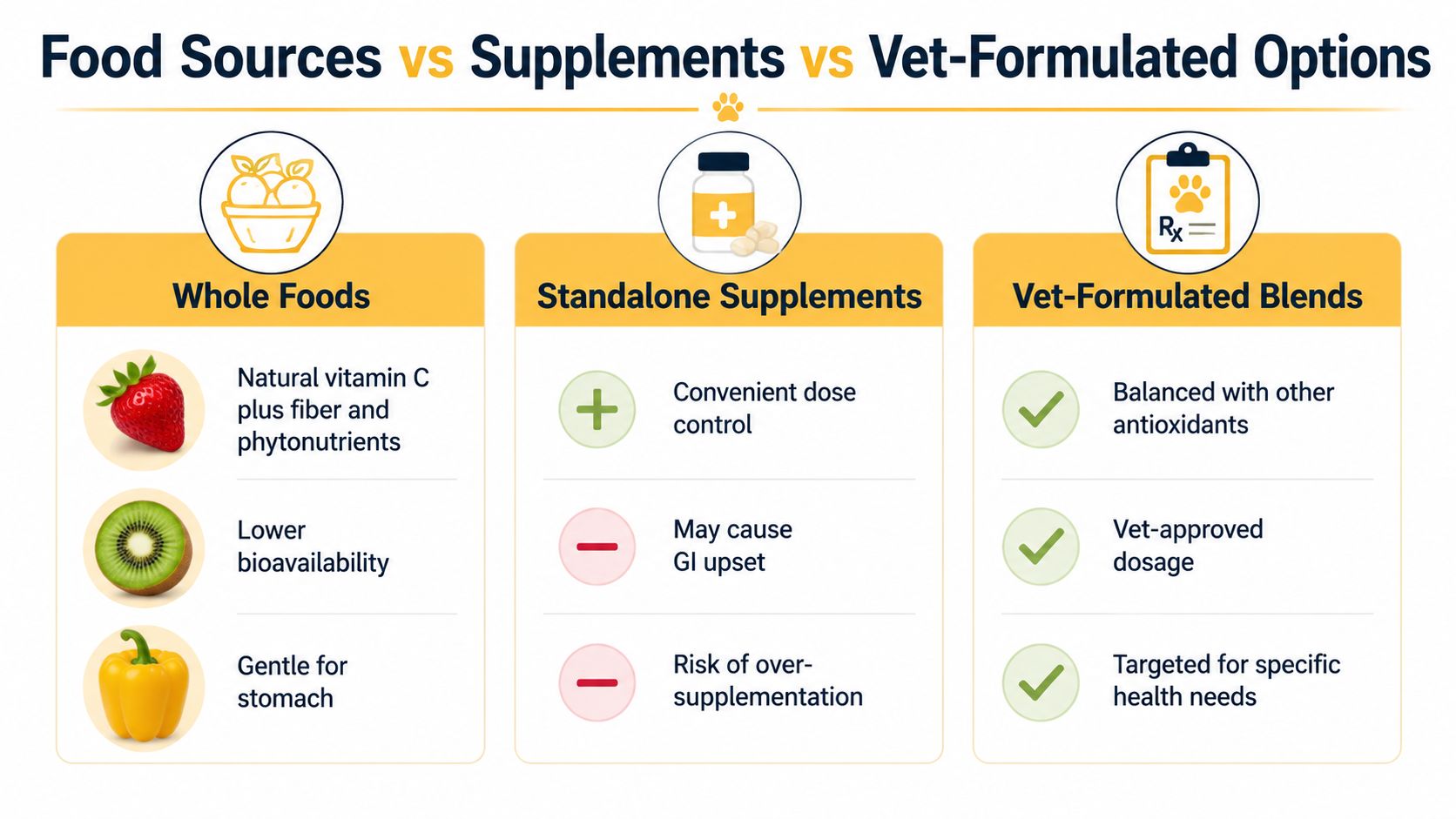
Whole foods bring texture, fiber, and other plant compounds along with vitamin C, but the amount in each bite varies. That inconsistency is fine for enrichment and casual variety. It is less helpful when someone is trying to target a specific intake with any real precision.
Standalone vitamin C supplements offer tighter control, especially when a veterinarian wants a set amount divided through the day. That matters because one dosing-oriented source describes vitamin C discussions in terms of body weight, not a one-size-fits-all scoop (DogFriendlyScene). Still, more is not better just because it is water-soluble, and excess can create avoidable problems.
Simple filter: If you're feeding for enjoyment, use food. If you're feeding for a purpose, get a plan first.
A vet-formulated blend can make sense when a dog already has other wellness needs, because it is designed to fit into a broader routine rather than adding another random ingredient. For owners who cook for their dogs, reading labels carefully matters just as much as choosing the right ingredient mix. A clear guide on how to read supplement labels is useful before adding anything new.
There's also a practical reason many owners prefer a single product approach. Multi-ingredient routines are easier to stick with when they don't require five separate containers and guesswork. The product choice still depends on the dog, but the decision should start with the goal, not the marketing claim.
Risks, Drug Interactions, and When to Call Your Vet
Vitamin C feels harmless because it's familiar, but dose still matters. Too much can upset the stomach, especially in dogs that get sensitive when new foods or supplements are added too quickly. In predisposed dogs, extra vitamin C can also raise concern about oxalate kidney stones, which is why “more” is not a smart default.
Medication and condition context matter too. Vitamin C can change how some drugs behave, and caution is reasonable with NSAIDs, urinary acidifiers, some chemotherapy protocols, and dogs with copper storage disease or kidney concerns. If your dog has a diagnosed kidney, liver, or cancer condition, the conversation belongs with the veterinarian before you add a new food or supplement.
The easiest way to think about it is this. A healthy dog with a normal diet usually does not need a vitamin C rescue plan. A dog on medication, a dog with a chronic condition, or a dog showing symptoms needs a plan that fits the whole case, not a guess based on a fruit list.
For families managing more than one pet, it helps to keep species differences straight. A useful reminder on feline fruit questions is the article on are apples bad for cats, because what's harmless in one species is not always the same in another.
Watch for these red flags and call your vet instead of tweaking the menu:
- Recurrent diarrhea or vomiting, especially after a new food or supplement.
- Blood in the urine or signs of painful urination.
- Sudden appetite change or obvious nausea.
- Lethargy with weight loss, which points to more than a treat issue.
- Any dog with kidney, liver, or cancer disease, because diet changes need supervision.
For dogs already using supplements, a broader best dog multivitamin guide can help you spot overlap before you stack ingredients that don't need stacking.
Practical Action Plan and Common Questions Answered
Start with the bowl you already use. If your dog is healthy and eating a complete diet, vitamin C foods for dogs work best as enrichment, not as a rescue plan. Choose one or two foods from the earlier list, add a tiny amount, and watch stool, appetite, and skin before you offer more.
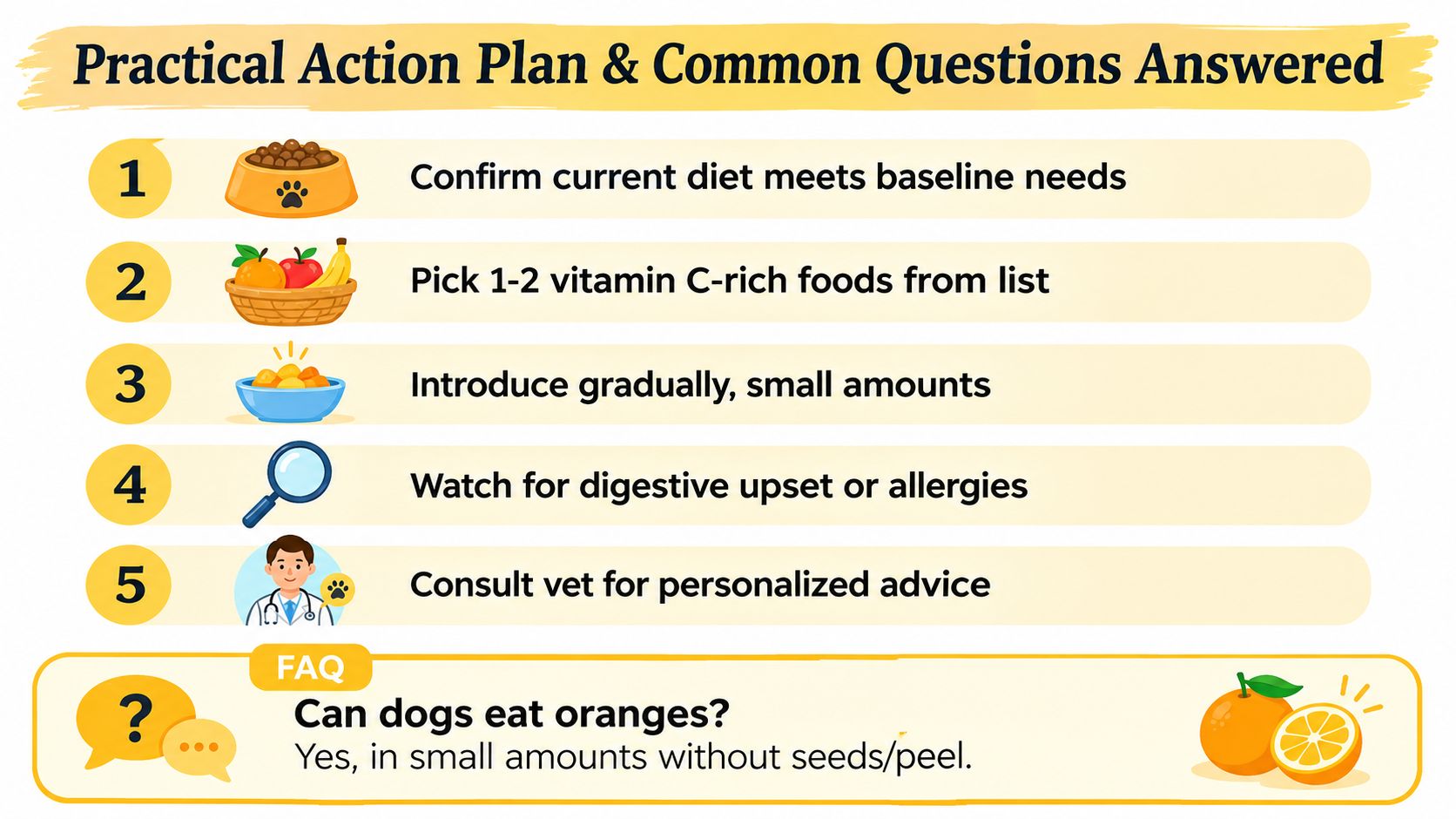
Questions usually follow a simple pattern. Puppies, seniors, and pregnant dogs do not automatically need extra vitamin C, so those stages deserve veterinary input before you change anything. Cooking can reduce vitamin C, which is why raw or lightly steamed pieces make more sense if the goal is a food-based treat.
Rotation is optional. If your dog handles a food well, you can keep it in the mix, but consistency usually helps digestion more than novelty. Vitamin C foods also do not fix joint disease or kennel cough, and a produce side dish should never replace care for a medical problem.
If you make meals at home, review homemade dog food nutrition so you can avoid gaps and accidental excesses. Food choices make more sense when they fit the whole diet, not one nutrient in isolation.
For stored portions, keep everything plain, sealed, and chilled, then throw out anything soft, brown, or watery. If you are unsure whether your dog's comfort, appetite, or energy has changed enough to matter, The Companion Project's quality of life tool can help you pause and assess the bigger picture before adding more variables.