


You're halfway through scooping your dog's stool when you notice several pale pieces scattered across the surface. They look like grains of rice, and for a moment you wonder whether your dog ate leftover pasta, swallowed something from the yard, or picked up a parasite. It's an unsettling discovery, but it's also one you can investigate calmly.
Rice-like material in dog poop can have several explanations. Tapeworm segments are the classic concern, but undigested food, mucus, and foreign material can look similar at a glance. Your first step isn't to guess or give a digestive supplement. It's to look closely, save what you can, and match the appearance with your dog's overall condition.
Table of Contents
- You Spotted Something That Looks Like Rice in Your Dog's Poop
- The Four Most Common Causes of Rice-Like Material in Dog Stool
- Tapeworm Segments vs Undigested Food
- What to Do at Home Before Calling the Vet
- What Your Vet Will Look For and How Tapeworms Are Treated
- When to Seek Veterinary Care Right Away
- Preventing Rice-Like Material From Coming Back
- A Simple Triage Checklist for Worried Owners
You Spotted Something That Looks Like Rice in Your Dog's Poop
Start with the question that gives you the most useful information: did the material move?
Fresh tapeworm segments may crawl or wriggle on the stool, around the anus, or on nearby fur. Once they dry, they often become firm, pale, and rice-like. A food particle usually stays still, while mucus tends to look shiny, slippery, or stringy before it dries. A piece of plastic, foam, or another foreign object may have a sharp edge or an unusual texture that doesn't match the rest of the meal.
That quick observation can narrow the possibilities, but it can't confirm a diagnosis. Food particles can resemble parasite segments, and species identification may require laboratory examination. If you can do so safely, take a clear photograph and keep a fresh sample for your veterinarian.
Practical rule: Treat movement, recurrence, and your dog's behavior as more useful clues than color alone.
The most common parasite behind rice-like pieces is Dipylidium caninum. Its reproductive sections, called proglottids, detach from the adult worm and pass through the intestine. The Merck Veterinary Manual's parasite guidance describes mature proglottids as approximately 12 millimeters by 3 millimeters and notes that they may pass individually or in chains. Dogs commonly acquire this tapeworm by swallowing infected fleas.
That doesn't mean every white speck is dangerous, or that your dog is seriously ill. Many dogs with visible segments remain bright, hungry, and playful. Still, recurring rice-like pieces deserve a veterinary conversation because treating the suspected tapeworm without addressing fleas can allow the problem to return.
For a quick visual reference, you can also compare what you saw with this guide to white dots in dog poop. The four possibilities to keep in mind are tapeworm segments, undigested grains, mucus, and foreign material. The next step is to compare their texture, shape, position, and behavior instead of relying on a single clue.
The Four Most Common Causes of Rice-Like Material in Dog Stool
A close look often reveals more than the first glance did. Use a disposable glove or a tool you can clean afterward, and don't handle stool with bare hands. If the material is moving, avoid crushing it before taking a photograph.
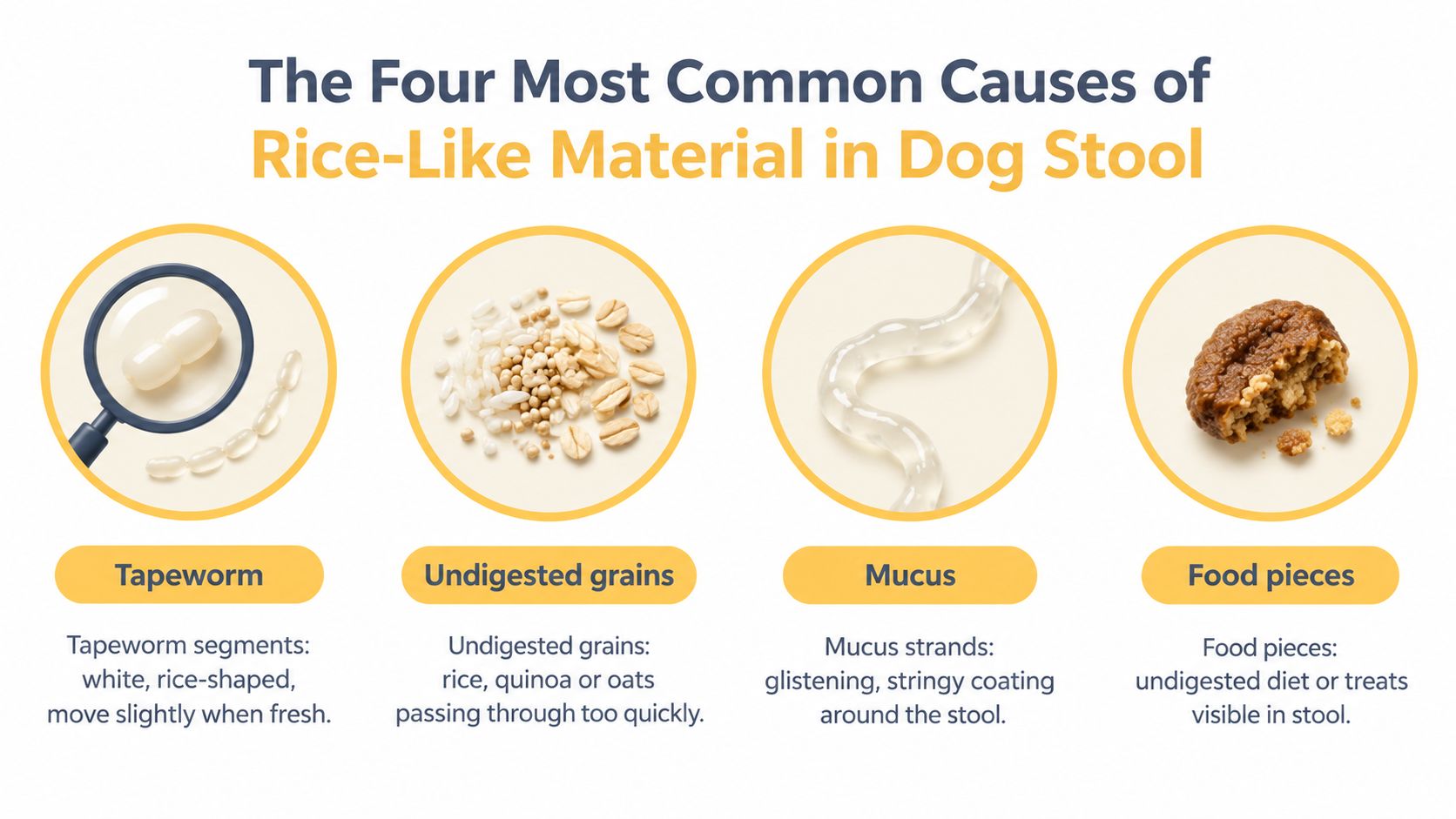
Tapeworm segments
These are usually white to pale yellow, flat, and short. Fresh proglottids can move, while dried pieces become hard and more convincingly rice-like. You may see them on the outside of the stool, around the dog's rear, or on bedding rather than evenly mixed through the feces. The CDC describes dried Dipylidium segments as rice-like particles and notes that egg packets aren't released continuously, which helps explain why a routine stool test can miss an infection. Read the CDC's explanation of Dipylidium in dogs for the parasite's life cycle and appearance.
Undigested grains
Rice, quinoa, oats, or similar foods may pass through as pale kernels or irregular fragments. They're usually still, and their color often matches the recent meal. Cooked grains can look glossy or swollen, while dry fragments may appear matte and brittle. A single appearance after a diet change is less suggestive of a parasite than repeated moving pieces.
Mucus
Mucus often begins as a clear, white, or pale coating on the stool. Fresh mucus looks wet, gelatinous, and stringy, sometimes forming a ribbon or slippery tube. After drying, it may break into pale flakes or small firm pieces. Mucus is a sign of intestinal irritation rather than a specific diagnosis, so it matters whether your dog also has loose stool, straining, urgency, or appetite changes.
Foreign material
Plastic, foam, paper, plant matter, and filler can imitate grains. These pieces may have straight edges, a manufactured color, or a texture that doesn't soften when wet. If you suspect your dog swallowed a toy, packaging, fabric, or another object, don't wait for rice-like pieces to pass before asking a vet for advice. A foreign body can cause a serious obstruction even when a dog initially seems comfortable.
A recurring change in stool texture, coating, or contents can also point to broader digestive upset. This overview of poor gut health signs in dogs can help you record related changes, but it can't replace an examination when segments recur.
For dogs whose routine includes general nutritional support, DA-1™ Daily All-in-One - Senior Dog Support, Joints, Skin/Coat & More is described by its manufacturer as a once-daily formula with 18 human-grade ingredients supporting cells, gut, and joints. It isn't a tapeworm treatment, and visible segments still require veterinary evaluation.
Tapeworm Segments vs Undigested Food
The most common mistake is treating every pale particle as evidence of worms. Put the two leading possibilities side by side and assess the whole pattern.
A tapeworm segment may look like a small, flat rectangle when fresh. It can be moist, creamy white, or pale yellow, and it may wriggle or crawl briefly before becoming still. After drying, it often hardens and resembles a grain of rice or a cucumber seed. Several segments may appear together, and some may cling to fur near the anus or show up on bedding.
Food grains tend to look more predictable. White rice may remain a swollen, soft kernel. Brown rice can retain a darker outer color, while quinoa and oats may look flatter, rougher, or more irregular. Food pieces usually reflect what the dog recently ate and remain motionless. Their surfaces may be matte, glossy, sticky, or coated in stool, but they generally don't change from moving to still.
| Signal | Tapeworm Segments | Undigested Food |
|---|---|---|
| Movement | Fresh pieces may crawl or wriggle | Stays still |
| Shape | Often flat, short, and rice-like after drying | Usually resembles the original grain or food |
| Color | White, creamy, or pale yellow | Often matches the meal |
| Texture | Moist when fresh, firm when dried | Soft, swollen, brittle, or grain-like |
| Location | May sit on stool, fur, or bedding | More often mixed through or attached to stool |
| Pattern | Can recur or appear in groups | Often follows a recent diet or treat |
No single visual feature proves the cause. A dried segment may look exactly like food, and a grain coated in mucus may look unusually pale. If the pieces return, photograph them while fresh and tell the veterinarian that you saw rice-like material, even if a previous flotation test was negative.
Diet can also complicate the picture when a dog has loose stool or recently received bland food. Review recent meals, treats, and table scraps before making a change. Guidance about rice and chicken for dogs with diarrhea may help you discuss diet with your vet, especially if the material appears only after digestive upset.
What to Do at Home Before Calling the Vet
A little preparation can make the appointment far more useful. You don't need to identify the material yourself. You need to preserve the evidence and describe what happened.
Start with the fresh view
Take a wide photograph that shows the stool and its surroundings, then take a close-up of the pale pieces. Place a ruler or coin beside the material for scale, without touching it. If a segment is moving, record a short video if you can do so safely.
Save a representative sample in a sealed container or bag. Label it with the date and time, and ask the clinic how it wants the sample stored. If the appointment isn't immediate, follow the clinic's instructions rather than guessing about storage.
Record the surrounding details
Write down what you've noticed recently:
- Appetite and energy: Note whether your dog is eating, drinking, playing, sleeping normally, or acting withdrawn.
- Digestive changes: Record diarrhea, constipation, straining, vomiting, mucus, blood, or repeated changes in stool.
- Rear-end behavior: Mention scooting, persistent licking, irritation, or visible pieces on the fur.
- Recent exposures: List new food, treats, table scraps, scavenged items, and access to areas where fleas may be present.
- Parasite history: Bring the dates and names of recent flea preventives or deworming treatments if you have them.
Check bedding and the fur around the rear without irritating the skin. Look for additional pale pieces or fleas, but don't rely on a home color test to identify a parasite. Wash your hands after handling bedding or samples.
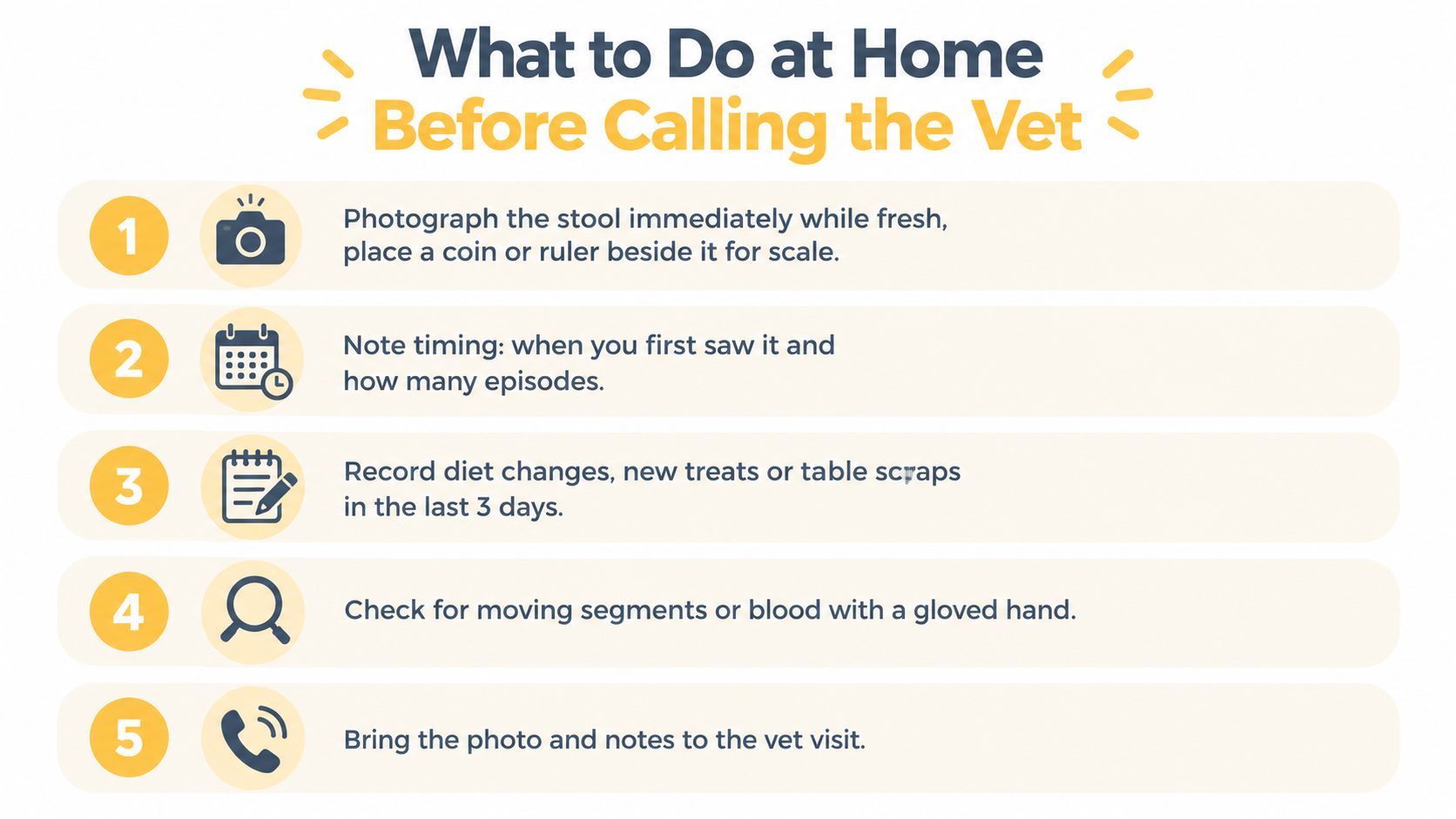
Bring the photograph, sample, symptom notes, medication list, and vaccination information to the appointment. If your dog also has loose stool, this guide to canned pumpkin and dog diarrhea may help you prepare questions, but don't use a food remedy as a substitute for care when parasites or foreign material are possible.
What Your Vet Will Look For and How Tapeworms Are Treated
Your veterinarian will begin with the dog, not just the stool. The examination may include the mouth, abdomen, skin, coat, weight, and area around the anus. Your answers about diet, flea exposure, symptoms, and timing can be as helpful as the sample itself.
Why a negative stool test may not settle it
Routine fecal flotation can miss Dipylidium infections because egg packets aren't released consistently into stool. The Cornell Canine Health Center's tapeworm guidance explains why direct observation of segments on feces, perianal fur, or bedding can be diagnostically important.
The vet may examine the material you brought, perform fecal testing, or recommend broader parasite testing if the appearance isn't clear. A photograph is especially useful when the sample has dried, broken apart, or disappeared before the visit.
What treatment usually addresses
If the veterinarian confirms a tapeworm, they'll prescribe an appropriate antiparasitic treatment for your dog. The exact medication and schedule depend on the suspected parasite, the dog's health, and the clinician's judgment. Don't use leftover dewormer or a human medication, because an incorrect product may not treat the infection and could create another risk.
Flea control is part of the solution for D. caninum. A dog can become reinfected by swallowing an infected flea, so the vet may recommend a prevention plan for every affected pet and discuss cleaning bedding and household areas. If another parasite or intestinal problem is possible, the vet may choose a broader diagnostic or treatment approach.
| Step | What Happens | Why It Matters |
|---|---|---|
| Physical examination | The vet checks the dog's general condition and rear area | Shows whether the stool finding is isolated or part of a wider illness |
| History review | You describe diet, flea exposure, symptoms, and timing | Connects the visual finding with likely sources |
| Sample assessment | The clinic examines the segment, stool, or photograph | Direct evidence can be more useful than flotation alone |
| Additional testing | The vet may request fecal or other parasite testing | Helps investigate look-alikes or multiple infections |
| Treatment plan | The dog receives a prescribed antiparasitic when indicated | Targets the confirmed or strongly suspected parasite |
| Prevention plan | Flea control and household measures are reviewed | Reduces the chance of reinfection |
Visible rice-like material is worth reporting even when your dog looks normal. Prompt identification usually turns an alarming discovery into a focused treatment and prevention plan.
When to Seek Veterinary Care Right Away
Rice-like pieces alone don't tell you how sick a dog is. Your dog's behavior and accompanying symptoms set the urgency.
Seek same-day veterinary care if you see blood in the stool, black tarry stool, repeated vomiting, severe abdominal discomfort, or a dog who refuses food and becomes increasingly quiet. These signs can accompany bleeding, obstruction, dehydration, or another illness that has nothing to do with a simple tapeworm infection.
Contact your vet promptly if your dog keeps scooting, licks the rear intensely, or has visible segments moving in fresh stool. Those findings suggest active irritation or a parasite that needs treatment, even if appetite and energy seem normal.
Young dogs, older dogs, and dogs with existing health conditions deserve a lower threshold for calling. Diarrhea paired with lethargy, vomiting, or appetite change can become more serious quickly, particularly when the dog is small or unable to keep water down.
A bright dog that eats, drinks, and behaves normally is usually less urgent than a dog who is quiet, painful, vomiting, or skipping meals.
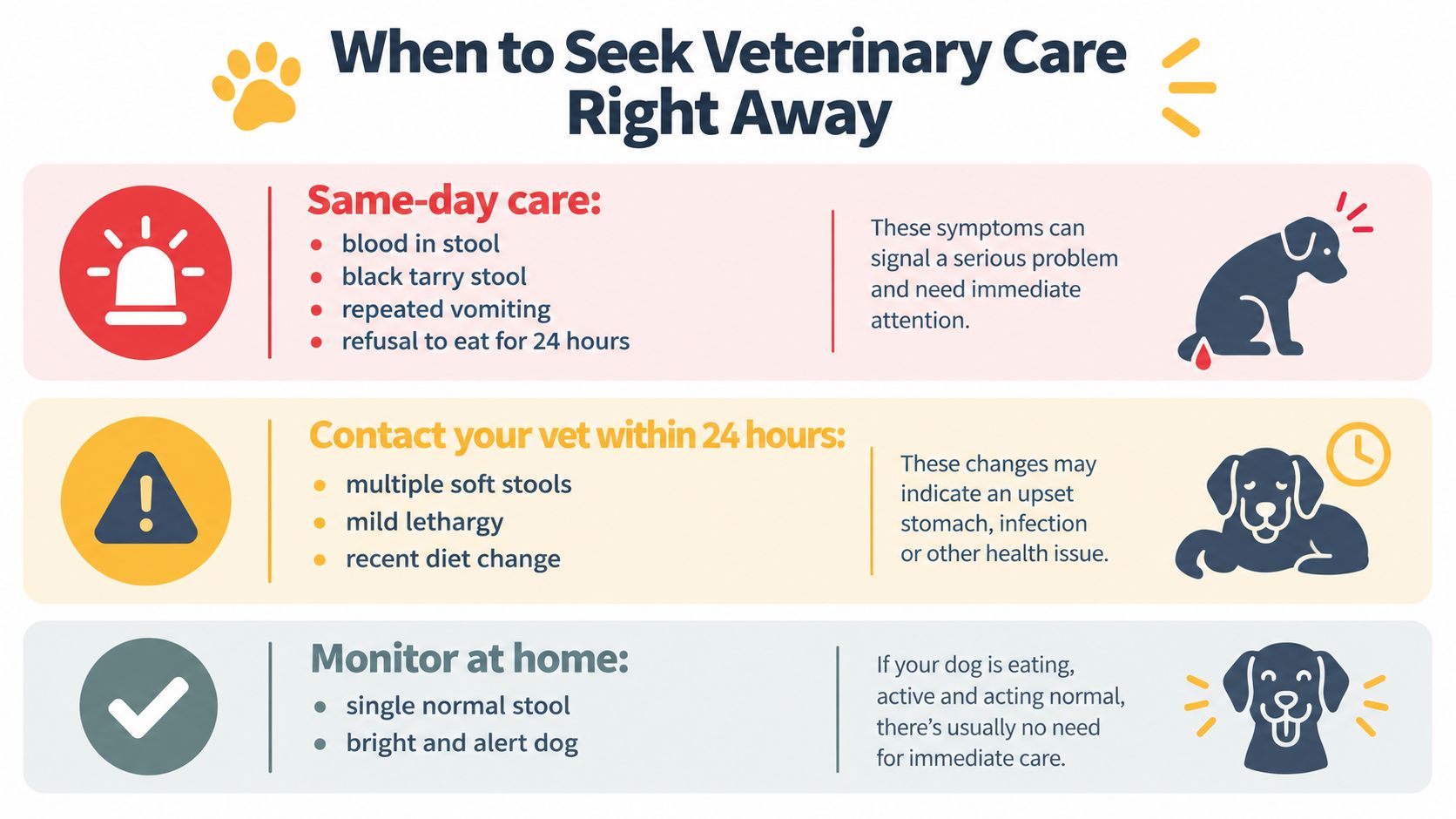
Don't wait for a routine appointment if you suspect your dog swallowed plastic, foam, fabric, a toy fragment, or another object. A foreign body can become an obstruction, and passing one small piece doesn't prove that the rest has cleared.
For additional symptom context, review this guide to upset stomach symptoms in dogs, then call your veterinary practice if your dog's condition is changing. When in doubt, describe the stool finding and the dog's behavior together. That gives the clinic a better basis for deciding how quickly to see your pet.
Preventing Rice-Like Material From Coming Back
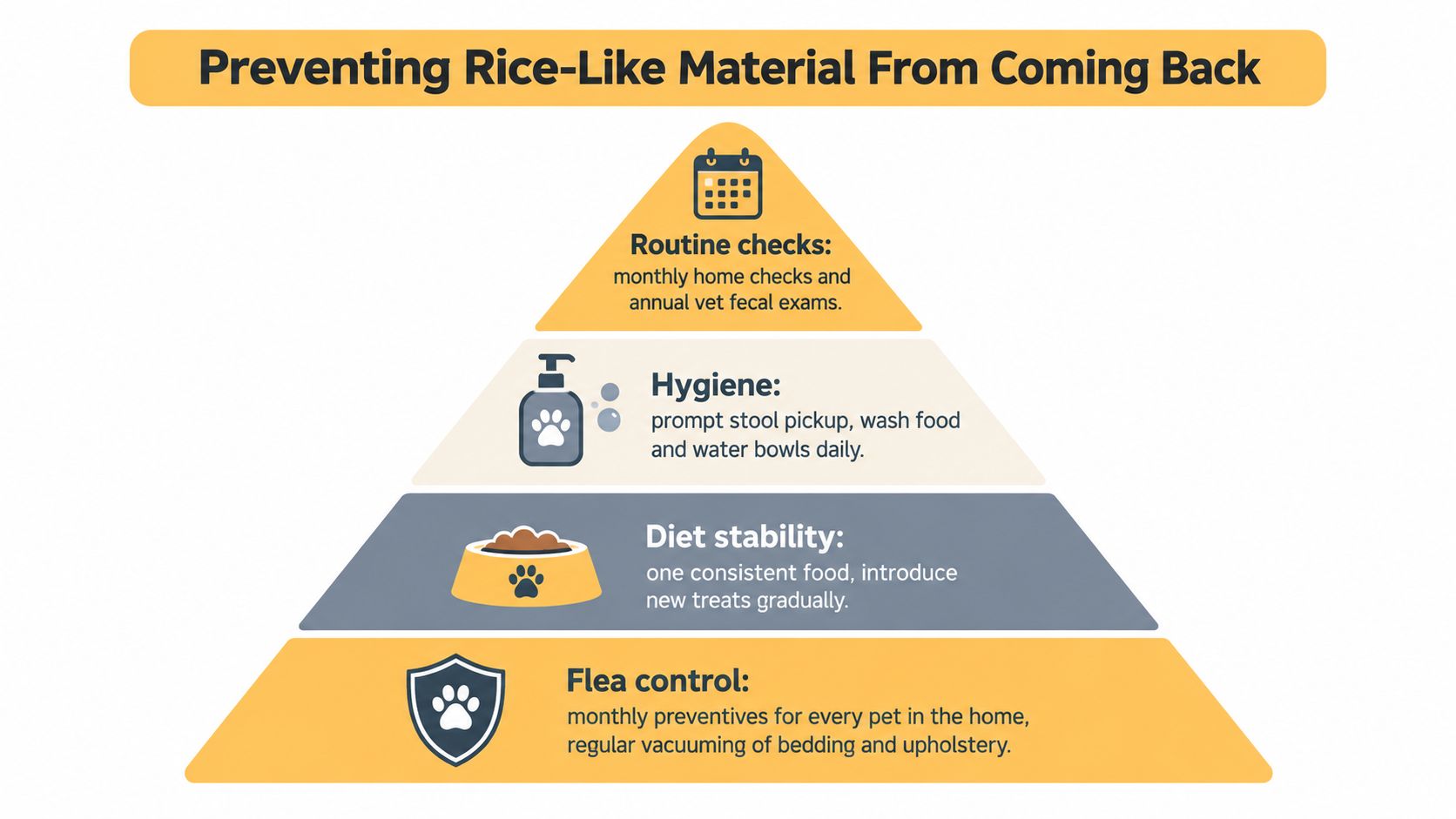
Prevention depends on the cause. If the material was food, focus on diet consistency. If it was mucus, look for the digestive trigger with your vet. If it was a tapeworm segment, flea control becomes the central layer.
Build protection around the parasite route
Dogs commonly acquire D. caninum by swallowing infected fleas. Use the flea prevention plan your veterinarian recommends for every pet in the household, not just the dog with visible segments. Wash bedding as directed, vacuum resting areas, and dispose of collected debris promptly.
Hunting, scavenging, and contact with unmanaged animal environments can add parasite exposure. Tell your vet about those habits so the prevention plan fits your dog's actual routine rather than an idealized one.
Keep the digestive routine steady
Avoid making several diet changes at once. Introduce new foods and treats gradually, keep portions consistent, and note whether a particular ingredient is followed by loose stool or visible food fragments. Grains should be fully cooked if you feed them, and any homemade diet should be reviewed for nutritional completeness.
If a dog has recurring digestive signs, ask about appropriate fiber, probiotics, or other gut-support options before adding them. A supplement may support routine digestion, but it won't remove a tapeworm or replace parasite control.
Make hygiene easy to maintain
Pick up stool promptly, clean food and water bowls regularly, and wash hands after handling feces or soiled bedding. Household cleaning won't treat an infection on its own, but it helps reduce contamination and makes recurring segments easier to spot.
Keep routine care on the calendar
Record flea treatments, deworming, stool changes, and veterinary visits in one place. Dogs with hunting or scavenging habits may need a different fecal-testing and deworming plan from dogs with limited outdoor exposure. Ask your veterinarian how often your dog should be examined based on age, health, lifestyle, and local parasite risks.
Prevalence varies widely by geography, dog population, and testing method. In one survey of untreated shelter dogs in Oklahoma, D. caninum was found in 49.5% of dogs, while a separate study of client-owned dogs found visible D. caninum proglottids or egg packets in 0.84%. A hospital-based study of 384 dogs detected D. caninum in 79 animals, or 21%, and a broader review reported canine estimates ranging from 0% to 39.1% in fecal-testing studies and 0.9% to 83.3% in necropsy studies. These figures from a review of canine tapeworm evidence show why your dog's exposure and the test method matter more than a single general prevalence figure.
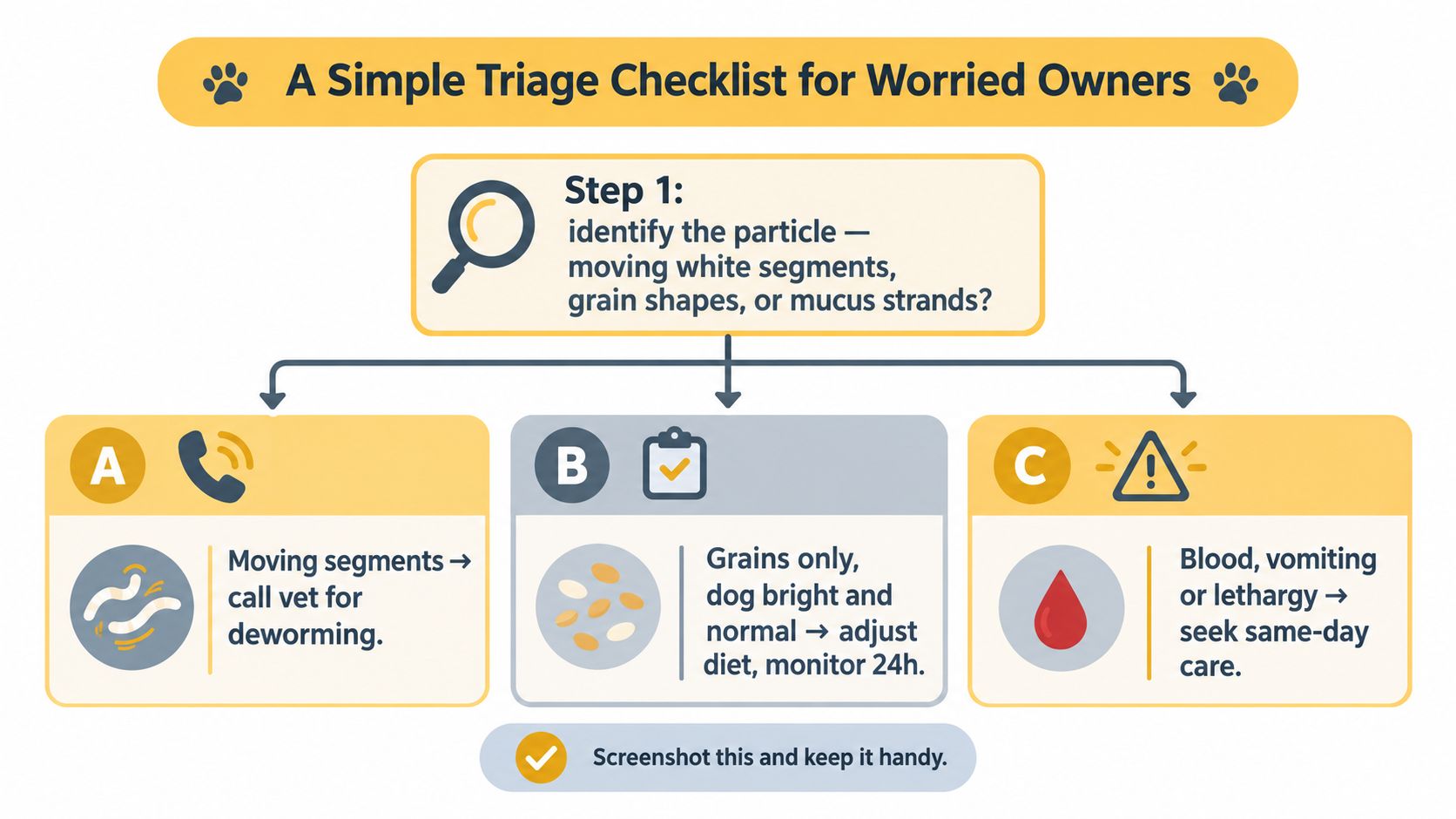
A Simple Triage Checklist for Worried Owners
Save this checklist for the next time a pale piece appears in the stool.
Look before you clean
Take a photograph while the stool is fresh. Check whether the material moves, whether it's flat or grain-like, and whether it looks wet and stringy like mucus. Save a sample if possible, and note whether the same material appears again.
Check the dog, not just the stool
Ask four quick questions:
- Is your dog bright and responsive?
- Are appetite and drinking normal?
- Is there vomiting, blood, black stool, pain, or marked diarrhea?
- Is your dog scooting, licking the rear, or showing fleas?
If your dog is comfortable and the pieces appear only once, contact your vet for routine guidance and monitor closely. If the pieces move, recur, or appear around the anus or bedding, arrange an examination and mention the visible segments even if a prior stool test was negative.
If blood, black stool, repeated vomiting, severe discomfort, or pronounced lethargy appears, seek same-day care. Don't give a dewormer, anti-diarrheal, or supplement just because the material looks like rice.
After any prescribed deworming treatment, ask your vet whether follow-up testing or monitoring is appropriate. Keep the flea-control plan active, continue recording stool changes, and bring new photographs if the rice-like material returns.
Pure Paw Labs offers daily dog nutrition products, including a human-grade, multi-system supplement designed to support gut, joint, skin and coat, immune, and stress-related needs. If you're looking for routine nutritional support alongside veterinary care for recurring digestive concerns, visit Pure Paw Labs to review the available formula and product information.