


You searched for a Golden Retriever Corgi mix because the combination looks almost too charming to be real: a fluffy coat, expressive face, compact legs, and the cheerful presence of a retriever. Then the dog comes home, starts shedding across every room, barks at movement outside the window, races after a toy, and tries to launch off the sofa. The cute appearance is only the beginning. Caring for this hybrid means understanding how a long-backed, short-legged body handles retriever energy, food, stairs, heat, and daily movement.
Table of Contents
- Meet the Golden Retriever Corgi Mix
- Appearance, Size, and Lifespan Expectations
- Temperament, Training, and Socialization Needs
- Exercise Requirements and Grooming Routines
- Common Health Issues and Genetic Risks
- Nutrition and the Role of All-in-One Supplements
- How to Choose and Adopt a Golden Corgi Responsibly
Meet the Golden Retriever Corgi Mix
A Golden Retriever Corgi mix, often called a Golden Corgi, combines two working backgrounds that produce very different physical and behavioral tendencies. The Corgi contributes a compact frame, herding awareness, and a tendency to stay alert to movement. The Golden Retriever contributes a larger genetic influence, social warmth, retrieving enthusiasm, and a strong desire to participate in family life.
That combination can make an engaging companion, but it doesn't create a standardized breed. One puppy may look more like a low-slung retriever, while another may have a distinctly Corgi-like back and legs. Coat texture, adult proportions, energy, and confidence can all vary, so owners should prepare for an individual dog rather than a guaranteed internet image.

Two working histories in one dog
Historical sources place the intentional development of the mix in North America during the late 1990s, during the wider designer-dog trend. The parent breeds have much older roots. Golden Retrievers were developed in Scotland in the late nineteenth century, while Corgis have been present in Wales for over 1,000 years as herding dogs, as described in this history of the Golden Corgi and its parent breeds.
That history helps explain why this dog can be both affectionate and busy. A retriever may look for games, carrying tasks, and human interaction. A herding dog may monitor the household, react to passing activity, and attempt to control movement. The result is often a dog that wants companionship and purpose, not one that decorates the sofa.
Practical rule: Treat the Golden Corgi as a working-minded family dog in a compact body. Plan for training, enrichment, and careful physical management from the start.
Appearance, Size, and Lifespan Expectations
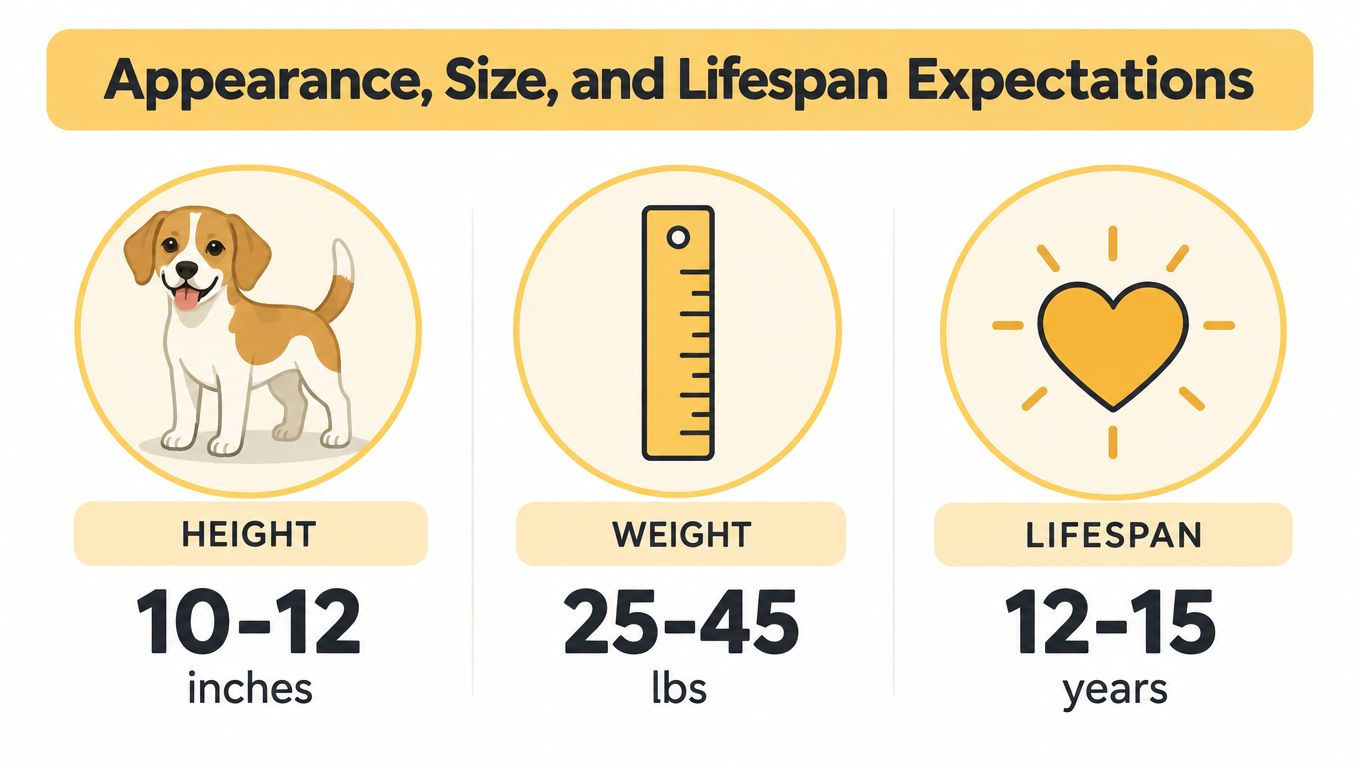
Predicting the adult appearance of a Golden Retriever Corgi mix is difficult because mixed genetics aren't standardized. Even puppies from the same litter can inherit different proportions, coat density, leg length, and overall build. The safest approach is to prepare for a range rather than buy equipment or plan exercise around a single expected size.
Breed profiles commonly describe the mix as a medium-sized hybrid, with an adult height of about 10 to 18 inches, or 25 to 46 centimeters, and a weight range of roughly 30 to 75 pounds, or 14 to 34 kilograms. An average lifespan is commonly cited at 10 to 13 years. These figures are summarized in this Golden Retriever Corgi mix profile, but they shouldn't replace an assessment of the individual dog.
Read the body, not just the scale
The most important visual question isn't whether your dog fits a predicted number. Look at proportion and movement. A longer back paired with shorter legs changes how the dog climbs, jumps, turns, and absorbs force. A heavier Golden-influenced frame can increase the mechanical demand placed on that structure.
Choose a crate that allows the dog to stand, turn, and lie down comfortably, but don't assume a puppy's final proportions from its current size. At home, provide stable bedding and reduce situations that encourage repeated jumping from furniture. Ramps or low-access furniture can be more useful than trying to teach a dog to avoid every tempting surface.
Plan for a long commitment
A lifespan commonly cited at 10 to 13 years means adoption is a substantial commitment, covering puppy development, adult conditioning, and later-life mobility changes. Nutrition, body condition, dental care, veterinary examinations, and a safe home layout all matter across those stages.
For an older dog whose routine needs broader support, DA-1™ Daily All-in-One - Senior Dog Support, Joints, Skin/Coat & More is described as a once-daily formula with human-grade ingredients intended to support multiple systems. It should complement, not replace, individualized veterinary care and a complete diet.
Temperament, Training, and Socialization Needs
The Golden Corgi often brings together the Golden Retriever's social, people-focused nature with the Corgi's alertness and independent thinking. That can produce a dog that learns quickly but doesn't always agree that your first request is the most interesting thing happening in the room.
Training works best when it gives the dog a clear job. Ask for a sit before opening a door, a hand target before greeting visitors, or a calm wait before receiving a toy. These small routines turn enthusiasm into cooperation without relying on physical corrections, which can increase tension and make a sensitive or watchful dog less willing to engage.
Redirect movement before it becomes a habit
Herding behavior may appear as heel nipping, chasing, intense staring, or barking at people and animals who pass by. Don't wait for the behavior to become self-rewarding. Interrupt early, move the dog away from the trigger, and reward an alternative such as looking at you, walking beside you, or settling on a mat.
A practical pattern is:
- Notice the trigger. Identify whether bicycles, children running, visitors, or other animals start the reaction.
- Create distance. Distance gives the dog enough room to think instead of react.
- Offer a simple cue. Use a behavior the dog already knows, such as hand targeting or a turn.
- Reward the choice. Reinforce calm observation, not frantic barking or chasing.
- Repeat gradually. Increase difficulty only while the dog can remain responsive.
Socialization needs structure
Socialization doesn't mean allowing every person or dog to rush into contact. It means giving the puppy controlled exposure to household sounds, surfaces, calm visitors, grooming, travel, handling, and other appropriate experiences while keeping the emotional response positive.
Children should learn not to climb over the dog, grab its coat, or disturb it while eating. The dog should have a quiet retreat that nobody enters without invitation. With other pets, supervise interactions and reward calm disengagement. A friendly Golden influence doesn't guarantee that every individual dog will enjoy every social situation, so observe body language rather than relying on breed expectations.
Mental work matters as much as physical activity. Short scent searches, food puzzles, retrieve-and-release games, and brief obedience sessions can satisfy the dog's working instincts without asking a vulnerable body to perform repeated high-impact exercise.
Exercise Requirements and Grooming Routines
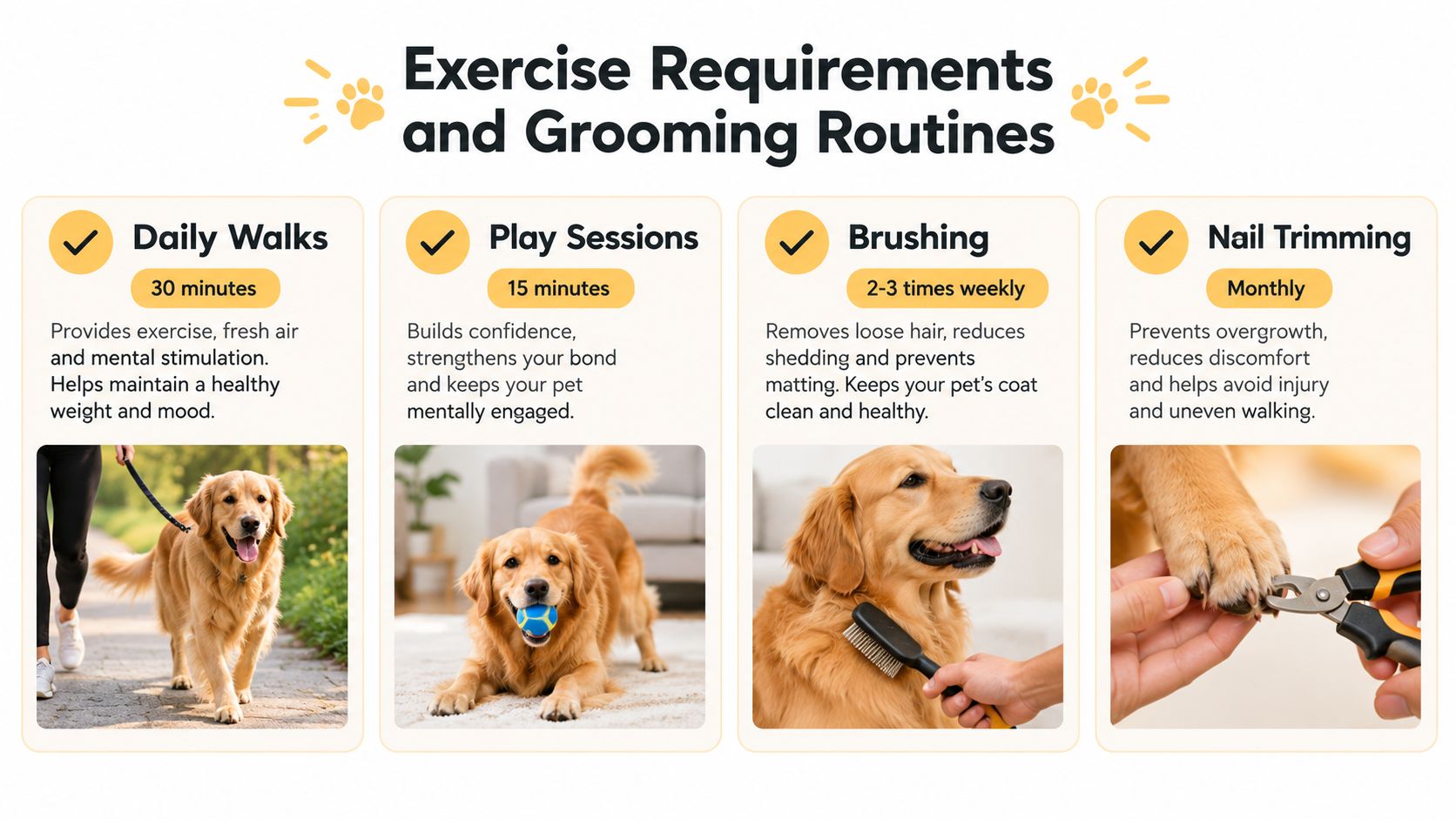
Exercise has to achieve two goals at once: provide enough activity for a retriever-influenced dog and avoid unnecessary stress on a potentially long back, short legs, and developing joints. Expert summaries place Corgi mixes broadly around 15 to 45 pounds and 10 to 18 inches at the shoulder, while Golden Corgi exercise recommendations commonly fall between 30 and 90 minutes per day, depending on age and individual structure, as outlined in this guide to Corgi mixes.
Don't treat that range as a fixed prescription. A young puppy, an adult with a heavier frame, and an older dog need different workloads. Divide activity into manageable sessions rather than one exhausting bout, and favor walking on stable surfaces, controlled play, scent work, and training games over repeated jumping, sharp pivots, or long stair sessions.
Build a repeatable routine
A useful daily pattern might include a calm walk, a short play session, and several brief training or scent activities. Watch the dog's movement during and after exercise. Reluctance on stairs, a changed gait, difficulty rising, or unusual fatigue deserves attention rather than a forced increase in activity.
Warm weather requires extra caution. A dense double coat and a compact body can make heat management harder, so exercise should take place during cooler parts of the day, with access to water and shade. Stop when the dog shows signs of overheating, weakness, disorientation, or unusual breathing, and seek veterinary help when symptoms are serious or don't resolve promptly.
Brush the undercoat, not just the surface
This mix is generally described as a double-coated dog with moderate-to-high shedding. Brush several times per week to remove loose undercoat and reduce tangles. During seasonal coat blows, daily brushing may be needed. Work through feathering, behind the ears, around the tail, and along the hindquarters, where loose hair can collect.
Use a brush that reaches the undercoat without scraping the skin, then check with a comb in dense areas. Keep nails trimmed and inspect paws regularly. For more detail on maintaining a healthy coat and skin barrier, use this guide to dog skin and coat care.
Common Health Issues and Genetic Risks
The Golden Retriever Corgi mix isn't a low-risk hybrid just because it has mixed ancestry. Its main concern is the interaction between inherited vulnerabilities and body mechanics. A Corgi-like long back can experience greater spinal strain, while a heavier retriever influence can increase loading on the hips, elbows, and other weight-bearing structures.
Independent breed and veterinary-style summaries flag intervertebral disc disease, hip dysplasia, elbow dysplasia, obesity, and heat intolerance as important risks for this mix. The health overview of the Golden Retriever Corgi mix explains why the structure of the dog matters when owners plan exercise, weight control, and home access.
Understand the mechanical risk
Intervertebral disc disease, commonly shortened to IVDD, affects the discs and spinal column. A long-backed dog may be more vulnerable to stress from repeated jumping, abrupt twisting, uncontrolled stair use, or carrying excess weight. Hip and elbow dysplasia involve abnormal joint development and can lead to discomfort, altered movement, and reduced willingness to exercise.
Prevention can't eliminate inherited risk, but it can reduce avoidable strain:
- Keep the dog lean. Portion food carefully and assess body condition with your veterinarian instead of feeding by appearance alone.
- Control jumping. Block access to high furniture or teach the dog to use a stable ramp.
- Limit stairs. Use gates when unsupervised, especially during puppy growth or if movement changes.
- Choose conditioning over impact. Regular, moderate movement is preferable to sporadic intense activity.
- Respond early. Contact a veterinarian for persistent stiffness, reluctance to move, pain, weakness, or a changed gait.
A dog that suddenly avoids stairs or stops jumping isn't being stubborn by default. A change in movement deserves a health assessment.
Watch weight and heat together
Obesity increases the load carried by a structurally unusual body. It can also make exercise more difficult, creating a cycle in which the dog moves less, loses conditioning, and gains further weight. Measure meals, account for treats, and use part of the daily food ration during training.
Heat intolerance adds another management concern. Avoid pushing the dog through hot conditions because it appears eager to play. For owners also dealing with itching, recurring irritation, or coat changes, this overview of Golden Retriever allergies can help organize questions for a veterinary appointment.
Nutrition and the Role of All-in-One Supplements
Nutrition is a practical tool for managing the Golden Corgi's body condition, skin, digestion, and activity. Start with a complete diet appropriate for the dog's life stage, then adjust portions according to body condition, growth, exercise, and veterinary guidance. The goal isn't to make the dog look substantial. It's to support a stable, comfortable body that can move without carrying unnecessary mass.
Protein quality matters, but more food isn't automatically better food. Measure meals, keep treats controlled, and introduce dietary changes gradually. If the dog develops vomiting, diarrhea, persistent itching, or a sudden change in appetite, investigate the cause with a veterinarian rather than masking the symptom with supplements.
Simplify support without replacing fundamentals
Some owners accumulate separate products for joints, coat, digestion, immune support, and stress. That approach can make a routine difficult to follow and can complicate the process of identifying which ingredient helps or causes a reaction. A single daily product may be easier to administer, provided its ingredients, quality controls, intended use, and compatibility with the dog's diet are clear.
DA-1™ Daily All-in-One is described as containing 99.8% active ingredients with no fillers, using human-grade components and third-party lab testing in an FDA-registered facility. Its stated purpose is to consolidate joint, skin, gut, immune, and stress support into one daily scoop. Those are product specifications, not a promise that it will prevent or treat IVDD, dysplasia, obesity, allergies, or any other disease.

Use supplements as part of a measured plan
An all-in-one supplement makes the most sense when it supports a routine you can consistently maintain. Add the measured scoop to food as directed, monitor stool quality, skin, appetite, and movement, and introduce it gradually if your dog has a sensitive stomach. Tell your veterinarian about every supplement, especially if your dog takes medication or has a diagnosed condition.
The most effective prevention plan still begins with:
- Body condition control, because supplements can't offset chronic overfeeding.
- Structured movement, because joint support isn't a substitute for safe conditioning.
- Coat and skin observation, because recurring irritation may need diagnosis.
- Veterinary oversight, because pain, weakness, digestive upset, and heat-related signs require more than nutritional support.
For readers comparing approaches to daily wellness routines, this explanation of an all-in-one dog supplement provides additional context.
How to Choose and Adopt a Golden Corgi Responsibly
Responsible adoption starts with accepting uncertainty. A seller who promises a precise adult appearance, guaranteed temperament, or universally perfect health is offering more confidence than mixed genetics can support. Look for transparency about the parents, early development, veterinary records, diet, and any observed behavior.
If you're considering a breeder, ask to see health documentation for both parent dogs and ask specific questions about hips, elbows, spinal history, weight, and mobility. Meet the mother when possible and observe whether the dogs are clean, alert, comfortable around people, and housed in an appropriate environment. Be cautious if the seller refuses questions, pressures you to commit quickly, or can't explain how puppies were socialized and medically assessed.
Evaluate rescue dogs as individuals
A rescue organization may know an adult dog's movement, habits, reactions to handling, and comfort around children or other animals. Ask whether the dog has shown difficulty with stairs, jumping, grooming, heat, food, or prolonged activity. Watch the dog walk on a level surface, rise from rest, turn, and settle.
Before bringing the dog home, prepare:
- A safe layout. Use gates to limit stairs and block unsafe furniture access.
- A feeding plan. Confirm the current diet and transition gradually.
- A quiet retreat. Give the dog a predictable place to rest undisturbed.
- A veterinary appointment. Arrange an examination and discuss body condition, joints, spine, skin, digestion, and exercise.
- A training schedule. Begin with calm routines, name recognition, handling, and reward-based cues.
Common questions
Can a Golden Corgi live in an apartment?
Yes, an apartment can work if the dog receives daily physical and mental enrichment, has safe access to outdoor movement, and isn't left without meaningful companionship for long periods. Floor traction, stair management, and controlled play matter more than having a large home.
Is this mix suitable for children?
Many individuals can become affectionate family companions, but compatibility depends on the dog's temperament, the children's behavior, and adult supervision. Children should respect rest, food, and personal space, while adults should manage play that involves chasing, jumping, or rough handling.
Is the Golden Retriever Corgi mix low maintenance?
No. The mix may need weight control, restricted stair and jump access, and brushing multiple times per week to reduce matting and skin irritation, as outlined in this practical care guide for the Corgi Golden mix.
Pure Paw Labs offers daily dietary supplements designed to consolidate support for areas such as joints, skin and coat, digestion, immunity, and stress into a simple routine. If you're building a preventive care plan for a Golden Retriever Corgi mix, visit Pure Paw Labs to review the available approach and discuss it with your veterinarian.