


A healthy adult dog can have a small amount of plain, unsweetened coconut water as an occasional treat, but one cup contains about 46 calories, 6.3 grams of natural sugar, and roughly 600 milligrams of potassium. It should never replace plain water, and dogs with kidney disease or dogs taking heart medication should skip it unless their veterinarian specifically approves it.
Your Labrador has just finished exercising, you've opened a carton of coconut water, and those familiar pleading eyes are fixed on the bowl. The answer isn't a simple yes or no. Healthy dogs may tolerate a measured taste, but coconut water is not a required nutrient, a daily drink, or a dependable treatment for dehydration.
The right decision depends on your dog's situation. A healthy adult, a mildly thirsty dog after exercise, a puppy, a diabetic dog, and a dog with kidney disease don't belong in the same category. Product labeling matters, too. Only consider plain, unsweetened coconut water with no added sugar, flavoring, or xylitol.
This guide gives practical serving limits, frequency rules, a comparison with plain water and veterinary oral rehydration solutions, and a checklist for adverse reactions. If your dog has kidney disease or takes heart medication, call your veterinarian before offering any coconut water.
Table of Contents
- Whether Dogs Can Drink Coconut Water and What Owners Ask First
- What's Actually in Coconut Water and Why It Matters for Dogs
- Serving Sizes, Frequency, and How to Offer It Safely
- Coconut Water for Mild Dehydration and Recovery Scenarios
- How Coconut Water Compares to Plain Water and Electrolyte Solutions
- Special Cases Including Puppies, Diabetic Dogs, and Dogs With Kidney or Heart Conditions
- Where Coconut Water Fits in a Dog's Daily Nutrition and Supplement Routine
- Signs of Adverse Reaction and When to Call Your Vet
Whether Dogs Can Drink Coconut Water and What Owners Ask First
The direct answer is yes, healthy adult dogs can drink small amounts of plain, unsweetened coconut water. Veterinary and pet-care guidance consistently treats it as an occasional treat, not as a replacement for a dog's normal drinking water. Veterinary guidance on coconut water for dogs reaches the same practical conclusion: keep plain water available and don't make coconut water a meaningful part of daily fluid intake.
Coconut water isn't toxic to dogs when it's plain and unsweetened, but “safe” doesn't mean “useful for every dog.” It contains natural sugar and a substantial amount of potassium. That combination can cause digestive upset in larger servings and creates a more serious concern for dogs whose bodies can't regulate potassium properly, including some dogs with kidney or cardiac conditions. Additional nutrition guidance for dogs explains why the mineral profile deserves more attention than the drink's healthy image.
Start with the label
Before sharing any, check the ingredients. Choose coconut water without:
- Added sugar: Extra sweetness increases the calorie and sugar load.
- Xylitol: This sweetener is dangerous to dogs.
- Flavoring or blends: Fruit blends and flavored products may contain ingredients your dog shouldn't consume.
- Unnecessary additives: A short, recognizable ingredient list is the safer choice.
If your dog wants something different after a walk, plain water remains the better option. Coconut water adds taste, but it doesn't provide a balanced canine hydration formula.
The rest of the decision changes by scenario. Healthy adults may receive a measured treat, while puppies, diabetic dogs, dogs with kidney disease, and dogs taking heart medication should generally skip it. A dog with vomiting, diarrhea, heat exposure, or clear dehydration needs veterinary direction rather than a trendy drink. Owners managing chronic conditions should make the call with their veterinarian, not from a carton label.
What's Actually in Coconut Water and Why It Matters for Dogs
Coconut water looks light and refreshing, but nutritionally it's closer to a sweet potassium-rich drink than to plain water. A standard cup contains about 46 calories and 6.3 grams of natural sugar, plus roughly 600 milligrams of potassium, according to the available coconut water nutrition breakdown. The same serving contains about 252 milligrams of sodium, 60 milligrams of magnesium, and 57 milligrams of calcium.
Those numbers matter because dogs are smaller than people, and a serving that looks modest in a kitchen measuring cup can be disproportionately large for a small dog. Natural sugar isn't the same as xylitol toxicity, but it still adds calories and can complicate blood-glucose management in a diabetic dog. Potassium is the more important safety issue for dogs with impaired kidney function or medication-related potassium changes.
What each nutrient means
| Nutrient per 1 cup | Approximate amount | What it means for dogs |
|---|---|---|
| Calories | About 46 | Adds energy without replacing a complete meal. |
| Natural sugar | About 6.3 g | May be tolerated by a healthy dog in a small portion, but it's a poor choice for diabetic dogs. |
| Potassium | Roughly 600 mg | The main reason to avoid coconut water with kidney disease or certain heart medications. |
| Sodium | About 252 mg | Present, but not a reason to assume the drink replaces lost electrolytes. |
| Magnesium | About 60 mg | A mineral contribution, not a complete canine hydration solution. |
| Calcium | About 57 mg | Doesn't turn coconut water into a balanced supplement. |
Coconut water's appeal comes from its minerals and mild sweetness. Its limitation comes from the same place. Larger servings increase liquid, sugar, and potassium intake without matching the electrolyte composition a dog needs after significant fluid loss.
Practical rule: Treat coconut water as a flavored extra, not as a medical hydration product.
That framing should control your serving decision. If your dog is healthy and weight-stable, a small measured taste may be reasonable. If your dog has kidney disease, heart disease, diabetes, or active gastrointestinal illness, the nutritional trade-off is unfavorable.
Serving Sizes, Frequency, and How to Offer It Safely
There's no reason to free-pour coconut water into a dog's bowl. Use a measuring spoon or cup, start below the suggested limit, and watch how your dog responds. These conservative portions are practical starting thresholds for a healthy dog, not therapeutic doses:
- Toy and small dogs under 20 pounds: Start with 1 to 2 teaspoons.
- Medium dogs from 20 to 50 pounds: Offer 1 to 2 tablespoons.
- Large dogs from 50 to 90 pounds: Give up to one-quarter cup.
- Giant breeds over 90 pounds: Cap the serving at about one-third cup.
The nutrition behind these limits is outlined in this dog-care guidance on coconut water, which emphasizes small amounts, continued access to plain water, and the possibility of loose stool after larger servings. The portions above are intentionally restrained because product concentration and individual tolerance vary.
Keep the routine occasional
Offer coconut water no more than two or three times per week, and never make it a daily drink. Fresh plain water should remain available before, during, and after activity. If your dog refuses plain water but accepts coconut water, don't solve the problem by repeatedly offering sweet liquid. Investigate heat, pain, nausea, stress, dental problems, or illness instead.
For a first introduction, follow this sequence:
- Read the ingredients. Choose plain, unsweetened coconut water with no xylitol, flavoring, or unnecessary sweeteners.
- Measure a small test portion. Don't begin at the maximum suggested amount.
- Serve it in a clean bowl. Don't let your dog drink directly from a carton that has been sitting out.
- Remove leftovers promptly. Pour off any uneaten portion within 20 minutes to limit bacterial growth.
- Monitor digestion. Watch for loose stool, gas, vomiting, or unusual lethargy.
Don't pressure a dog that dislikes the taste. Coconut water offers novelty, not a nutritional requirement, and plain water remains the correct everyday choice.
Coconut Water for Mild Dehydration and Recovery Scenarios
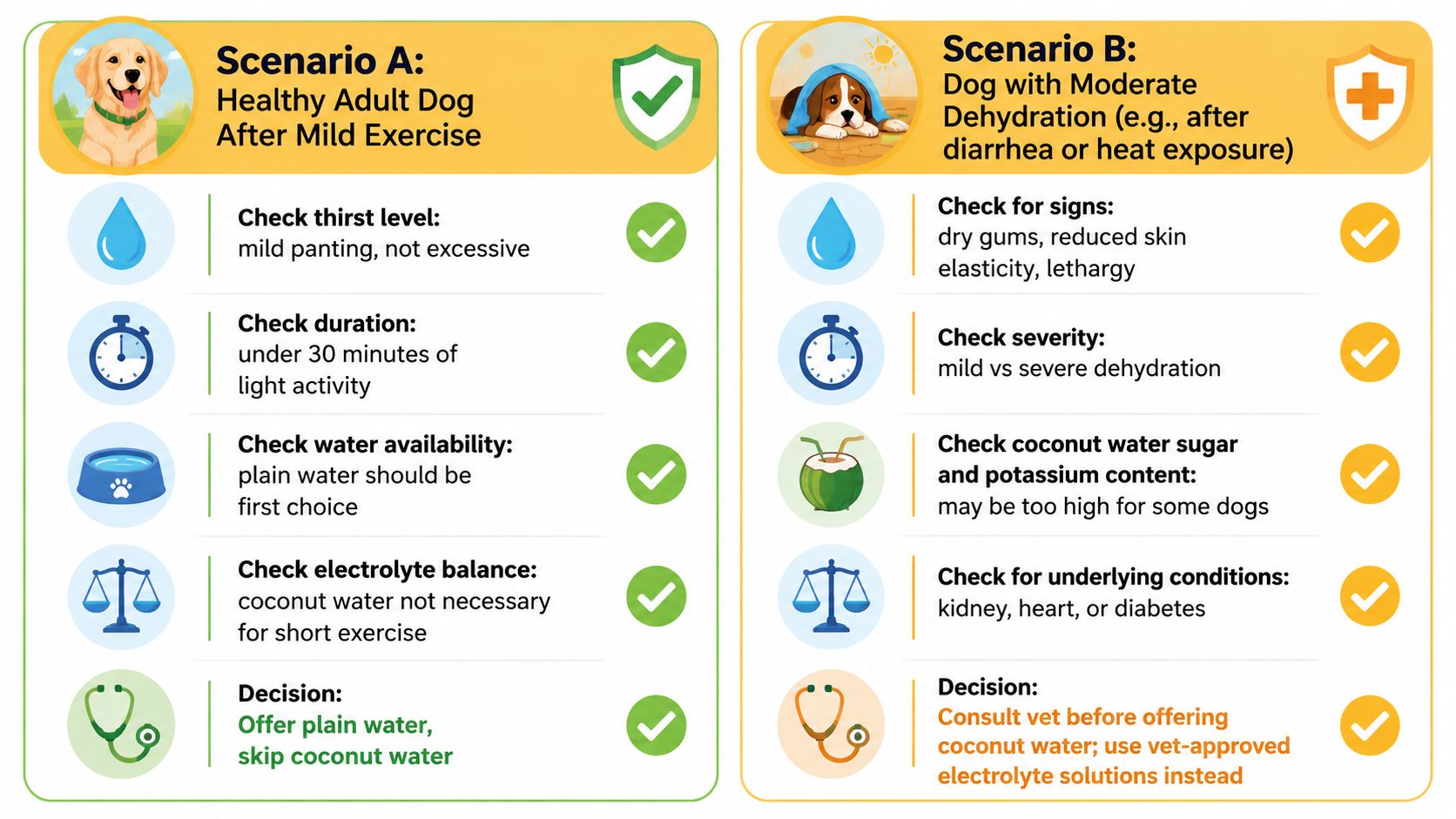
Coconut water is often marketed as a rehydration drink, but that description can mislead dog owners. A healthy adult dog that's mildly thirsty after ordinary exercise usually needs rest, shade, and access to cool plain water. It doesn't need coconut water to replace electrolytes after a routine walk or short bout of activity.
Separate thirst from dehydration
Mild panting after light activity isn't the same as clinical dehydration. A dog with lethargy, tacky or dry gums, reduced skin elasticity, weakness, or worsening thirst needs more careful assessment. Those signs can accompany illness, heat injury, gastrointestinal fluid loss, or another problem that coconut water won't correct.
Coconut water also isn't a reliable substitute for a veterinary oral rehydration solution. Its potassium and sugar content may be poorly suited to a dog losing fluid through vomiting or diarrhea, and larger amounts can worsen loose stool. During heat exhaustion, repeated vomiting, significant diarrhea, or post-surgical recovery, skip coconut water and contact a veterinarian.
If dehydration signs are present, don't experiment with a sweet electrolyte drink at home. Offer cool plain water only if your dog can drink safely, and ask your veterinarian whether a veterinary-approved oral rehydration solution is appropriate.
A dog that can't keep water down, appears weak, becomes confused, collapses, or continues deteriorating needs urgent veterinary care. There isn't a universal home serving threshold that makes coconut water appropriate for those situations. The discussion of coconut water and dehydration confusion highlights this practical gap: general advice often says “small amounts,” but that doesn't establish a safe recovery dose for every dog or condition.
For broader hydration and recovery choices, owners can also review the benefits of bone broth for dogs, while remembering that any added food or drink should be evaluated against the dog's medical needs.
If your dog's recovery lasts beyond a brief period, involve your veterinarian. Coconut water may be tolerated as a treat by a healthy dog, but it has no role as a stand-alone treatment for dehydration.
How Coconut Water Compares to Plain Water and Electrolyte Solutions
For everyday hydration, plain water wins. It contains no sugar, no calories, and no extra potassium load. Dogs need a dependable fluid source they can drink freely, not a beverage that adds nutrients in an unbalanced ratio.
Coconut water belongs in a different category. It's a flavored treat with natural sugar and meaningful potassium. It may tempt a healthy dog to take a few licks, but palatability doesn't make it a therapeutic electrolyte formula. Veterinary oral rehydration solutions are designed for targeted fluid and electrolyte replacement under professional guidance, especially when vomiting, diarrhea, heat exposure, or another illness causes losses.
| Option | Sodium | Potassium | Sugar | Calories per cup, approximately | Best use case |
|---|---|---|---|---|---|
| Plain water | None added | None added | None | None | Daily hydration and first choice after ordinary exercise |
| Plain unsweetened coconut water | About 252 mg | Roughly 600 mg | About 6.3 g | About 46 | Occasional treat for a healthy dog |
| Veterinary oral rehydration solution | Product-specific | Product-specific | Product-specific | Product-specific | Vet-directed electrolyte replacement after fluid loss |
The figures for coconut water come from the published nutrition profile for dogs. They show why owners shouldn't assume that “electrolytes” automatically means “better hydration.” Coconut water supplies more potassium than sodium, while fluid losses associated with panting and illness don't necessarily match that pattern.
Use the option that matches the problem
- Routine thirst: Offer plain water.
- Short, ordinary exercise: Offer plain water and allow the dog to cool down.
- A novelty treat: Use a measured amount of plain coconut water only for a healthy dog.
- Vomiting, diarrhea, or heat illness: Contact a veterinarian about an appropriate rehydration plan.
- Chronic kidney, heart, or glucose concerns: Don't use coconut water unless the veterinarian approves it.
Coconut water's natural sugar and mineral load are reasons to limit it, not reasons to promote it as a daily hydration upgrade.
Special Cases Including Puppies, Diabetic Dogs, and Dogs With Kidney or Heart Conditions
Some dogs shouldn't receive coconut water at all. Don't treat age, diabetes, kidney function, or cardiac medication as minor footnotes. These factors change how a dog handles sugar, potassium, and fluid.
Puppies
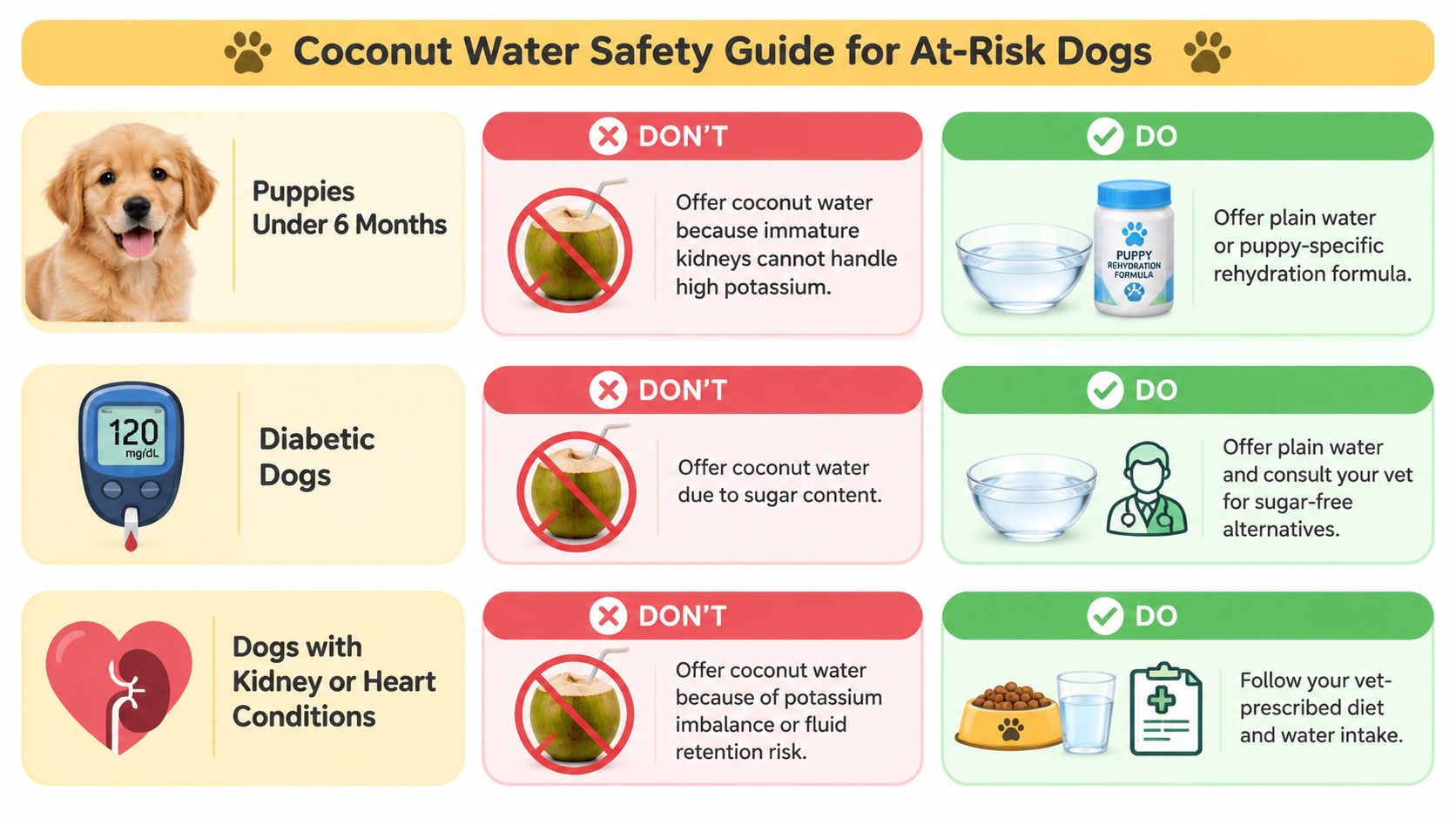
For puppies under six months, skip coconut water. Their developing bodies don't need an extra potassium-containing treat, and plain water alongside age-appropriate puppy food is the simpler, safer routine. A puppy with diarrhea, vomiting, weakness, or poor drinking needs veterinary guidance rather than a homemade hydration strategy.
Diabetic dogs
Diabetic dogs should not receive coconut water. Natural sugar is still sugar, and a sweet drink can complicate blood-glucose control and insulin management. Keep plain water available and ask the veterinarian about any alternative before introducing a new beverage.
Kidney disease
Avoid coconut water for dogs with kidney disease. Veterinary sources specifically caution that the potassium load matters because impaired kidneys may not clear extra potassium effectively. This veterinary reference on coconut water safety advises skipping it entirely for dogs with kidney disease or those taking heart medications.
Heart disease and heart medication
Dogs taking heart medications should also skip coconut water unless their veterinarian gives direct approval. The concern is not just the drink itself, but the interaction between added potassium, the dog's underlying condition, and medication effects. Potassium regulation can influence muscle and cardiac function, so this isn't a sensible food to test casually.
Healthy senior dogs without diabetes, kidney disease, heart disease, or relevant medication may tolerate a tiny serving if their veterinarian agrees. Still, the default for special cases is plain water and condition-specific veterinary advice, not coconut water.
Where Coconut Water Fits in a Dog's Daily Nutrition and Supplement Routine
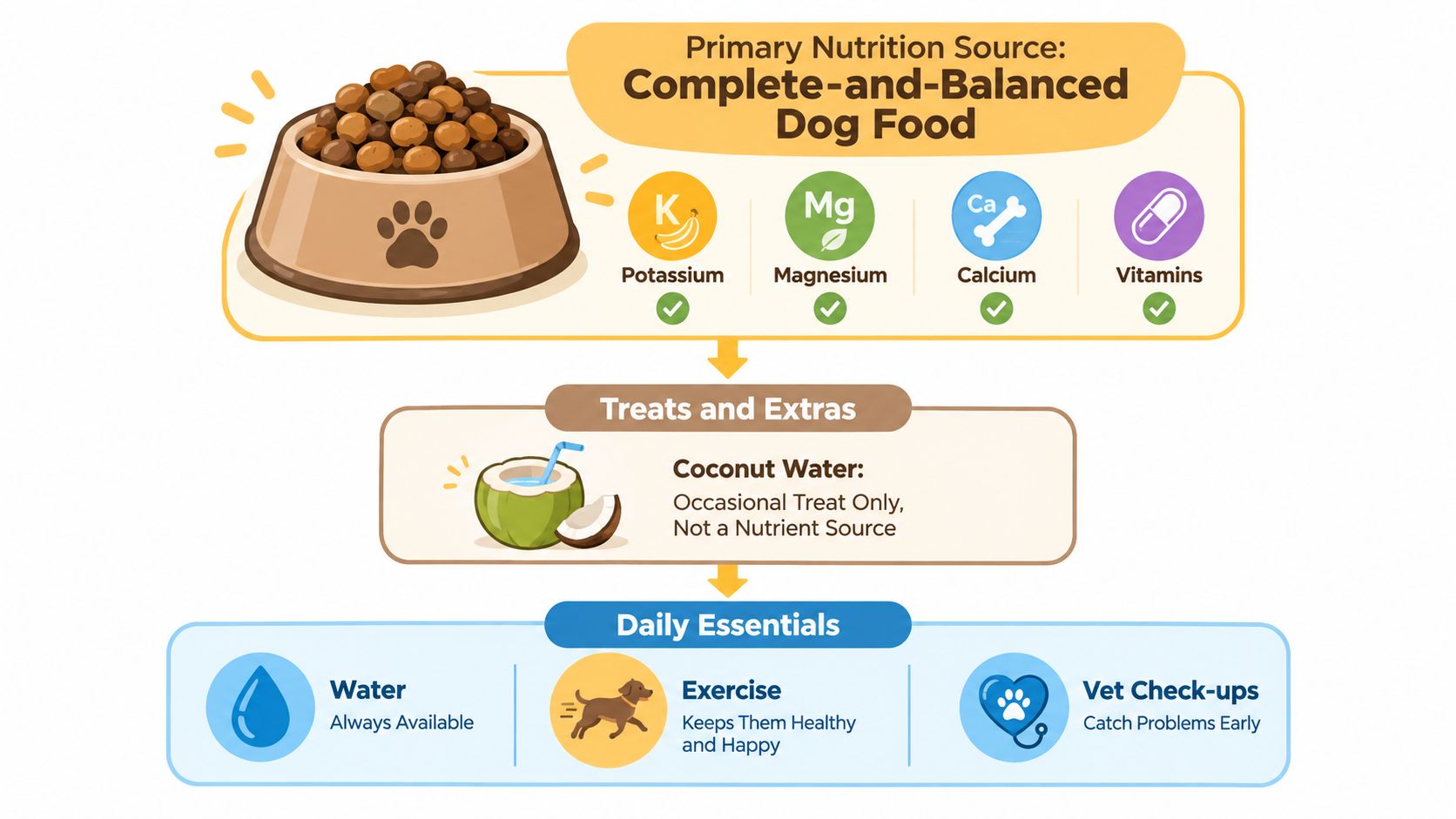
Coconut water is a treat, not a supplement. A complete-and-balanced dog food already supplies essential nutrients, including minerals such as potassium, magnesium, and calcium, in a formulation designed for the dog's life stage. Adding coconut water doesn't improve that balance. It adds sweetness, calories, and another variable to the routine.
That matters most for dogs whose weight, blood glucose, digestion, or medication schedule requires consistency. A dog receiving joint support, omega-3 fatty acids, probiotics, or another veterinarian-recommended supplement doesn't gain a clear nutritional advantage from adding coconut water. The drink can make calorie tracking less precise and may confuse owners about which product is responsible if digestive symptoms appear.
Build the routine in the right order
- Complete-and-balanced food comes first. It should anchor daily nutrition.
- Veterinarian-recommended supplements come next. Use them for a defined need, with dosing that fits the dog.
- Plain water handles hydration. Keep it clean, fresh, and available.
- Coconut water stays optional. Use it only as a rare flavor topper for a healthy, weight-stable dog.
Owners looking for a broader framework can read this guide to holistic dog nutrition. The central principle is straightforward: optional extras shouldn't displace the essentials.
For aging dogs with several routine support needs, DA-1™ Daily All-in-One - Senior Dog Support, Joints, Skin/Coat & More is described as a complete multi-system formula with 18 human-grade ingredients targeting cells, gut, and joints. That type of product belongs in a planned nutrition and supplement conversation, while coconut water remains an occasional indulgence with no standardized therapeutic role.
Signs of Adverse Reaction and When to Call Your Vet
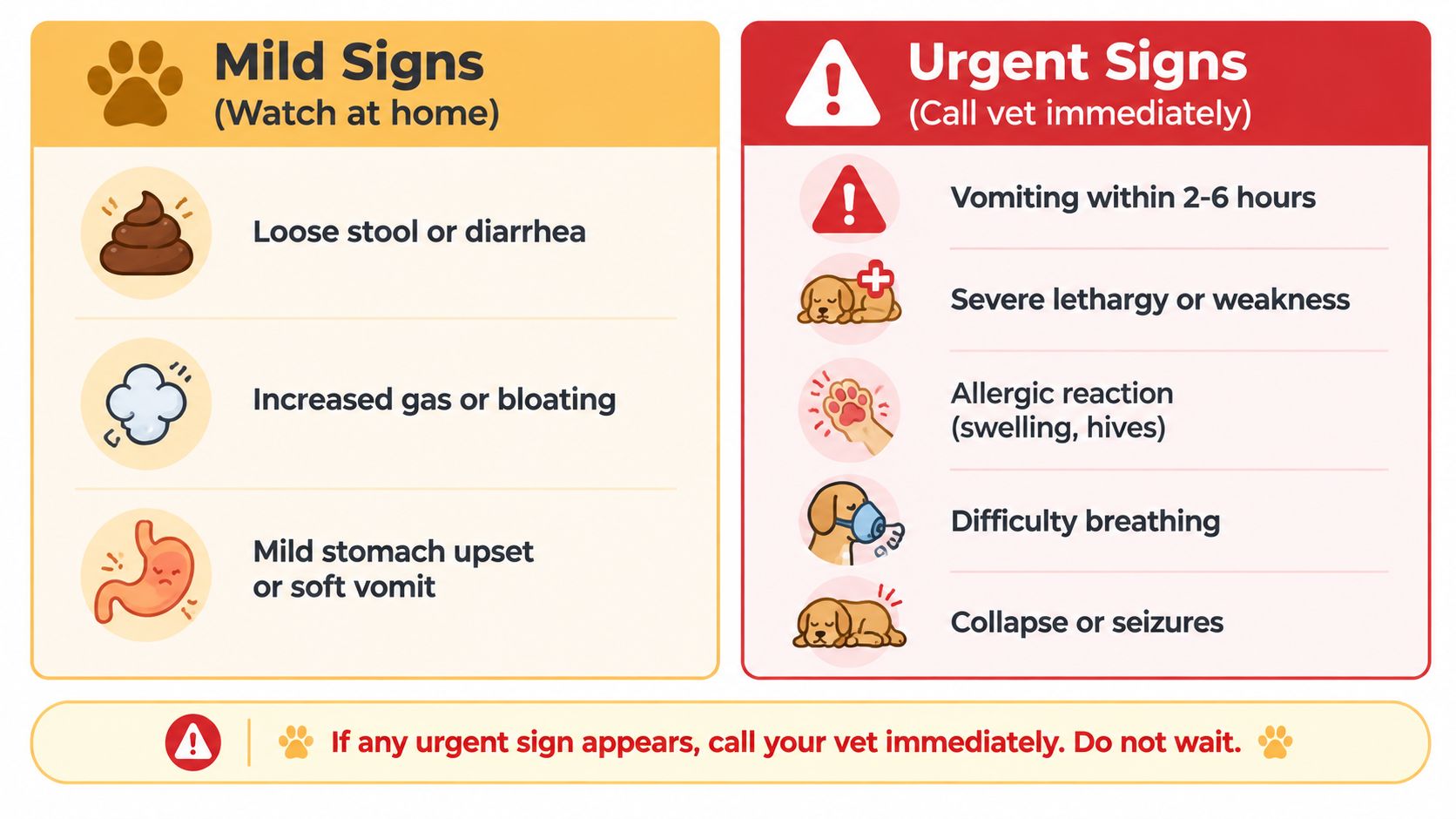
Watch your dog after the first serving, especially during the first few hours. The most common issue is digestive intolerance, often seen as loose stool, gas, bloating, or stomach upset. Stop offering coconut water at the first digestive sign and don't give another serving to “test” whether the reaction repeats.
Some symptoms require faster action. Call your veterinarian the same day for vomiting or diarrhea, particularly if your dog is small, elderly, medically fragile, or taking medication that affects potassium or fluid balance. If diarrhea persists beyond 12 hours, the dog needs veterinary advice rather than continued home monitoring.
Signs to monitor
Milder signs that still mean stop the drink:
- Loose stool: Don't offer more coconut water.
- Increased gas or bloating: Watch closely and keep plain water available.
- Mild lethargy: If it doesn't resolve promptly, call your veterinarian.
- Temporary increased thirst: Don't respond by offering more sweet liquid.
Urgent signs that need immediate veterinary contact:
- Repeated vomiting or severe diarrhea: Fluid loss can worsen quickly.
- Weakness, wobbliness, or profound lethargy: These signs can indicate a serious electrolyte or medical problem.
- Tremors or collapse: Treat these as emergencies.
- Pale gums or difficulty breathing: Seek immediate care.
- Refusal to drink water: Don't wait for coconut water to become the solution.
Allergic reactions can include facial swelling, hives, sudden vomiting, collapse, or breathing difficulty. For additional guidance on concerning stool changes, see what yellowish diarrhea can mean in dogs.
Write down the product, ingredients, approximate amount, and time you offered it. Share those details with your veterinarian. The safest rule is simple: healthy dog, tiny measured treat, plain water first; medical condition or dehydration signs, skip coconut water and call the vet.
Pure Paw Labs offers science-backed, human-grade daily supplements for dogs, including a single-scoop formula designed to support joint, skin and coat, digestive, immune, and stress-related needs. If you're building a consistent nutrition routine and want to keep optional treats like coconut water in their proper place, visit Pure Paw Labs to review the available support options.