


A small amount of ground cinnamon is usually not an emergency for most dogs, while more than about 1 teaspoon of cinnamon powder can trigger problems. Cinnamon essential oil is different, because a few drops may be enough to cause toxicity.
Your dog may have grabbed a cinnamon roll, licked powder from a spice jar, or knocked over a shaker while you were looking away. Stay calm, but don't treat every “dog ate cinnamon” situation the same. The form matters more than the name on the label. Powder, a stick, a baked product, and essential oil create different risks, and inhaled powder can be more urgent than swallowed spice.
Table of Contents
- What to Do in the First Few Minutes
- How Risky Is Cinnamon for Dogs Really
- Different Forms of Cinnamon and Their Risk Levels
- Warning Signs and Symptoms to Watch For
- When to Call Your Vet or Poison Control
- Preventing the Next Cinnamon Mishap
What to Do in the First Few Minutes
If your dog ate a small amount of ground cinnamon on food, the usual response is home monitoring. Essential oil exposure, inhaled powder, a chewed stick, or a large amount of straight powder deserves a faster call to a veterinarian.
Start with these actions
- Remove the source. Take away the shaker, jar, wrapper, food, or spill. Check your dog's mouth only if you can do it safely, and don't put your fingers into a resisting dog's mouth.
- Identify the form. Was it ground powder, a cinnamon stick, an extract, essential oil, or a baked good? Look at the ingredient label if another product was involved.
- Estimate the amount. Note whether your dog took a lick, swallowed part of a treat, chewed the container, or consumed an unknown quantity. Compare the amount with your dog's size. A small dog and a large dog won't face the same exposure from the same amount.
- Check breathing first. Coughing, gagging, choking, or labored breathing after powder exposure changes the situation. Move your dog away from the spill and seek veterinary guidance if breathing doesn't quickly settle.
- Write down the details. Record the time, product name, form, estimated amount, and any existing liver disease, diabetes, medication use, or other health condition. This information helps a veterinary professional make a quicker decision.
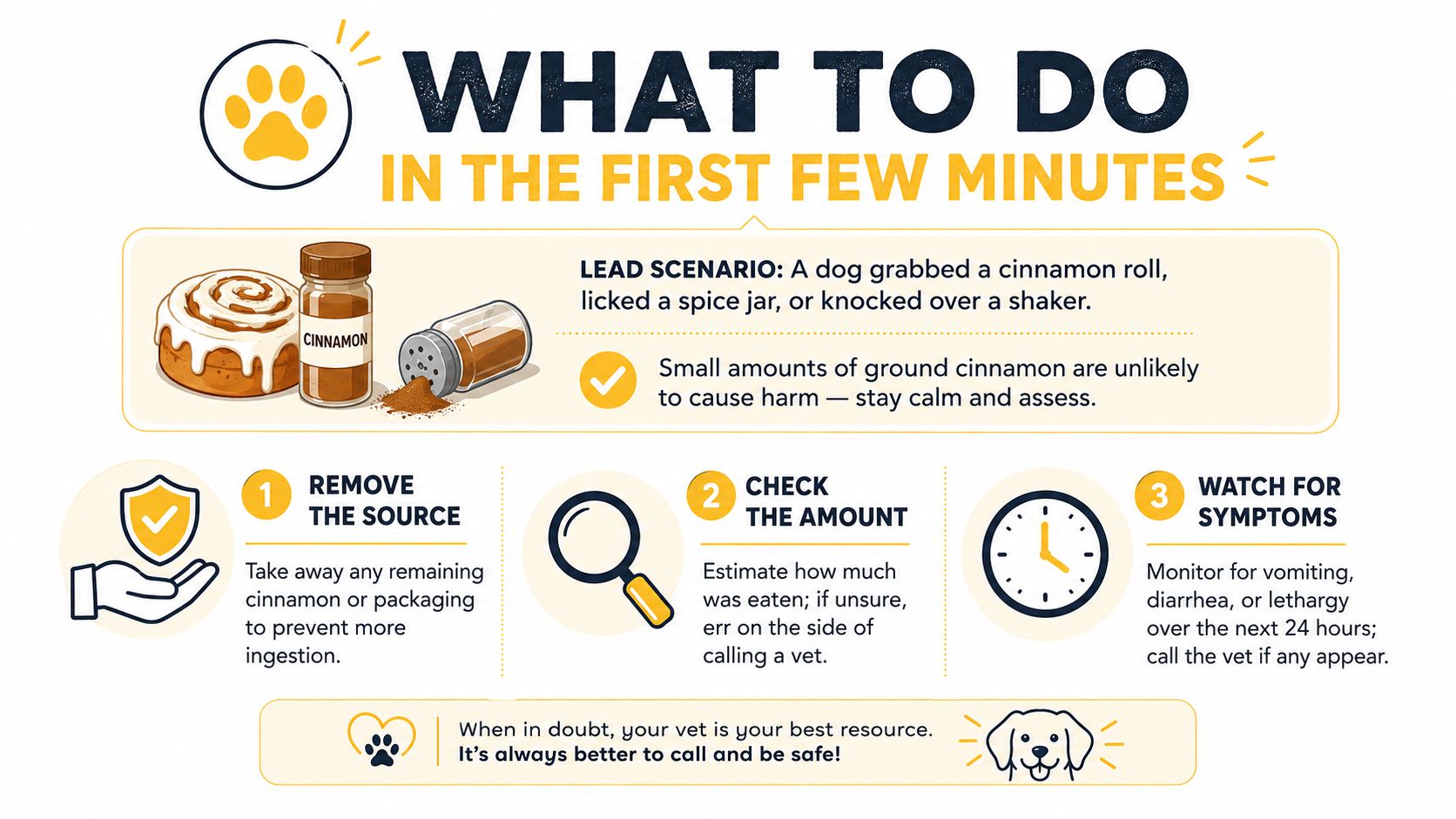
Practical rule: Don't induce vomiting, give hydrogen peroxide, force food or water, or try a home remedy unless a veterinarian specifically directs you.
For broader emergency-readiness ideas, keep a reliable guide to dog first aid during Patagonia crossings with your pet-care information. If loose stool develops, avoid improvising treatment and review appropriate guidance about canned pumpkin for dogs with diarrhea only as general information, not as a substitute for veterinary advice.
The reason for this careful first check is simple. Cinnamon isn't one uniform substance in practice. Its concentration, physical shape, and route of exposure determine what your dog may experience.
How Risky Is Cinnamon for Dogs Really
ASPCA guidance generally lists cinnamon as non-toxic to dogs, but that doesn't mean every cinnamon product is safe. Veterinary guidance cited by the ASPCA cinnamon safety information distinguishes ordinary culinary exposure from concentrated oil, inhaled powder, and large quantities.
The main risk drivers are dose, body size, chemical form, and existing disease. A light amount baked into food is diluted by the rest of the recipe. Straight powder is more concentrated, and essential oil contains cinnamon compounds in a much stronger form.
Use the amount as a triage clue
Guidance derived from Pet Poison Helpline materials commonly places concern for many pets at more than about 1 teaspoon of cinnamon powder, while a few drops of cinnamon essential oil can be enough to create toxicity. These are not permission slips or guaranteed safe limits. A small dog, a dog with liver disease, or a dog with another condition may need advice at a lower exposure.
Ceylon cinnamon is generally considered safer than cassia because cassia contains more coumarin, but the distinction doesn't make a large or concentrated exposure harmless. Cinnamon can irritate the mouth and digestive tract, and inhaled powder can irritate the airways even when severe systemic toxicity is unlikely.
| Dog size | Low risk, monitor at home | Moderate risk, call vet | High risk, urgent care |
|---|---|---|---|
| Small dog | A trace or small lick of ground cinnamon on food, with normal breathing | More than a small bite of straight powder, unknown amount, or any symptoms | Essential oil, breathing difficulty, collapse, or a swallowed stick |
| Medium dog | A small amount of diluted cinnamon in ordinary food, with no symptoms | A noticeable amount of straight powder or a chewed stick | Essential oil, persistent coughing, repeated vomiting, or severe weakness |
| Large dog | A small taste of baked food or a light dusting of powder, with normal behavior | A large spill, unknown quantity, or symptoms after ingestion | Any oil exposure or serious breathing, neurologic, or collapse signs |
This table is a practical sorting tool, not a diagnosis. For routine diet questions unrelated to the exposure, discuss supplements and ingredients with a professional, including information about green tea for dogs, because human wellness ingredients aren't automatically appropriate for dogs.
Different Forms of Cinnamon and Their Risk Levels
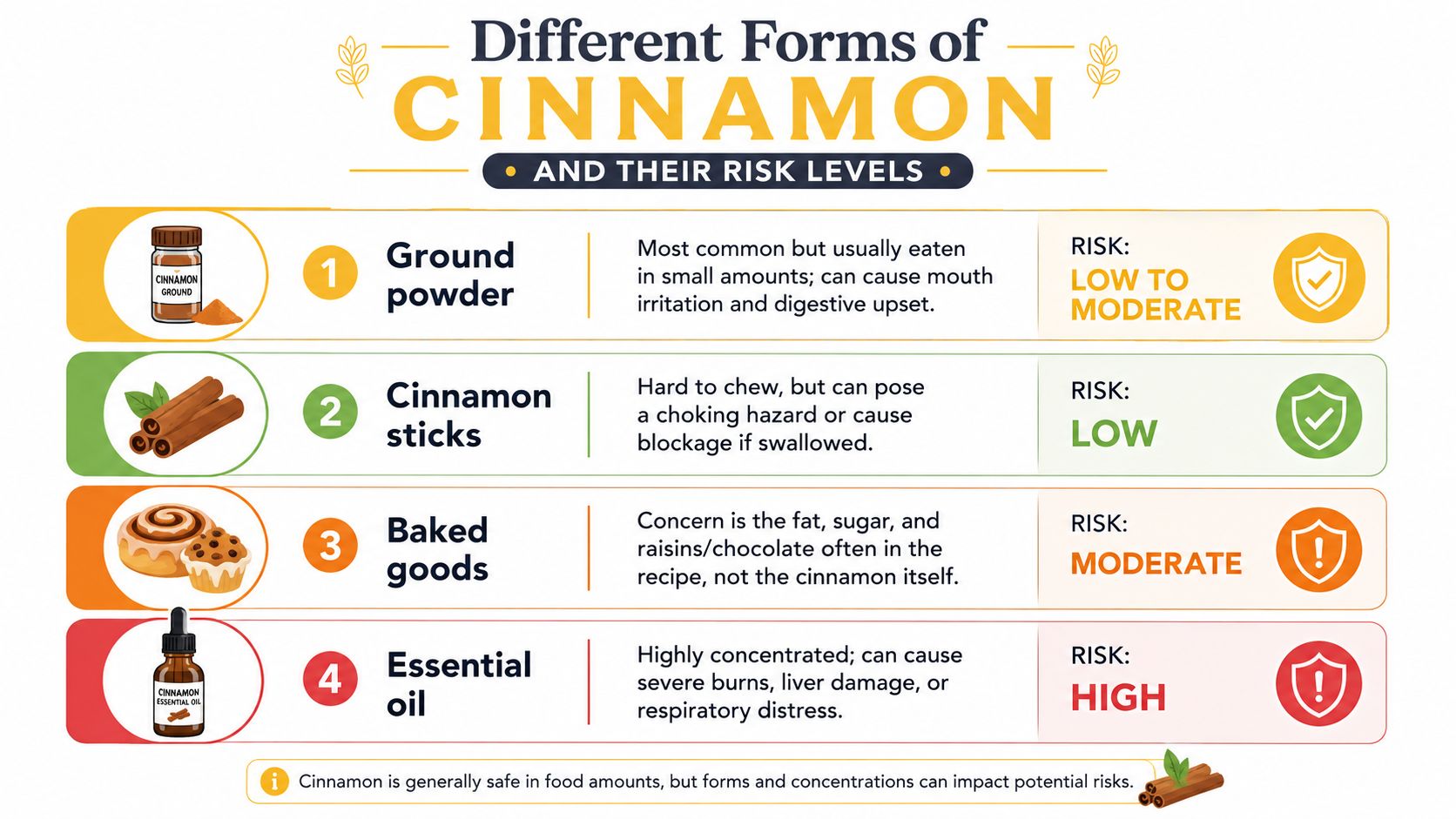
The phrase “cinnamon exposure” hides four very different situations. Ground powder is usually the least alarming in a small amount. Essential oil is the form I would treat most seriously.
Ground powder
Risk rating: low to moderate. A small swallowed amount commonly causes no serious problem, but straight powder can irritate the mouth and throat. If your dog inhales it, coughing, gagging, choking, or breathing difficulty can develop.
Remove the powder, offer access to normal water without forcing it, and monitor a dog that remains comfortable. Call promptly for a large or unknown amount, persistent cough, or any breathing change.
Cinnamon sticks
Risk rating: low for toxicity, higher for mechanics. The stick can scratch or redden the mouth, splinter, cause choking, or create a blockage if swallowed. Don't assume a stick is safe because it contains less loose powder.
If your dog chewed one, remove fragments and call your veterinarian for advice. Seek urgent care for choking, repeated gagging, abdominal pain, repeated vomiting, or sudden loss of normal behavior.
Baked goods
Risk rating: depends on the recipe. The cinnamon may be only a minor part of the problem. Sugar, butter, raisins, chocolate, xylitol, nutmeg, or other ingredients can create separate concerns, so save the packaging or recipe for the call.
A tiny bite of a plainly made treat may call for observation, but don't use the cinnamon amount alone to judge a cinnamon roll or dessert.
Essential oil
Risk rating: high. Cinnamon essential oil is concentrated and can cause toxicity in much smaller amounts than powder. Exposure may lead to mouth irritation, vomiting, diarrhea, changes in heart rate, low blood sugar, liver stress, or respiratory problems.
Call a veterinarian or poison service immediately after ingestion or skin contact. If oil gets on the coat, prevent licking and ask for instructions before bathing, because the correct decontamination method depends on the product and exposure.
Warning Signs and Symptoms to Watch For
A dog that licks a small amount of powder may act completely normal. You might see a brief lip smack or mild mouth irritation, then no further change. Keep observing rather than repeatedly handling the mouth or forcing water.
A different pattern follows inhalation. Your dog may sneeze, cough, gag, or paw at the face immediately after breathing in a cloud of powder. A brief cough that stops is less concerning than ongoing coughing, noisy breathing, blue or gray gums, or visible effort to breathe.
Match the symptom to the exposure
During the hours after ingestion, watch for vomiting, diarrhea, drooling, mouth redness, coughing, lethargy, weakness, or changes in heart rate. Oil exposure raises the concern level because concentrated compounds can affect more than the digestive tract.
- One mild episode: A single vomit or brief cough in a dog that quickly returns to normal may be monitored while you call for advice.
- Persistent digestive signs: Repeated vomiting, ongoing diarrhea, refusal to drink, or worsening weakness warrants prompt veterinary contact.
- Possible low blood sugar: Trembling, marked weakness, disorientation, or collapse is urgent, particularly after essential oil exposure or in a small dog.
- Possible liver stress: Unusual lethargy, appetite changes, or yellowing of the eyes or gums requires veterinary assessment rather than home treatment.
- Breathing trouble: Difficulty breathing, repeated choking, or coughing that doesn't settle means emergency care.
Don't give a supplement to “counteract” the exposure. If your older dog already uses a routine wellness product such as DA-1™ Daily All-in-One - Senior Dog Support, Joints, Skin/Coat & More, tell the veterinarian the product name and ingredients during the call. For ongoing stool changes unrelated to this event, you can also review yellowish diarrhea in dogs, but don't let an article delay urgent care.
When to Call Your Vet or Poison Control
Call your veterinarian when the amount is more than a small taste, when you can't estimate the quantity, or when your dog is small, medically fragile, or has a pre-existing condition. Any cinnamon essential oil exposure deserves urgent professional guidance, even if your dog looks normal.
Use a poison service when the product is concentrated, the ingredient list is unclear, or you need help calculating risk outside clinic hours. The ASPCA Animal Poison Control number is 888-426-4435, and the Pet Poison Helpline number is 855-764-7661. Keep the product container nearby and say:
“My dog weighs [size], ate [form and product], approximately [amount], at [time]. My dog is currently showing [symptoms or no symptoms].”
Don't wait for symptoms after oil exposure, a large powder exposure, or a swallowed stick. A poison professional can help determine whether home observation, a same-day appointment, or immediate treatment is appropriate.
Choose the right level of care
- Monitor at home: Small ground-cinnamon exposure, normal breathing, normal behavior, and no concerning ingredients in the food.
- Call promptly: Unknown amount, more than a small bite of straight powder, chewed stick, symptoms, or a dog with relevant medical conditions.
- Go to emergency care: Breathing difficulty, repeated vomiting, tremors, severe weakness, pale or abnormal gums, collapse, or any rapidly worsening sign.
Don't induce vomiting or give peroxide while waiting for instructions. Take the package, remaining product, or a photo of the label with you if you travel to a clinic.
Preventing the Next Cinnamon Mishap
Most cinnamon incidents start with access, not deliberate feeding. A dog follows the smell of a sweet baked item, knocks a container from a counter, or investigates a trash bin. Prevention works best when you secure both the cinnamon and the foods that carry it.
Store each form with its actual risk in mind
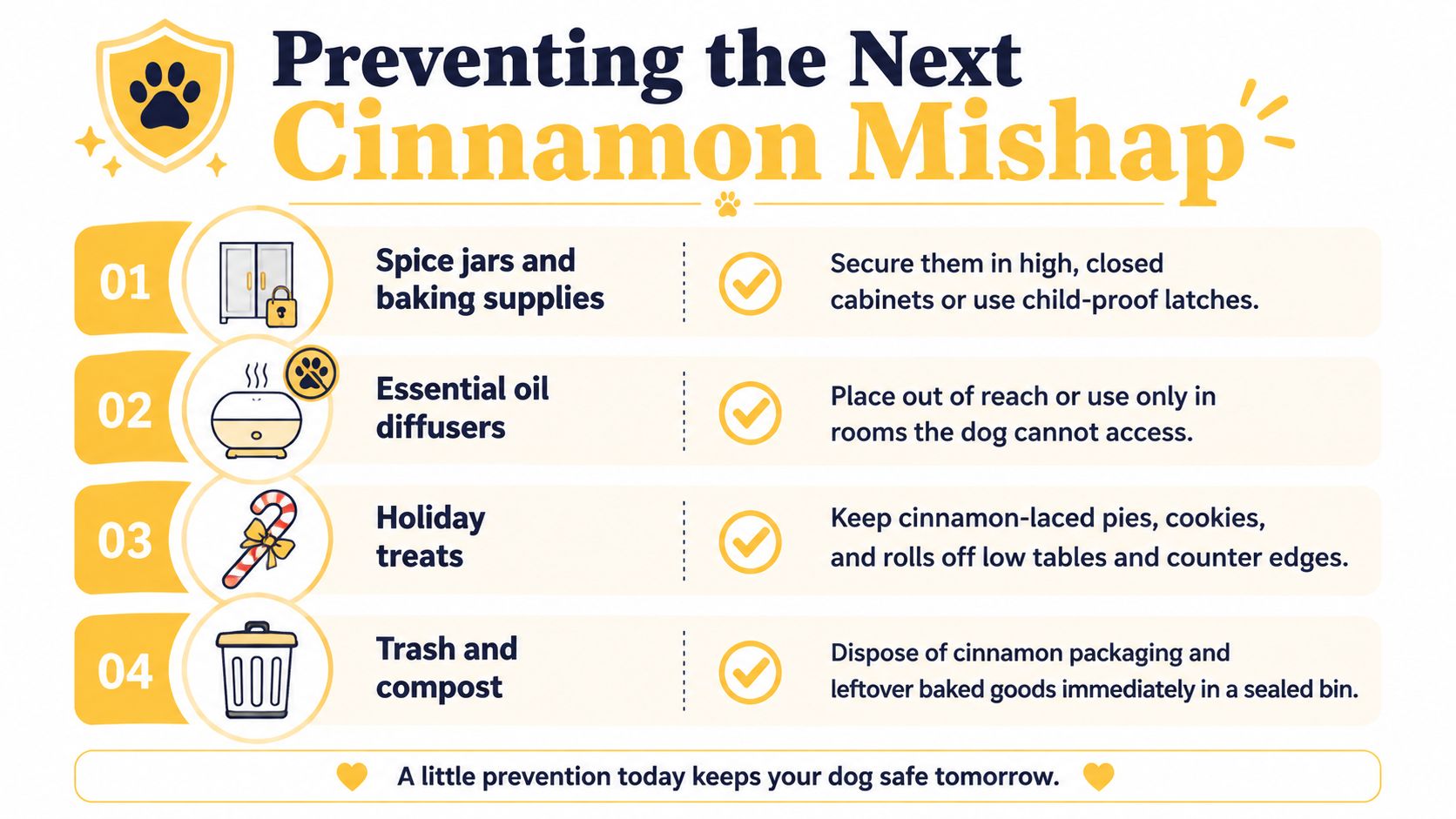
Keep spice jars and baking supplies in a high, closed cabinet, preferably behind a latch if your dog can reach counters. Store cinnamon sticks with the same care, especially if your dog chews objects or swallows food quickly.
Essential oil needs stricter separation. Keep bottles and diffusers out of reach, and use them only in rooms your dog can't enter if the product could spill or be licked. Wipe up drips immediately, and don't leave used tissues, cotton pads, or packaging where a dog can investigate.
Holiday foods deserve a label check before they reach a low table. Cinnamon rolls, pies, cookies, and flavored breads may contain ingredients that are more concerning than cinnamon, so keep them away from counter edges and dispose of leftovers in a sealed bin.
Build a simple household response plan
Save veterinary and poison-control contacts in your phone, then write them somewhere visible for anyone caring for your dog. Keep a current list of medications, existing conditions, approximate body size, and usual behavior. A clear baseline makes changes such as weakness, unusual quietness, or appetite loss easier to recognize.
Household rule: Secure the source first, identify the form second, and judge symptoms before deciding to wait.
Quick decision guide
- Small amount of ground powder: Remove access and monitor if your dog is comfortable.
- Inhaled powder: Watch breathing closely and call if coughing or distress persists.
- Cinnamon stick: Treat choking and blockage as the concern, not just spice toxicity.
- Baked good: Check the full ingredient list, not only the cinnamon.
- Essential oil: Call a veterinarian or poison service immediately.
- Any collapse or breathing difficulty: Go to emergency care.
Pure Paw Labs offers daily, human-grade powdered supplements for routine support across areas such as joints, skin and coat, gut health, immunity, and stress. If you're looking for a simple wellness routine after this incident, visit Pure Paw Labs and review the available options with your veterinarian.