


Have you ever wondered why one probiotic powder helps a dog's stools settle while another seems to do almost nothing? The answer usually isn't that probiotics fail, it's that many products never clear the basic quality bar before they're mixed into food. For dog owners trying to choose the best probiotic powder for dogs, the question is whether the powder can still be useful by the time it reaches the gut.
Table of Contents
- Why Most Probiotic Powders Fail Before They Reach the Gut
- Understanding Probiotics and Postbiotics for Dogs
- How to Read a Probiotic Label Like a Veterinarian
- Powder vs Capsules vs Chews vs Treats
- Safe Dosing Guidelines and When to Consult Your Vet
- Beyond Gut Health The Case for All-in-One Daily Supplements
- Troubleshooting Common Probiotic Problems
Why Most Probiotic Powders Fail Before They Reach the Gut
A probiotic powder only has a chance to work if the organisms inside are still viable, correctly identified, and present in a meaningful amount. Cornell University's Riney Canine Health Center says probiotic labels should include an expiration date, the exact species, the number of microorganisms in the product, and a guarantee for the number of live organisms at expiry, because viability is central to whether the product can plausibly work (Cornell University).
The label is the first filter
Many powders look similar in the bag and feel similar in the scoop. Many owners get misled because the front label looks polished while the back panel stays vague. A real probiotic decision starts with the details that let you compare products side by side, not with a mascot, flavor name, or a broad wellness promise.
Practical rule: if the label hides the strain identity or won't tell you how many live organisms are present at expiry, treat that as a warning sign.
A useful mental model is this, a probiotic powder is like a delivery truck carrying living cargo. If the truck is underloaded, poorly sealed, or delayed past its expiration window, the cargo can arrive in bad shape even if the box looked impressive at purchase. That is why the quality conversation starts with the label, not the marketing.
For many dogs, the practical target is a daily supplement in the 1 to 10 billion CFU range, depending on the strains used, because that's the kind of dose veterinarians point to as meaningful for routine support (Cornell University). In other words, a powder that can't state its live count clearly isn't just hard to compare, it's hard to trust in a daily routine.
Understanding Probiotics and Postbiotics for Dogs
Probiotics, prebiotics, and postbiotics play different roles in canine gut health, and understanding each one helps you choose the right product. The gut microbiome is the community of microbes already living in your dog's digestive tract. Probiotics add live, beneficial microorganisms. Postbiotics are the compounds those microbes produce after they do their work. For a clear overview of how these pieces fit together, see dog gut health.

What each term actually means
Probiotics are live microorganisms given in a way that can support the existing gut environment. Prebiotics are the food those organisms use, so they help the probiotics settle in and stay active. Postbiotics are the beneficial compounds produced after the microbes do their work, which is why some modern formulas aim to support the whole microbial system rather than focusing only on added bacteria.
That distinction matters because “contains probiotics” still leaves too many questions unanswered. Strain identity tells you more than a generic label ever will, because different strains are used for different jobs. A powder built for digestive support is not the same thing as a broad wellness blend, even if both sit in the same supplement aisle.
Veterinary evidence for canine probiotics has also moved beyond casual anecdote. A 2023 peer-reviewed review in PubMed Central summarizes that an oral probiotic mixture accelerated clinical recovery and intestinal microbiota normalization in dogs with acute hemorrhagic diarrhea, which shows why probiotics are now treated as supportive care rather than a novelty (PubMed Central review). That does not mean every powder works for every dog, but it does show that the category has real clinical grounding.
For daily use, the format often matters as much as the organism list. Powders are popular because they can be mixed into food, adjusted more easily for different body sizes, and used consistently during routine stomach upset or diet transitions. Some veterinarians point to a daily supplement in the 1 to 10 billion CFU range as a practical target for routine support, depending on the strains used. In other words, a powder that cannot state its live count clearly is hard to compare and hard to trust in a daily routine.
The same logic explains why an all-in-one powder can make sense for some dogs. DA-1™ Daily All-in-One - Senior Dog Support, Joints, Skin/Coat & More is described as a single-scoop formula with 18 human-grade ingredients targeting cells, gut, and joints, which is useful if you would rather not separate gut support from other daily needs. That kind of product is not a replacement for reading the probiotic side of the label, but it does show why format and formula should be judged together.
How to Read a Probiotic Label Like a Veterinarian
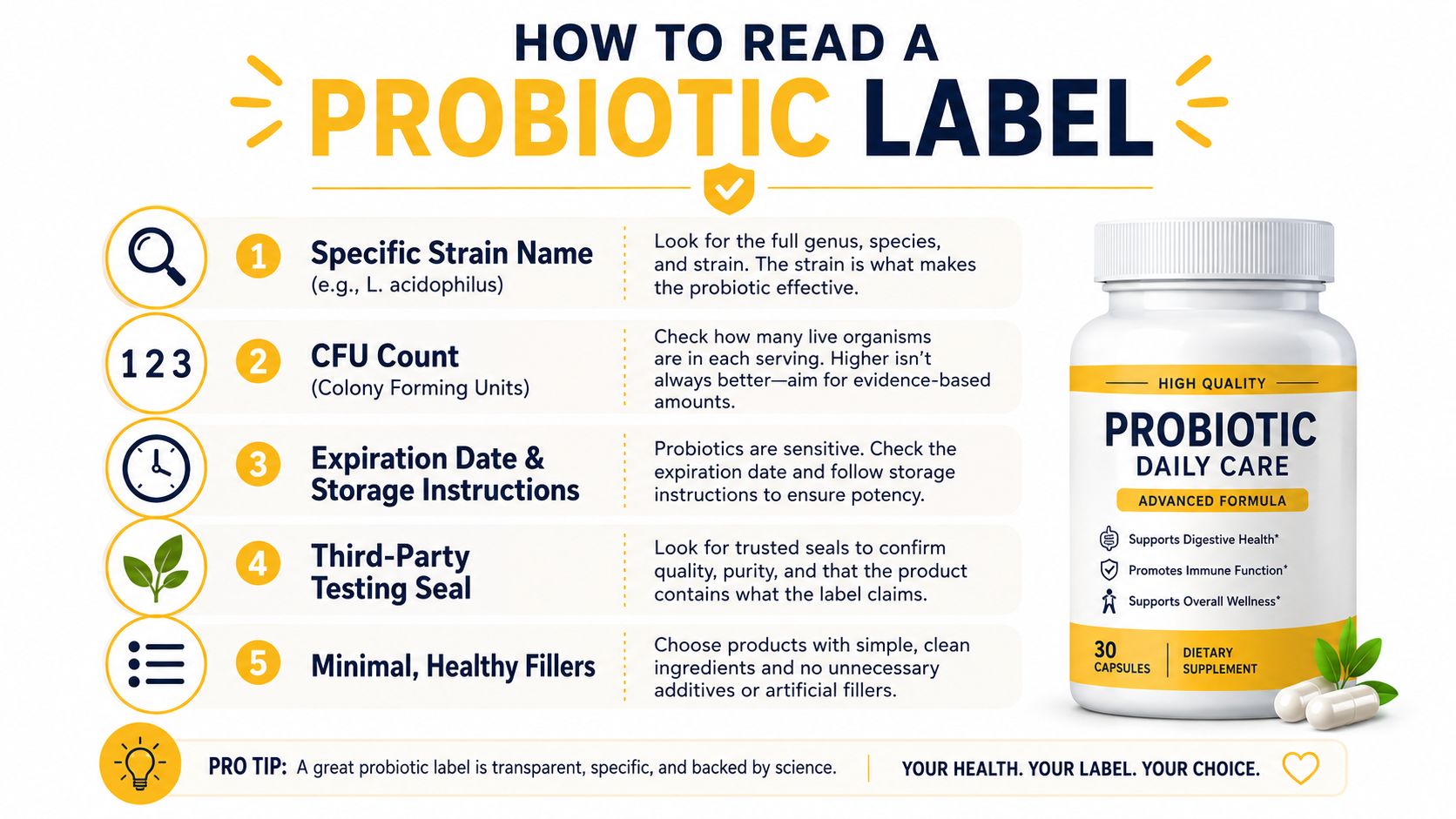
What tells you whether a probiotic powder has a real chance of helping your dog? The label does. A strong label gives enough detail to judge what is inside, how much is inside, and whether the organisms are still viable by the time your dog eats the powder. Skip the marketing language and look for the facts that a veterinary nutritionist would check first.
Start with the information that proves quality
The first detail to check is strain identity. Species names matter, but strains are more specific and usually more informative. If a label only says “probiotic blend,” you are being asked to trust the package instead of the formulation.
Then look for the CFU count at expiration, not just at manufacture. Live organisms can lose viability during storage, so a count that holds through the expiry date tells you more about the dose your dog gets. Cornell University explains this point clearly in its probiotic guidance, and it is one of the easiest ways to separate a carefully made powder from one that looks good on the shelf (Cornell University).
Storage instructions come next. A powder that needs careful handling is not automatically a poor product, but you do need to know whether it should stay cool, dry, and tightly sealed. If the label leaves out storage guidance, you cannot protect the product the way the manufacturer expects. For a closer look at quality checks tied to manufacturing, see how batch testing works.
Use the dose range as a reality check
Practical veterinary guidance often points to about 1 to 10 billion CFUs per day for routine probiotic support in dogs, depending on the strains used. That range helps you spot powders that are too lightly dosed for everyday use. It also explains why many powders are built as daily supplements rather than one-time fixes.
The point is not to chase the biggest number. The point is to match live count, strain choice, and stability to the dog in front of you. A powder that cannot state its live count clearly lacks the transparency needed for daily use.
For buyers comparing products online or in a store, that checklist is enough to separate a serious probiotic from a decorative one. If a label is vague on strains, vague on CFUs, and vague on storage, it is asking for blind trust. Dogs do not benefit from blind trust, they benefit from measurable formulation choices.
Powder vs Capsules vs Chews vs Treats
Powder isn't automatically the right format, it's just the most flexible one when your dog eats meals consistently and you want to mix supplementation into food. Capsules can be precise, chews can be convenient, and treat-style options can improve compliance for picky eaters, but each format trades something away.
| Probiotic Format Comparison for Dogs | Dosing Flexibility | Picky Eater Friendly | Shelf Stability | Best For |
|---|---|---|---|---|
| Powder | High, because it can be adjusted and mixed into food | Moderate, depending on taste and texture | Often strong when stored well | Daily routines, mixed feeding, flexible dosing |
| Capsules | Moderate, because dosing is fixed | Low to moderate unless hidden in food | Often strong | Owners who want a defined serving |
| Chews | Moderate | High for many dogs | Usually practical | Dogs that refuse powders or pills |
| Treats | Low to moderate | High | Varies by formula | Simple compliance, occasional use |
Powders stand out when a dog's meals are predictable and the owner wants to blend one supplement into the routine. They're also useful for dogs on prescription diets or simplified feeding plans, because you can often add the powder without changing the whole meal format. That said, if your dog rejects anything with a texture change, a chew or capsule may be easier to sustain.
The other difference is transparency. Powders often let brands show the formula more plainly, while chew and treat products sometimes add flavor systems, binders, and other extras that can obscure what you're really paying for. That's why label literacy still matters even when the format is convenient.
Bottom line: choose the format your dog will actually take every day, not the one that sounds most clinical on paper.
The phrase “best probiotic powder for dogs” only makes sense when it's tied to a real use case. If your dog needs flexible dosing, mixes easily with meals, and does best with a routine supplement, powder is a strong candidate. If your dog is fussy, stress-prone, or hard to medicate, another format can win on practicality even if it loses on dosing flexibility.
For owners who want more guidance on blending supplements into food routines, this supplement powder guide is a useful companion read.
Safe Dosing Guidelines and When to Consult Your Vet
Start with the serving listed on the package, then compare it with the broader veterinary guidance. For routine support, 1 to 10 billion CFUs per day is a practical benchmark, and higher-potency powders often sit in the 5 to 10 billion CFU per serving range, as noted by Cornell University. If a medium or large dog has a more specific digestive concern, some veterinary guidance places the daily target higher, around 25 to 50 billion CFUs/day, which is the point where a vet should help decide whether the product and dose fit.

What to watch during the first days
A probiotic is usually doing something useful when stool starts to look more formed, gas eases, or appetite becomes steadier. Mild adjustment during the first days can happen, especially if the gut is already unsettled or the dog is switching foods. That is why gradual consistency matters more than dramatic dose changes.
The video below gives a visual overview of dosing logic and can help you sanity-check the numbers on a package.
When to stop and ask for help
If diarrhea persists, vomiting starts, or your dog becomes lethargic, do not keep experimenting at home. Probiotics are supportive, not a diagnostic tool, so they will not address dehydration, infection, or other underlying causes of GI distress. A vet visit matters most when the signs are severe, worsening, or paired with blood in the stool or clear pain.
Puppies, seniors, and dogs recovering from antibiotics are the most common groups where owners ask whether to use a probiotic daily. In those cases, the product choice and dose should be tied to the reason you are using it, not just to the label's front-panel promise. A powder can be the right format, but it still has to fit the dog's health context.
Beyond Gut Health The Case for All-in-One Daily Supplements
A standalone probiotic makes sense when the only goal is digestive support. Once you're trying to cover gut health, mobility, skin, coat, or stress-related needs in the same household routine, a broader daily supplement can be more practical than stacking separate products.
Why consolidation changes the decision
The advantage of an all-in-one powder is not novelty, it's compliance. Fewer containers on the counter means fewer missed doses, less confusion about timing, and less guesswork about which product is doing what. For dogs that already need daily support across several areas, one scoop can be easier to maintain than three or four separate supplements.
That matters because a probiotic only helps if it's used consistently. A formula that sits in the cupboard because the routine is too complicated isn't useful, no matter how strong the label looks. Owners often discover that the most realistic supplement plan is the one they can repeat without friction.
The publisher's example of this approach is DA-1™ Daily All-in-One - Senior Dog Support, Joints, Skin/Coat & More, which is described as a one-scoop formula with 18 human-grade ingredients and no fillers. It's positioned as a single daily option for dogs that need support across cells, gut, and joints, which shows how an all-in-one product can simplify a broader wellness plan.
What to weigh before choosing one
An all-in-one powder is best judged by the same discipline you'd use for a dedicated probiotic. Ask whether the formula is transparent, whether the ingredients fit the dog's actual needs, and whether the daily routine will still be sustainable in a month. If the product solves several problems at once without making the label harder to read, it earns a serious look.
A broader formula only helps if each part of it is relevant to your dog, not just present on the panel.
An all-in-one can outperform a standalone probiotic for daily wellness. It doesn't replace the need for strain awareness or viable dosing, but it can reduce the need to manage separate gut, joint, and skin products one by one. For many owners, that simplicity is the difference between a supplement plan that sounds good and one that happens every morning.
Troubleshooting Common Probiotic Problems
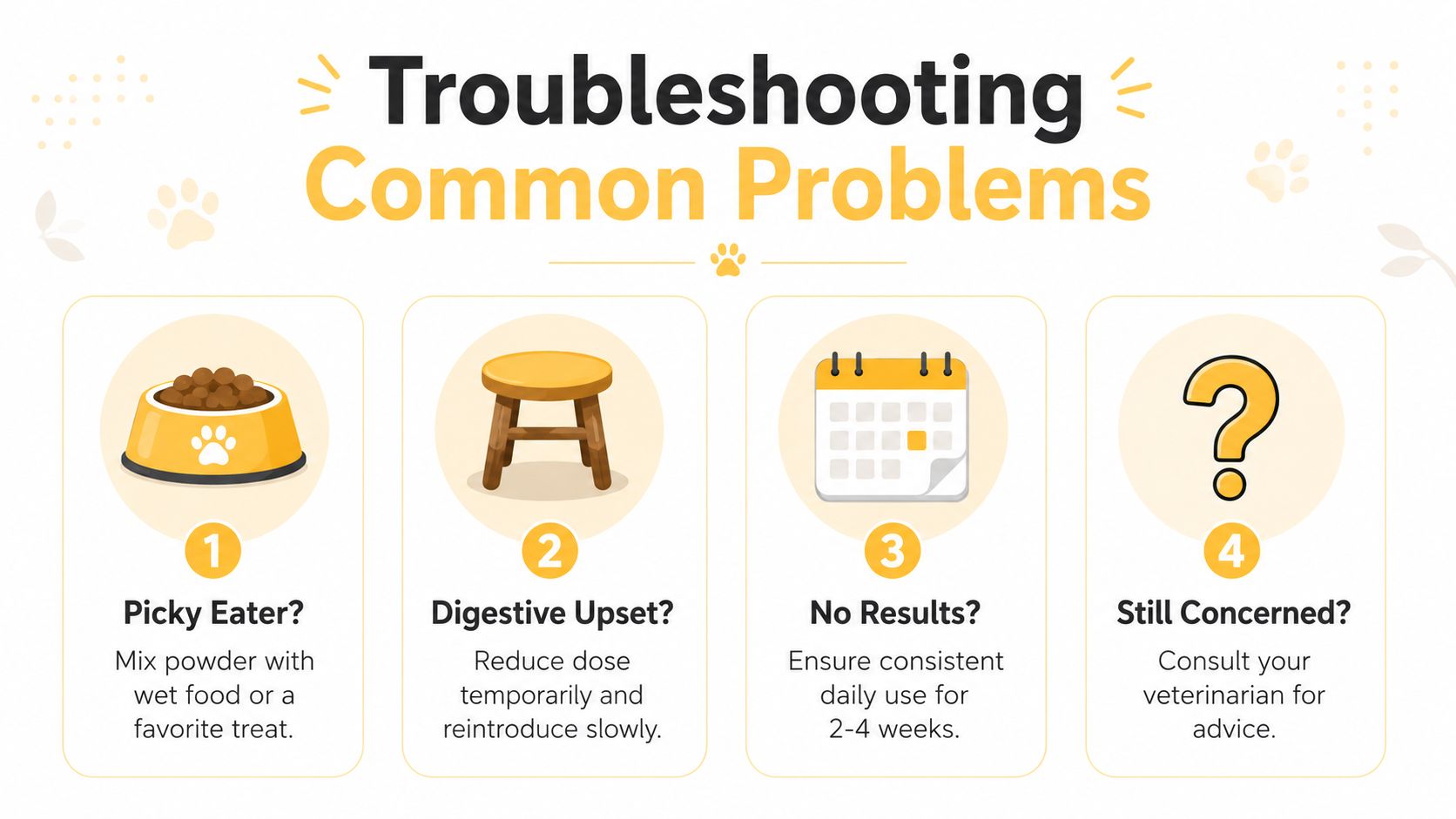
If your dog sniffs the bowl and walks away, do not assume the powder failed. Many dogs need a slower introduction, a different mixing method, or a more palatable food base before they'll accept a supplement regularly.
Fix the usual failure points
Picky eater issues usually improve when you mix the powder into wet food or another favorite food your dog already finishes. The goal is simple acceptance, like hiding medicine in a meal the dog already trusts. Digestive upset after starting a new product often means the dose moved too fast, so a temporary reduction and slower reintroduction can help. No obvious results can mean the dog has not had enough consistent daily use yet, because gut changes rarely show up after one or two meals.
Storage mistakes are another common problem. Heat, moisture, and leaving the container open can all reduce viability, which turns a potentially helpful powder into an expensive scoop of uncertainty. If the expiration date has passed or the product was stored poorly, replacement is usually smarter than hoping for the best.
A simple tracking habit helps here. Watch stool quality, appetite, and gas over a few weeks, then compare those notes to how the dog was before starting the powder. If nothing changes after a fair trial and the label was strong to begin with, the formula may not be the right match for that dog.
Best next step: if symptoms are still bothering your dog, talk to your veterinarian before switching products repeatedly.
The best probiotic powder for your dog is one that stays viable, has clear labeling, and fits your daily routine. If you want a broader daily option, Pure Paw Labs offers a human-grade all-in-one powder that combines gut support with other daily wellness needs, and you can review the full product approach at Pure Paw Labs.