


Your Shih Tzu is scratching during the night, licking their paws until the fur turns brown, or rubbing their face along the carpet. You've changed shampoos, checked for fleas, and wondered whether a different food might finally help. These signs are common in Shih Tzu dogs and allergies, but they aren't something you should dismiss as ordinary shedding or a grooming problem.
Allergies can affect the skin, ears, paws, eyes, digestion, and sometimes the people sharing the home. The encouraging part is that most itchy dogs can be helped once the underlying trigger, secondary infection, and damaged skin barrier are assessed together.
Table of Contents
- Why Shih Tzus Are So Prone to Allergies
- Recognizing Allergy Types and Their Triggers
- Grooming and Skin-Care Practices That Reduce Allergy Flares
- Food Allergies, Elimination Diets, and the Gut-Skin Connection
- Medical Treatments Your Vet May Recommend
- Preventive Habits That Keep Allergy Flares at Bay
- Frequently Asked Questions About Shih Tzu Allergies
Why Shih Tzus Are So Prone to Allergies
An owner may first notice a small change. Their Shih Tzu pauses during a walk to chew one paw, scratches behind an ear, or wakes up to rub their muzzle against the sofa. A few days later, the behavior becomes frequent. The coat may still look beautiful, so it's easy to assume the problem is cosmetic. In practice, persistent itch usually deserves a medical explanation.
Shih Tzus are predisposed to canine atopic dermatitis, an inflammatory skin disease associated with environmental allergens and genetic susceptibility. Large breed-comparison research found that Shih Tzus had a higher prevalence of canine atopic dermatitis than the registered dog population, and a separate clinical survey identified them as the most prevalent pure breed among dogs presented with skin disease. The research is discussed in this veterinary dermatology study.
That doesn't mean every Shih Tzu will develop allergies. It does mean an itchy Shih Tzu deserves more than repeated product changes without a proper examination.
Low shedding doesn't mean allergen free
People often call Shih Tzus “hypoallergenic” because they shed relatively little. That description causes confusion. Low shedding is a coat characteristic, not a guarantee of low allergen exposure.
Human dog allergies are triggered by proteins found in dander, saliva, and urine, not only by loose hair. A Shih Tzu can still spread these allergens through licking, skin flakes, bedding, and household surfaces. No breed is completely hypoallergenic, and individual reactions vary, so anyone with allergies should spend time around a specific dog before adopting.
Practical rule: Treat “hypoallergenic” as “possibly better tolerated,” never as “allergy-proof.”
The same coat that traps less loose hair can still hold pollen, dust, moisture, and skin debris close to the body. Facial hair, feathered paws, and floppy ears create areas where irritation can persist. Grooming matters, but it cannot correct a genetic tendency toward allergic inflammation on its own.
Recognizing Allergy Types and Their Triggers
The word “allergy” covers several different patterns. Your vet may need to rule out parasites, infection, and other causes before confirming the main driver, but the location and timing of symptoms can provide useful clues.
Environmental allergy, often called atopic dermatitis, may involve pollen, mold, or dust mites. It commonly affects the paws, face, ears, and other sparsely haired areas that contact the environment. Signs may worsen during particular seasons, but indoor allergens can create year-round discomfort. Cornell describes typical onset between 6 months and 3 years of age in dogs with atopic dermatitis, with the face, ears, and paws among the commonly affected areas. You can review the clinical overview from the Cornell Riney Canine Health Center.
Food allergy can look almost identical. A dog may scratch, develop ear trouble, lick their feet, or have digestive signs. The reaction may continue throughout the year because the ingredient is being fed consistently. Chicken, beef, dairy, and other proteins are often suspected, but symptoms alone can't identify the ingredient.
Contact allergy is more localized. Irritation may appear where the skin touches grass, a cleaning residue, bedding material, or another surface. The underside of the body, feet, and muzzle can be affected, and signs may ease when the suspected material is removed.
A quick way to organize the clues
- Seasonal pattern: Symptoms that rise and fall with outdoor exposure may point toward environmental triggers.
- Year-round pattern: Constant itch can reflect indoor allergens, food allergy, parasites, infection, or a mixture.
- Ear involvement: Recurrent ear inflammation often accompanies allergic skin disease and shouldn't be treated as an isolated grooming issue.
- Paw chewing: Persistent licking can reflect environmental exposure, inflammation, yeast, bacteria, pain, or several causes at once.
- One contact area: A sharply defined rash may make contact irritation more likely, although your vet still needs to confirm it.
The common mistake is deciding that every itchy dog has a food allergy. Food is one possibility, but environmental allergy is also important in this breed. Keep a simple diary of meals, treats, walks, bathing, ear symptoms, and flare-ups. That record gives your veterinary team a clearer starting point than a list of guesses.
Grooming and Skin-Care Practices That Reduce Allergy Flares
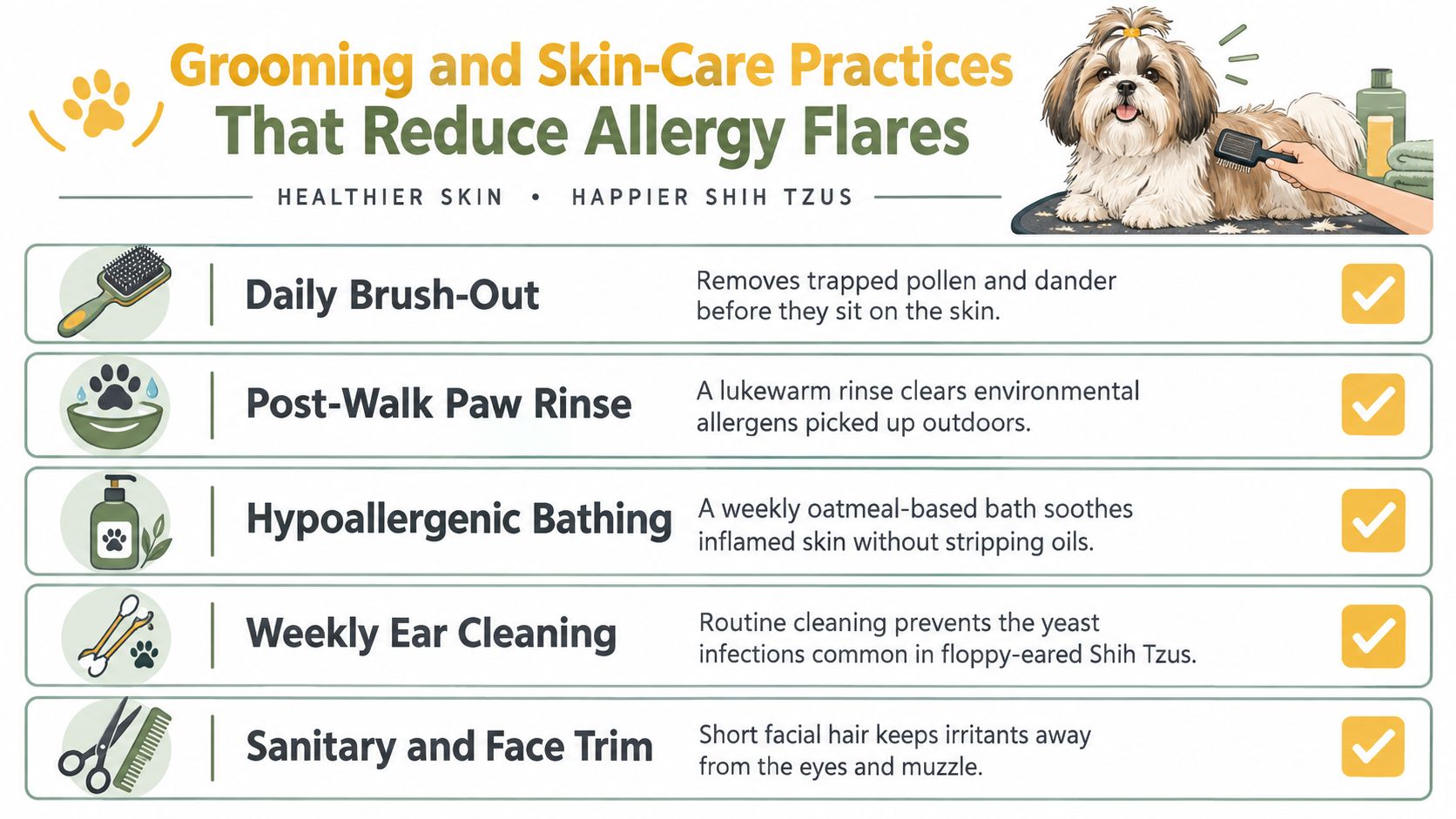
For a Shih Tzu, grooming is part of skin care. A well-planned routine removes potential irritants, prevents mats from holding moisture against the skin, and makes it easier to spot redness, odor, scabs, or hair loss early. It should support the skin barrier, not leave the coat stripped and dry.
Start with a gentle brush-out appropriate for the coat length. Long hair needs frequent attention to prevent tangles, especially around the ears, legs, armpits, and belly. Brush slowly rather than pulling through mats, because irritated skin can become more painful with rough handling.
After outdoor walks, wipe or rinse the paws and lower legs with lukewarm water. Dry carefully between the toes. This simple step can reduce the amount of pollen, dust, and grass residue that your dog later licks from their feet.
Build a repeatable routine
Bathing should follow your veterinarian's advice, particularly if your dog has inflamed skin or needs a medicated shampoo. Use a gentle, veterinary-approved cleanser and rinse thoroughly. Over-bathing or using human products can worsen dryness and interfere with the protective oils on the skin.
The face needs particular care. Keep hair away from the eyes, wipe food and moisture from the muzzle, and dry facial creases gently. Don't put household cleaners, essential oils, or unapproved products near the eyes or mouth.
Ears also deserve regular observation. Look for redness, discharge, odor, head shaking, or sensitivity. Cleaning frequency and product choice should be guided by your vet, because over-cleaning an already inflamed ear can make discomfort worse.
A shorter trim may make daily inspection easier, but clipping the coat won't remove the underlying allergy. Think of grooming as exposure reduction and early detection. For broader guidance on maintaining healthy skin and coat, see this resource on dog skin and coat care.
A clean coat can reduce irritant contact, but an itchy dog still needs a medical assessment when signs persist.
Food Allergies, Elimination Diets, and the Gut-Skin Connection
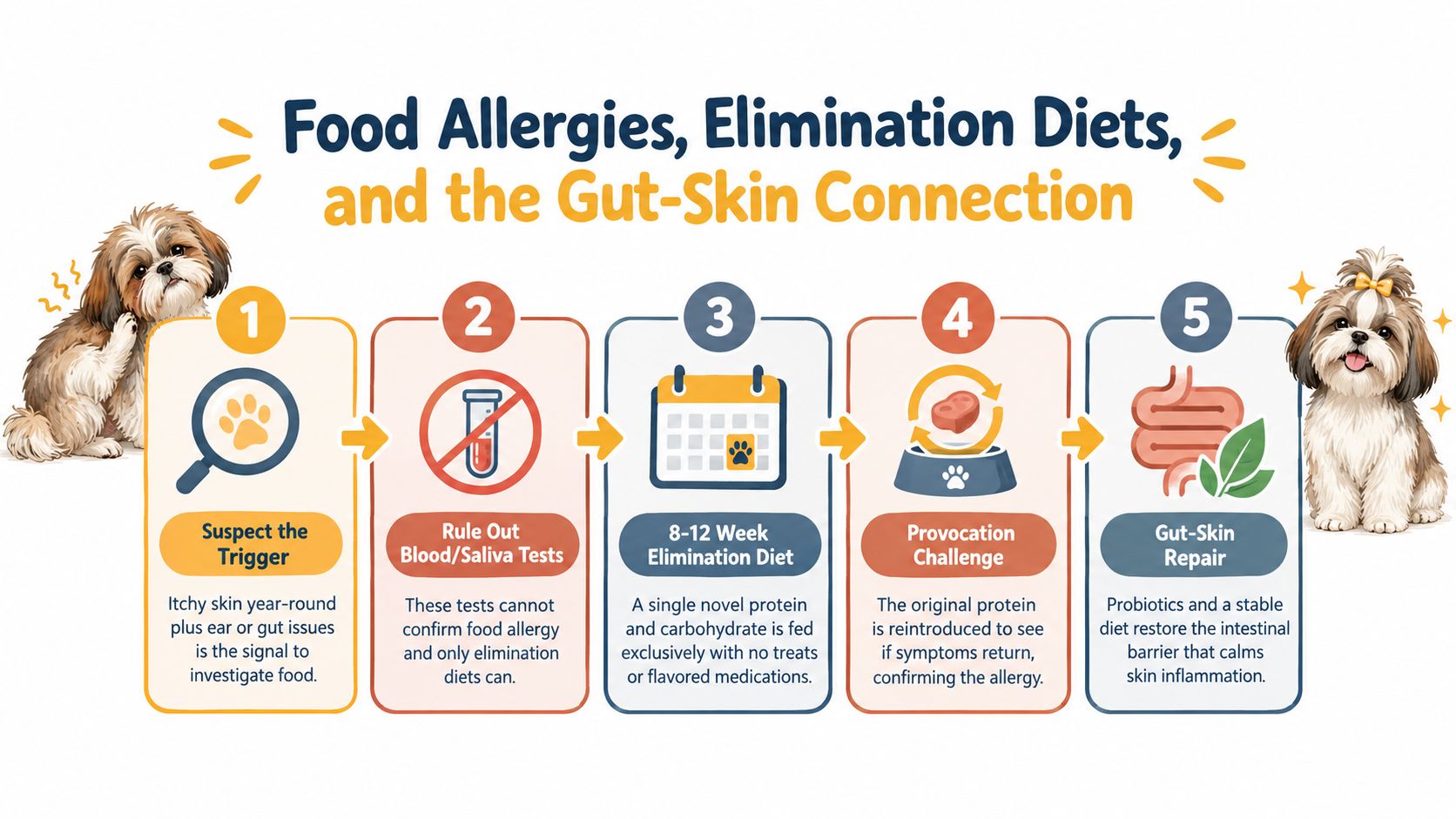
Food allergy is often blamed too quickly and tested too casually. Blood and saliva panels may sound convenient, but serum IgE or IgG results alone can't confirm a food allergy in dogs. The accepted diagnostic approach is a strict elimination diet for 8 to 12 weeks, using a novel-protein or hydrolyzed diet, followed by a deliberate food challenge. The protocol is detailed in this peer-reviewed review of canine adverse food reactions.
“Strict” means every item that enters the mouth must be accounted for. That includes treats, dental chews, table scraps, pill pockets, flavored medications, supplements, and food shared by another pet. An occasional extra can expose your dog to the suspected ingredient and make the result impossible to interpret.
What the trial should show
If skin or ear signs improve during the controlled diet, your vet may reintroduce the original food or protein. A return of symptoms after provocation strongly supports food allergy. If the signs don't improve, environmental allergy, infection, parasites, or mixed disease becomes more likely.
This process can feel slow when your dog is uncomfortable, so work with your veterinary team on itch control and infection checks while the diet trial proceeds. Don't swap foods repeatedly without recording what changed. That creates more variables and can prolong the search.
Why the gut matters
The gut and skin communicate through immune and inflammatory pathways, which is why nutrition may matter beyond avoiding a single ingredient. Recent canine microbiome research has produced mixed findings. One study found no major overall microbiome difference between allergic and healthy dogs, although it reported a moderate negative correlation between E. coli abundance and itch severity. A separate 2025 study reported that probiotics could ameliorate canine atopic dermatitis by modulating gut microbiota, but the evidence remains developing.
That makes probiotics and gut-support products worth discussing, not treating as guaranteed cures. A stable, nutritionally complete diet is more important than adding several products at once. Owners who want to understand the broader nutrition question can also read this guide to dog food for gut health and allergies. For general diet principles related to inflammatory skin conditions, the Sphagnum Botanicals eczema diet guide may provide useful background, though your dog's diet plan should come from a veterinary professional.
If you're considering a daily nutritional option, DA-1™ Daily All-in-One, Senior Dog Support, Joints, Skin/Coat & More is described as a once-daily formula containing 18 human-grade ingredients aimed at cells, gut, and joints. It shouldn't replace an elimination diet or prescribed treatment.
Medical Treatments Your Vet May Recommend
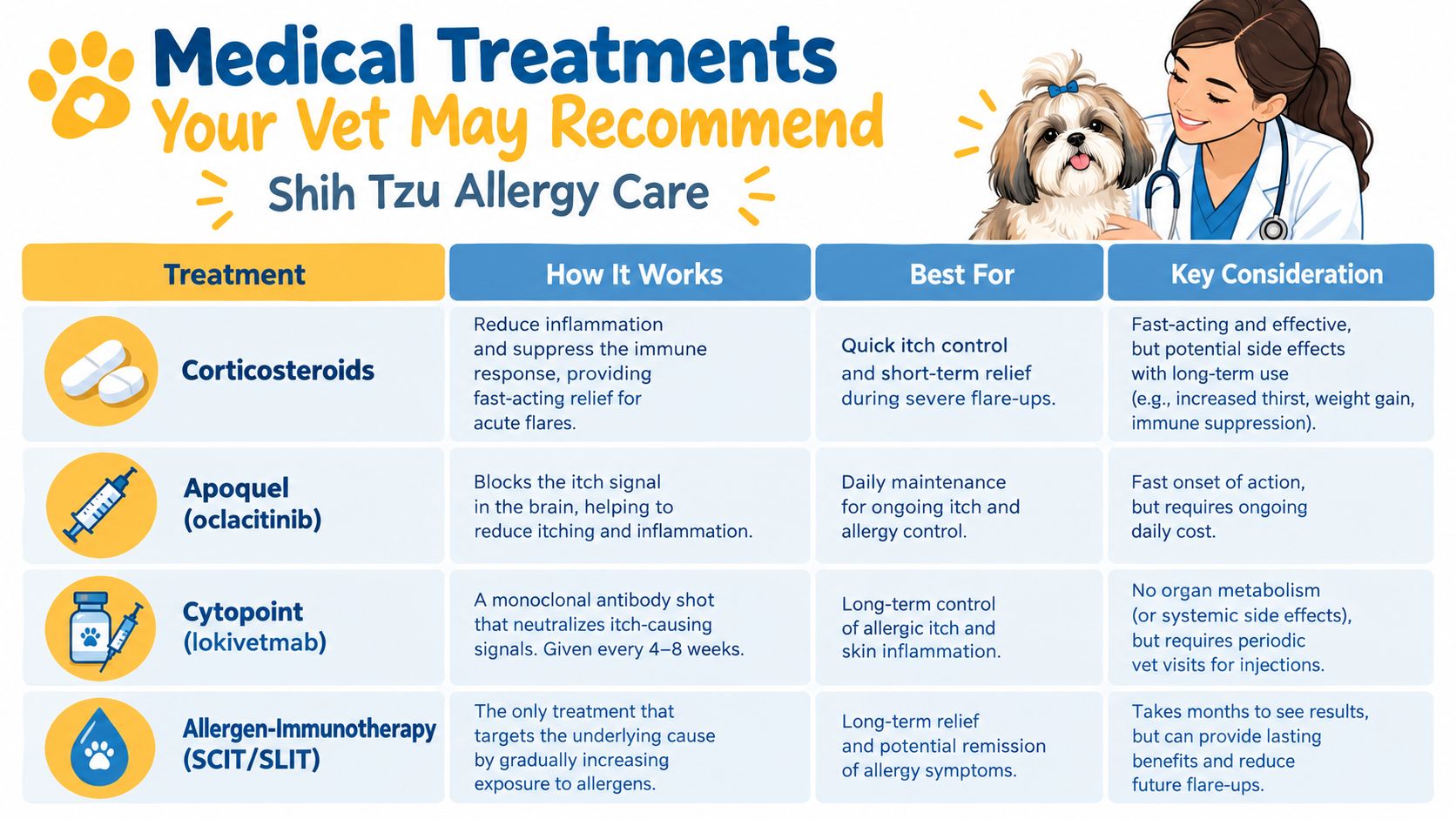
Treatment depends on what your vet finds. A Shih Tzu with fleas, yeast, bacterial infection, food allergy, and environmental allergy needs a different plan from a dog with mild seasonal itch. Veterinary management usually begins by excluding parasites and infection, then addressing allergens, inflammation, and the skin barrier.
| Treatment category | Where it may fit | Main consideration |
|---|---|---|
| Antihistamines | Some mild or intermittent cases | Response varies, and they may not control moderate inflammation |
| Corticosteroids | Rapid relief during severe flares | Long-term use can cause important adverse effects |
| Targeted itch medicines | Ongoing control of allergic itch | Your vet must assess suitability, monitoring, and ongoing treatment needs |
| Allergen immunotherapy | Dogs with confirmed environmental allergy | It aims to change the immune response and may take time to show benefit |
| Topical care | Localized skin irritation or infection | The product must match the problem and be used as directed |
Matching treatment to the problem
Corticosteroids can reduce inflammation quickly, which may be useful during an acute flare. They aren't a casual long-term solution, especially when a dog has repeated infections or other health concerns.
Targeted therapies may help dogs that need ongoing itch control. Your vet may discuss oral treatment or an injectable option based on age, medical history, examination findings, and the pattern of disease. These medicines manage symptoms, but they don't remove every trigger.
Allergen-specific immunotherapy is different because it aims to gradually desensitize the immune system to identified environmental allergens. It requires testing, patience, and veterinary oversight. It isn't an instant rescue treatment, but it can form part of a longer-term plan for a dog with confirmed atopic dermatitis.
Topical therapy matters too. Medicated shampoos, rinses, wipes, or localized sprays may reduce surface organisms and inflammation. Ask before using leftover medication, because the wrong product can mask infection or irritate delicate skin.
Most dogs need a combination approach. That may include parasite control, ear treatment, bathing, diet work, environmental changes, and medication. The aim is control and comfort, not a promise that the predisposition will disappear.
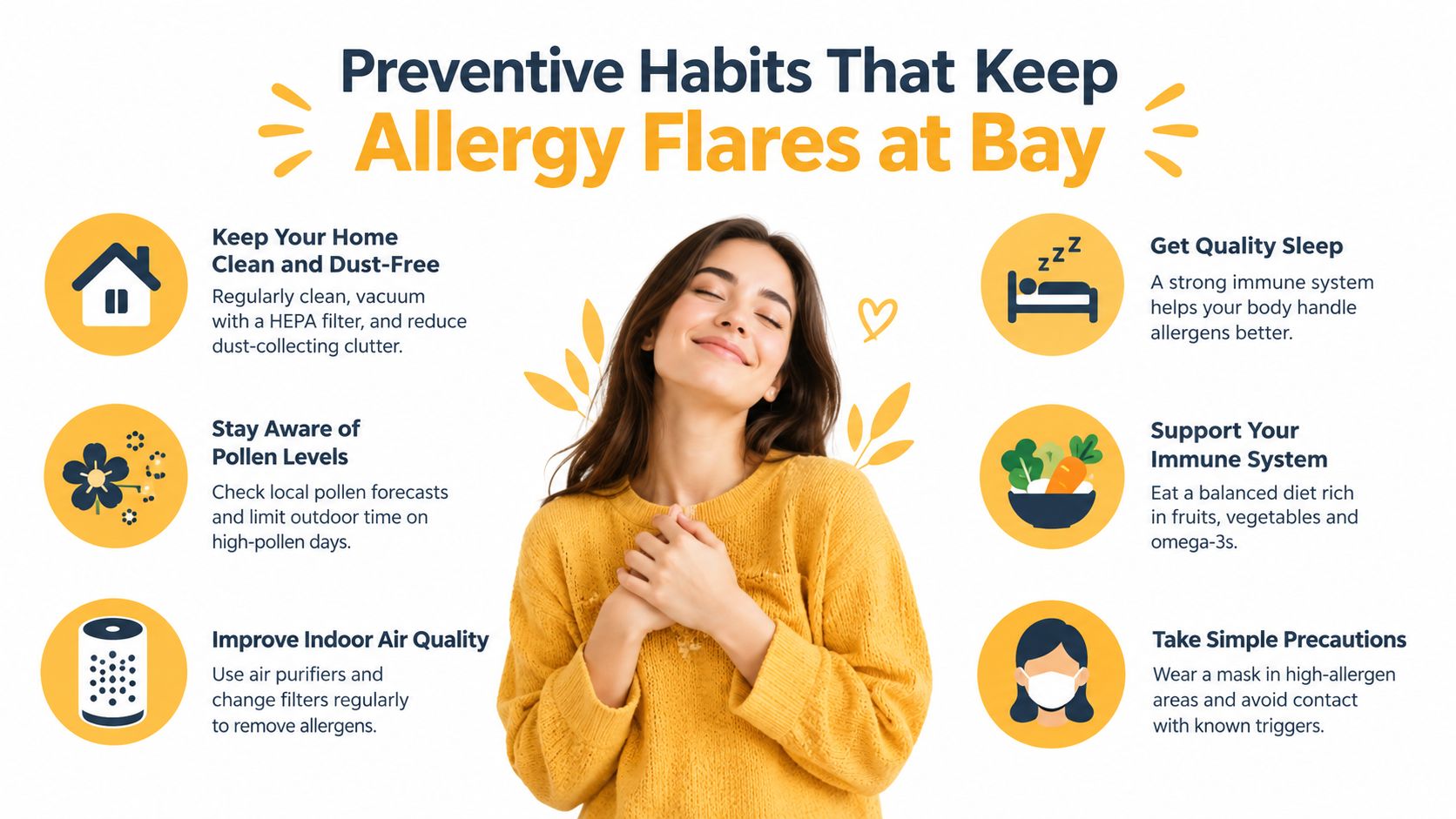
Preventive Habits That Keep Allergy Flares at Bay
Prevention works best when it becomes ordinary household maintenance rather than an emergency response. You can't remove every allergen, but you can reduce the amount your Shih Tzu carries, inhales, or contacts.
Wash bedding regularly and vacuum areas where your dog rests. Hard flooring is easier to clean than fabric surfaces, but comfort still matters, so use washable blankets and launder them consistently. A well-placed air purifier may help reduce airborne particles, while keeping your dog's sleeping area away from heavy dust accumulation.
Adjust the routine by season
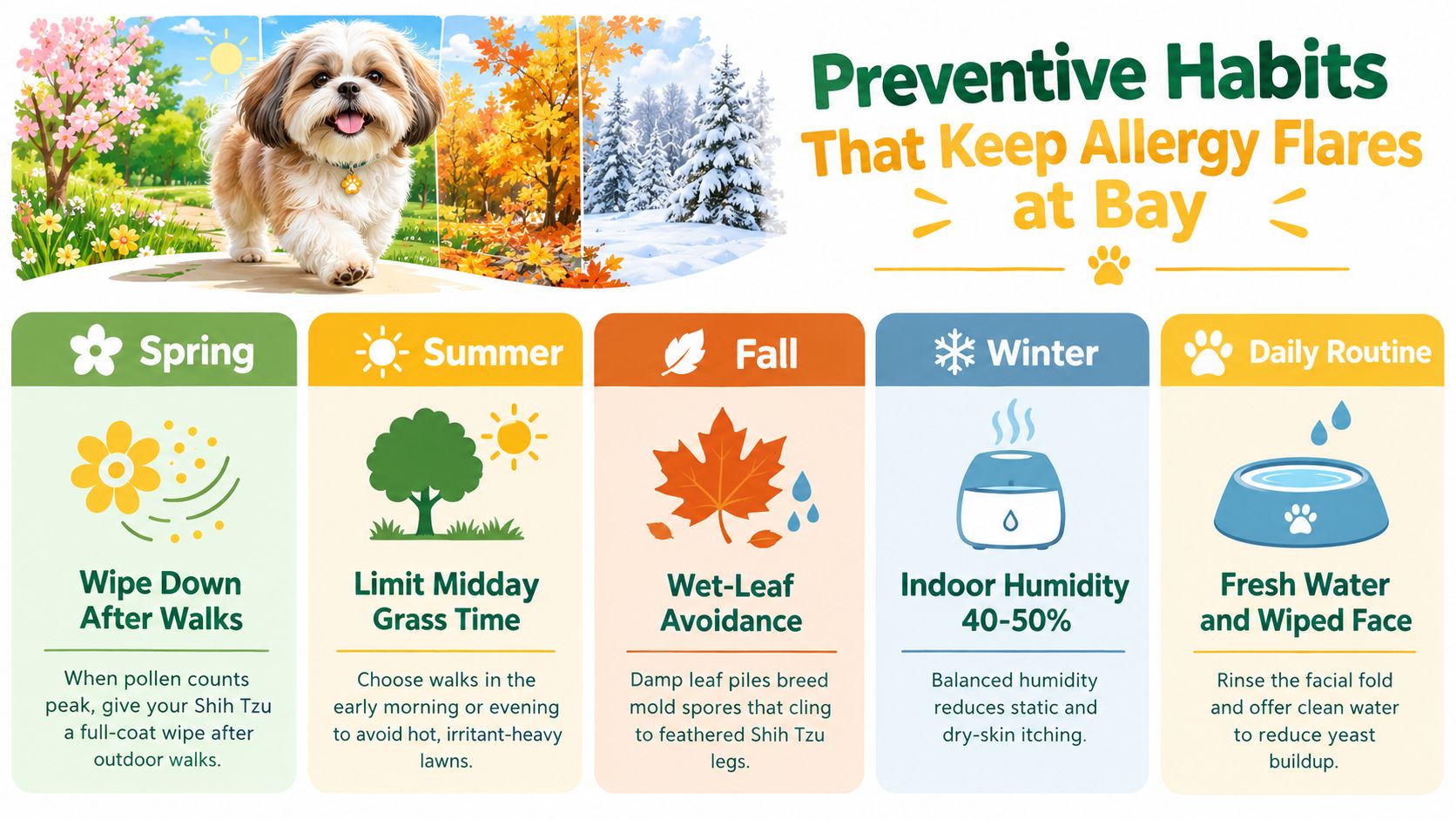
During pollen-heavy periods, wipe the coat, paws, and belly after walks. In warmer weather, avoid prolonged contact with visibly irritating grass if your dog flares after outdoor activity. Damp leaf piles can expose dogs to mold, so steer clear of decaying vegetation during autumn walks.
Indoor heating and dry air can make already sensitive skin feel worse. Ask your vet whether changes to the home environment are appropriate rather than relying on a single humidity target.
Keep daily habits simple
A practical daily checklist might include:
- Morning inspection: Look at the paws, ears, muzzle, and underarms before the day's activity.
- After-walk cleanup: Wipe exposed areas and dry them thoroughly.
- Food consistency: Record meals, treats, chews, and supplements if your dog is undergoing dietary investigation.
- Bedding care: Keep sleeping fabrics clean and easy to wash.
- Flare notes: Record scratching, paw licking, odor, redness, and medication use.
Nutrition supports the skin barrier, but it doesn't replace diagnosis. Feed a complete diet suited to your dog and discuss fatty acids or gut-support ingredients with your veterinary team. For additional practical guidance, see this resource on helping dogs with allergies.
Frequently Asked Questions About Shih Tzu Allergies
Can a Shih Tzu outgrow allergies?
Some dogs have quieter periods, but a genetic tendency toward atopic dermatitis usually requires long-term management. Remission doesn't necessarily mean the predisposition has gone away. Keep preventive routines in place and respond early when scratching returns.
Are Shih Tzus suitable for people with dog allergies?
They may be tolerated better by some people because they shed less, but they aren't hypoallergenic. Allergens come from saliva, urine, and dander, so reactions remain possible. Spend time with the individual dog before making a commitment.
How can I tell infection from allergy?
Odor, discharge, moist redness, crusting, pain, or rapidly worsening lesions can indicate a secondary bacterial or yeast infection. Allergy and infection often occur together, so appearance alone isn't reliable. Arrange a veterinary examination instead of trying multiple household products.
When should I see a veterinary dermatologist?
Ask for a referral when itch persists despite a reasonable first-line plan, ear disease keeps returning, diet trials are difficult to interpret, or your dog needs repeated medication changes. A dermatologist can help investigate complicated or mixed allergic disease.
Pure Paw Labs offers daily nutritional support products for dogs, including formulas focused on skin, coat, gut, and joint support. Visit Pure Paw Labs to review the available options and discuss any supplement with your veterinarian alongside your Shih Tzu's allergy plan.