


Your dog's stool has been soft on and off, or perhaps your dog is scratching more than usual after a change in routine. You've tried to improve the food, considered probiotics, and now you're wondering whether postbiotics for dogs could offer gentler, more dependable support.
Postbiotics are attracting attention because they focus on useful microbial products and components rather than relying only on live bacteria. That distinction may matter for dogs with sensitive digestion, changing schedules, or skin concerns connected to the gut. It also gives owners another category to understand, without turning a supplement into a substitute for diagnosis or treatment.
The science is promising but still developing. A 2025 systematic review found that canine research remains relatively small, and newer trials provide encouraging signals rather than proof that postbiotics treat disease. This guide explains what postbiotics are, how they differ from probiotics and prebiotics, what current dog studies show, how safety and dosing work, and how to choose a product responsibly. For broader foundational guidance, start with this practical resource on dog gut health.
Table of Contents
- Introduction to Postbiotics for Dogs and Why Owners Are Curious Now
- What Postbiotics Really Are and How They Differ From Live Microbes
- How Postbiotics Work Inside Your Dog Gut Immunity and Beyond
- Postbiotics vs Probiotics vs Prebiotics for Dogs
- Potential Benefits for Gut Health Immunity Skin and Stress
- Safety Dosing and How to Choose a Quality Postbiotic Supplement
- Making Postbiotics Part of Your Dog Daily Wellness Routine
Introduction to Postbiotics for Dogs and Why Owners Are Curious Now
A practical question behind the new ingredient
Your dog is healthy overall, yet gas appears after a food change and scratching increases during stressful weeks. You want to support everyday digestion and skin comfort, while avoiding a supplement that depends entirely on live organisms surviving storage and the digestive tract.
Postbiotics offer a different route. They are preparations made from inactivated microorganisms and/or their components, intended to provide a health benefit without requiring those microorganisms to stay alive. Their appeal is stability: selected microbial components or metabolites can be delivered in a form that is less dependent on survival.
That stability may matter along the gut-skin axis, where digestive changes and skin comfort can sometimes be discussed together. It does not mean a postbiotic will prevent every flare or resolve an underlying disease. For a broader foundation, review this guide to dog gut health.
The term is relatively new in scientific use. ISAPP formally defined postbiotics in 2021, according to the 2025 systematic review of canine postbiotic research. That review screened 157 records and identified 69 eligible studies overall, of which only 13 were in vivo dog studies (2025 systematic review of canine postbiotic research), so dog-specific evidence remains early. Its meta-analyses of selected outcomes found no statistically significant differences compared with control groups.
The sensible expectation: postbiotics may provide daily support for some dogs, especially for prevention or mild concerns, but they are not replacements for veterinary care.
Owners may reasonably ask about stool consistency, microbial balance, immune function, skin comfort, coat quality, or resilience during ordinary stress. Persistent diarrhea, repeated vomiting, severe itching, weight loss, lethargy, blood in stool, appetite changes, or pain need veterinary assessment first.
Use postbiotics as a stability-focused microbiome tool, alongside appropriate nutrition, routine, exercise, and medical care. The most realistic role is supportive, not curative.
What Postbiotics Really Are and How They Differ From Live Microbes
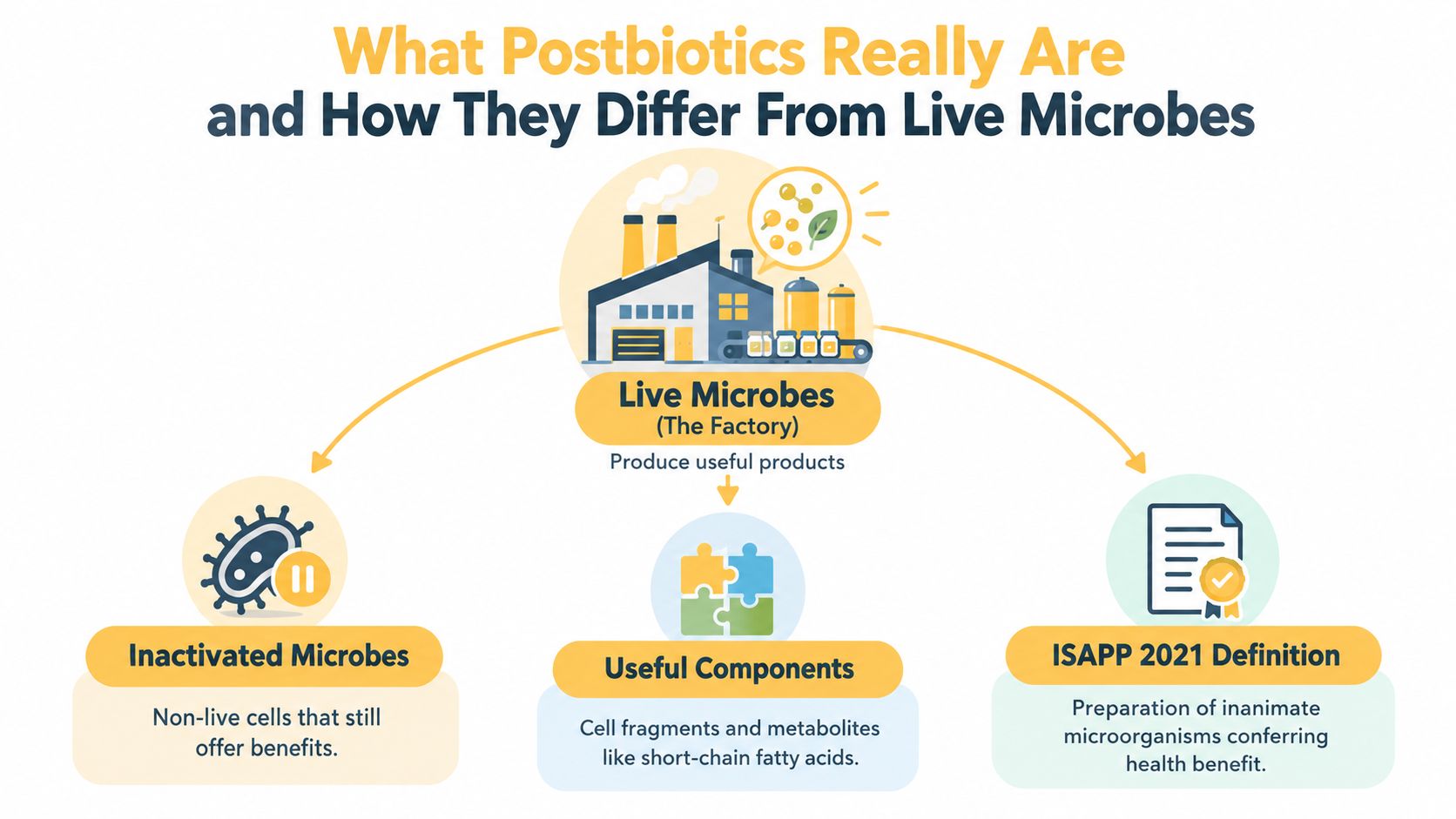
A useful way to separate these three categories is by what each one delivers: prebiotics are raw materials, probiotics are living workers, and postbiotics are selected products or components linked to microbial activity. The comparison is helpful, but it does not mean every product contains the same ingredients or works in the same way.
ISAPP's formal 2021 definition describes postbiotics as preparations of inanimate microorganisms and/or their components that confer health benefits on the host. The canine systematic review cited earlier in this guide explains the evidence behind that definition. In plain language, the microorganisms have been inactivated, while parts of their structure and useful substances may still interact with a dog's gut environment.
What remains after inactivation
Inactivation does not make a preparation automatically useless. It may leave cell components, structural fragments, and metabolites, including compounds such as short-chain fatty acids. Depending on the preparation, these materials can be recognized by cells lining the digestive tract or by immune cells.
A live probiotic must remain viable to carry out its intended role. A postbiotic does not need to colonize the gut or multiply there. That difference may simplify formulation, storage, and delivery for some products, although owners should not assume every postbiotic is heat-stable or unaffected by storage conditions. The label should state how the product needs to be handled.
“Dead probiotic” is too vague to guide a purchase. The phrase may describe part of the manufacturing process, but it does not identify the microorganism used, the components left behind, how the preparation was made, or which benefit was studied. Quality depends on characterization, including clear information about the preparation and its intended use.
Why stability changes the practical choice
Live microbes can be affected by heat, moisture, oxygen, storage time, and the digestive environment. Postbiotic preparations use non-live material, which may provide a more predictable delivery format in certain products. For owners managing travel or irregular routines, that stability can be a practical advantage because the product does not depend on keeping microorganisms alive.
A multi-system powder such as DA-1™ Daily All-in-One - Senior Dog Support, Joints, Skin/Coat & More illustrates a related convenience principle. Its product snapshot describes 18 human-grade ingredients in one scoop for cells, gut, and joints, without fillers or pills. That description does not make it equivalent to a dedicated postbiotic. Owners should check the ingredient panel for the specific microbial preparation and the evidence supporting it.
The distinction is straightforward. Probiotics provide live microorganisms. Prebiotics provide substrates that microbes can use. Postbiotics provide inactivated microorganisms or their components. Stability may make postbiotics appealing for prevention or mild support, while persistent symptoms still require veterinary assessment.
How Postbiotics Work Inside Your Dog Gut Immunity and Beyond
A dog may take a postbiotic during travel, a routine change, or occasional digestive upset. Once swallowed, the preparation moves through the digestive tract as microbial components and metabolites. Unlike a live culture, it does not need to establish a living population before interacting with the gut environment. Its effects depend on the source, preparation, dose, and biological activity of that specific product.
From gut lining to immune signaling
The intestinal lining controls what passes between the digestive tract and the rest of the body. Nearby immune tissue also monitors signals from food and microbes. Postbiotic components may interact with epithelial and immune cells, influencing barrier function and immune signaling.
The gut barrier behaves more like a careful filter than a concrete wall. Healthy support helps the filter perform its normal job instead of shutting down every immune response.
Short-chain fatty acids are among the biological signals researchers measure. In a 42-day randomized controlled trial involving healthy adult Beagle dogs, a Bifidobacterium animalis-derived postbiotic was safe and well tolerated. It was associated with increased short-chain fatty acid production and changes in immune, antioxidant, bone formation, and hair-quality measures. Because the dogs were healthy, these findings do not show that postbiotics treat illness.
The gut's microbial community remains active around the preparation. A postbiotic can influence that environment without surviving as a live organism. One small canine study summarized in the 2026 review of canine and feline postbiotics involved 12 dogs receiving a Saccharomyces cerevisiae fermentation product for 8 days. Researchers reported increased gut microbial diversity. That result is an early signal, not a standard timeline that applies to every dog.
Understanding the gut-skin axis
The gut-skin axis describes communication among digestive biology, immune activity, microbial ecology, and skin function. Changes in gut-related signaling may influence outcomes beyond stool, including skin comfort or coat quality. An itchy dog does not automatically have a gut problem. Allergies, parasites, infections, environmental triggers, and other conditions remain possible causes.
A double-blind randomized clinical trial reported that an indole-rich postbiotic reduced scratching by 20% relative to baseline and lowered human-perceived pruritus by 27% versus placebo by day 28. The study also found better skin and coat quality by day 14 and increased gut microbiome diversity by day 28, as detailed in the clinical trial report. These findings support a possible gut-skin connection, while leaving open whether other preparations would produce the same response.
The antioxidant and bone-marker findings broaden the research question. Scientists are examining postbiotics as signals that may affect several body systems, rather than as products aimed only at stool quality. For owners, the practical expectation is modest: postbiotics may support prevention or mild concerns, while persistent, severe, or worsening symptoms need veterinary assessment. These results remain early wellness evidence, not proof of disease prevention or treatment.
Postbiotics vs Probiotics vs Prebiotics for Dogs
The easiest way to distinguish these categories is to ask what the supplement delivers. A probiotic delivers living microorganisms. A prebiotic delivers material intended to nourish selected microbes. A postbiotic delivers inactivated microorganisms, their components, or associated bioactive preparations.
| Feature | Postbiotics | Probiotics | Prebiotics |
|---|---|---|---|
| What they provide | Inactivated microorganisms and/or components | Live microorganisms | Substrates or fibers used by microbes |
| Main practical question | Is the preparation clearly characterized? | Will the organisms remain viable and function as intended? | Can the dog tolerate and use the fiber? |
| Stability considerations | Often selected for a stable, non-live format | Sensitive to formulation and storage conditions | Depends on fiber type and product handling |
| Need to colonize | No | Intended action involves living organisms | No, but microbes must be present to use the substrate |
| Typical role | Deliver microbial signals or components directly | Add live microbial strains | Support microbial activity and fermentation |
| Useful decision context | Travel, routine simplicity, or interest in stable microbial components | A targeted live-culture approach | Dietary support for the existing microbial community |
The categories can overlap in a broader plan, but they aren't interchangeable. A dog with a delicate stomach may not tolerate every added fiber source, while another dog may do well with a prebiotic-rich diet. A probiotic may be chosen when a veterinarian recommends a specific live strain. A postbiotic may suit an owner who prefers a non-live preparation with clear handling instructions.
For a plain-language overview of the distinctions, this guide to prebiotic versus probiotic versus postbiotic support can help organize the terminology. Owners comparing supplement formats can also use a general human example such as the Hum Skin Squad probiotic supplement, but a human product isn't automatically appropriate for a dog.
Choose by goal, not by trend
Start with the problem you're trying to address. If your goal is general digestive support, ask whether the product provides a postbiotic, a live probiotic, a prebiotic, or a combination. If your dog has a diagnosed condition, let the veterinarian determine whether a supplement fits the treatment plan.
The stability advantage is practical, not magical. A stable product may be easier to store and use, but its value still depends on the preparation, evidence, dose, and your dog's individual response.
Potential Benefits for Gut Health Immunity Skin and Stress
Your dog may have occasional soft stools, extra scratching, or coat changes, and you may wonder whether a postbiotic could help. The most useful way to assess these products is to separate plausible support from treatment. Effects depend on the preparation, dose, and the dog receiving it.
Digestive balance and microbial diversity
Digestive support is the most practical starting point. A postbiotic may help maintain a steadier gut environment, regular stool quality, or microbial diversity, especially as part of a broader diet and wellness plan. The 2025 systematic review cited earlier found only 13 in vivo dog studies among eligible canine research, so the field still offers limited guidance about which preparations work best.
That evidence gap changes the question for owners. Rather than asking whether postbiotics work for every dog, ask whether a specific, characterized preparation produces a visible change in stool quality during a monitored trial. The small study involving Saccharomyces cerevisiae fermentation material reported increased microbial diversity. It provides a useful research signal, not a promise for a dog with chronic diarrhea.
Immune and whole-body support
The gut and immune system communicate continuously. Postbiotic components may interact with immune cells, while short-chain fatty acids can act as signals that influence normal biological responses. In a healthy Beagle trial, daily supplementation was associated with enhanced humoral and cellular immune responses and improved antioxidant capacity, alongside other measured changes.
These findings may matter for everyday wellness, but they do not establish protection from infections, allergies, or cancer. Supporting normal immune activity is different from treating immune disease. A dog with recurring illness still needs a veterinary assessment.
Skin, coat, and everyday stress
The gut-skin axis offers a practical reason to watch both digestion and skin. In the double-blind canine trial, an indole-rich preparation reduced scratching by 20% relative to baseline and human-perceived pruritus by 27% versus placebo by day 28. Skin and coat quality improved by day 14, while microbial diversity increased by day 28, as reported in the published clinical study cited earlier.
These results suggest possible mild support for selected dogs, not a cure for itching. Fleas, allergies, infection, pain, and other causes can look similar, so persistent scratching deserves veterinary evaluation.
Stress is less certain. A change in routine can affect appetite, stool, scratching, and sleep, but postbiotics should not be treated as anxiety medicine. Consistent routines, enrichment, exercise, behavior support, and veterinary guidance may have a larger effect than one supplement.
Use mild, measurable support as the goal. Track stool quality, scratching, coat condition, appetite, and energy, then stop and seek veterinary advice if symptoms persist, worsen, or appear alongside other signs.
Safety Dosing and How to Choose a Quality Postbiotic Supplement
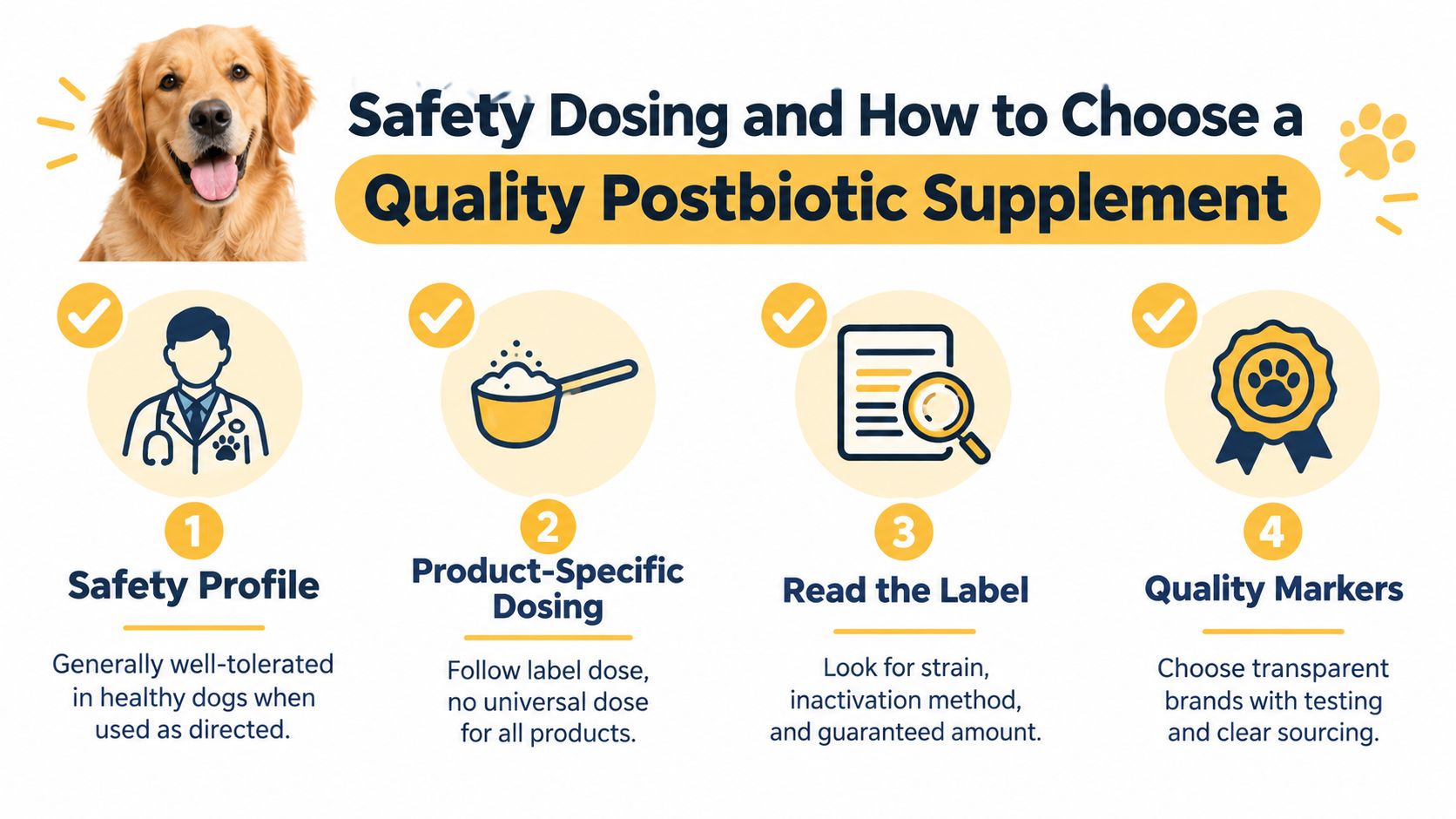
The available dog research includes a 42-day randomized controlled trial in healthy adult Beagles in which a Bifidobacterium animalis-derived postbiotic was reported to be safe and well tolerated. That is reassuring for the studied preparation and population, but it isn't a blanket safety guarantee for every product, dog, age, medical condition, or medication.
Treat dosing as product-specific
There isn't one universal postbiotic dose for all dogs or all preparations. Follow the product's feeding directions, use the supplied measure if one is provided, and don't increase the amount because a small change hasn't produced an immediate result.
Before starting, write down your dog's normal stool pattern, appetite, scratching, coat condition, and energy. Introduce one new supplement at a time so you can identify whether it helps or causes a problem.
Read beyond the front label
A useful label should make it possible to answer several questions:
- Identify the source: Look for the microorganism or fermentation source used in the preparation.
- Understand the process: The manufacturer should explain how the microorganism was inactivated or processed.
- Check the guaranteed material: A clear label should identify the relevant components or amount rather than relying only on a broad proprietary name.
- Review feeding directions: Instructions should address dog size or product serving guidance without forcing owners to guess.
- Look for transparency: Manufacturing standards, ingredient sourcing, and testing information should be easy to find.
Batch testing is one quality topic worth discussing with a veterinarian or manufacturer, and this explanation of what batch testing means can help owners understand the terminology. For readers building a broader digestive-support plan, a gut protocol overview from Lifeworks Integrative Health may provide additional context, although dog-specific advice still belongs with a veterinary professional.
Pause the supplement and contact your veterinarian if your dog develops worsening diarrhea, repeated vomiting, marked lethargy, facial swelling, breathing difficulty, severe discomfort, or another concerning change. Puppies, pregnant or nursing dogs, dogs with chronic disease, and dogs taking medication deserve individualized advice before supplementation.
Making Postbiotics Part of Your Dog Daily Wellness Routine
A sensible routine begins with a clear purpose. You might be supporting general digestive regularity, exploring mild skin comfort, or looking for a stable non-live microbial preparation for travel. You shouldn't start with the assumption that postbiotics will diagnose the cause of itching or fix unexplained gastrointestinal symptoms.
Use a simple observation log. Record the date, product, serving, stool quality, scratching, coat appearance, appetite, energy, and any adverse signs. Look for a consistent trend over 2 to 6 weeks, rather than treating one unusually good or bad day as proof. If nothing changes, or if symptoms worsen, take the record to your veterinarian instead of continually adding more supplements.

Keep the bigger picture in view
Postbiotics work best as one part of daily wellness. Balanced nutrition, clean water, regular movement, enrichment, parasite prevention, dental care, and routine veterinary visits remain central. A supplement may support normal biology, but it can't replace testing, dietary trials, allergy management, or treatment when a medical problem is present.
The most careful choice is usually the simplest one that matches your goal. Check the preparation, follow the label, change one variable, and monitor your dog. Then discuss the results with your veterinarian, especially if the original concern continues.
Pure Paw Labs offers human-grade daily dog supplements designed to combine support for areas such as the gut, skin and coat, joints, immunity, and stress-related wellness in a single powder routine. Visit Pure Paw Labs to review the available formula details and decide whether a daily supplement fits your dog's needs.