


If you've ever stood in the kitchen with a pot on the stove, a few leftover bones, and a dog waiting hopefully by your feet, you already know why homemade bone broth feels so appealing. It smells good, looks simple, and seems like an easy way to add something warm and nourishing to your dog's bowl.
The part that gets glossed over is that bone broth is a supplement, not a cure-all. The evidence base for dogs and cats is still limited, and practical feeding guidance matters more than hype, especially when your dog has a sensitive stomach or a medical condition that changes what's safe to feed. That's why this guide keeps the recipe straightforward and the safety rules even stricter.
Table of Contents
- Why Homemade Bone Broth Is a Great Food Topper
- Choosing Safe Bones and Ingredients for Your Broth
- Three Simple Methods for Making Bone Broth at Home
- Serving Guidelines and Important Safety Precautions
- How to Store and Serve Your Homemade Broth
- A Simpler Option for Everyday Wellness
Why Homemade Bone Broth Is a Great Food Topper
If your dog turns away from dry kibble, eats too fast, or needs a little encouragement on days when appetite is low, a plain spoonful of broth can make the meal more appealing. That practical use is why homemade bone broth for dogs has a place at the bowl. It adds moisture and aroma, and it can help a dry meal feel less repetitive without changing the whole feeding routine. For a plain overview of the benefits, this bone broth benefits guide for dogs gives a helpful starting point. The modern view is clear, bone broth has moved from folk remedy territory into mainstream pet advice, but it still isn't a substitute for medication or veterinary supplements when those are needed, as noted in this industry review on bone broth expectations for pets.
What it can realistically add
Bone broth is most useful for the way it supports feeding, not for dramatic promises. It can soften dry food, add smell and taste, and give extra moisture to dogs that drink poorly or seem bored with plain meals. People often mention collagen, gelatin, and amino acids, and those terms matter because they come from the long, gentle simmer that gives broth its body and texture.
Safety still comes first. A dog with pancreatitis, kidney disease, or another diet-sensitive condition may need a very different approach, since even a simple topper can cause trouble if it adds fat, extra minerals, or ingredients that do not fit the dog's plan. In those cases, I would keep broth plain and ask a veterinarian whether it belongs in the bowl at all.
If your dog has stiff joints, a picky appetite, or just does better with a little more flavor at dinner, broth can be a sensible habit. If you expect it to correct an illness by itself, it will not.
Practical rule: Use broth to improve a meal, not to replace one.
The most useful mindset is straightforward. Make it plain, serve it in small amounts, and treat it like a functional topper you can keep on hand. That approach is more realistic than chasing miracle claims, and it is usually where dog owners see the most day-to-day value.
Choosing Safe Bones and Ingredients for Your Broth
The safest broth starts before the pot ever goes on the stove. A good batch is built from plain bones, water, and a little acid for extraction, not from seasonings, scraps, or whatever happens to be left in the fridge. A practical method is to use raw or cooked bones in a slow cooker or covered pot, add just enough water to cover them, and include a small splash of apple cider vinegar to help pull minerals into the liquid, a technique described in the recipe guidance from Dogs Naturally Magazine.
What belongs in the pot
Use bones that are meant for simmering, not bones that are seasoned or heavily processed. Beef marrow bones, knuckle bones, chicken feet, and turkey necks are common choices because they give broth body and gelatin. Raw bones are the safer starting point for broth-making because cooked bones can splinter more easily, which is a choking and injury risk if any pieces are left behind.
A plain ingredient list keeps the final broth easier to trust. If you're making it for a dog with a sensitive system, the simpler the better.
- Safe base: Bones, water, and a modest splash of apple cider vinegar
- Optional add-ins: Plain carrots or celery for aroma, if your dog tolerates them
- Best practice: Keep the batch unseasoned from start to finish

What should stay out
Onions, garlic, and heavy salt don't belong in dog broth. Those ingredients are common in human cooking, but they're a poor fit here, and broth doesn't need them to taste appealing to a dog. Fat trimmings and greasy scraps are another problem, especially if you're trying to keep the batch light enough for a dog with a delicate digestive tract.
Keep the ingredient list boring. Boring is what makes broth dependable.
That's especially true if you're cooking for a dog with pancreatitis risk, kidney disease, or a sodium-sensitive diet. In those cases, the issue isn't whether broth sounds healthy in theory, it's whether the fat, minerals, or any hidden seasoning will fit the dog in front of you. Clean ingredients make that decision much easier.
Three Simple Methods for Making Bone Broth at Home
There is no single right way to make broth for dogs. The best method depends on how much time you have, how closely you want to watch the pot, and how much effort you want to put into cleanup later. Stovetop, slow cooker, and pressure cooker all get you to the same place, but each one changes the amount of supervision, the texture you end up with, and how easy it is to keep the batch safe from start to finish.
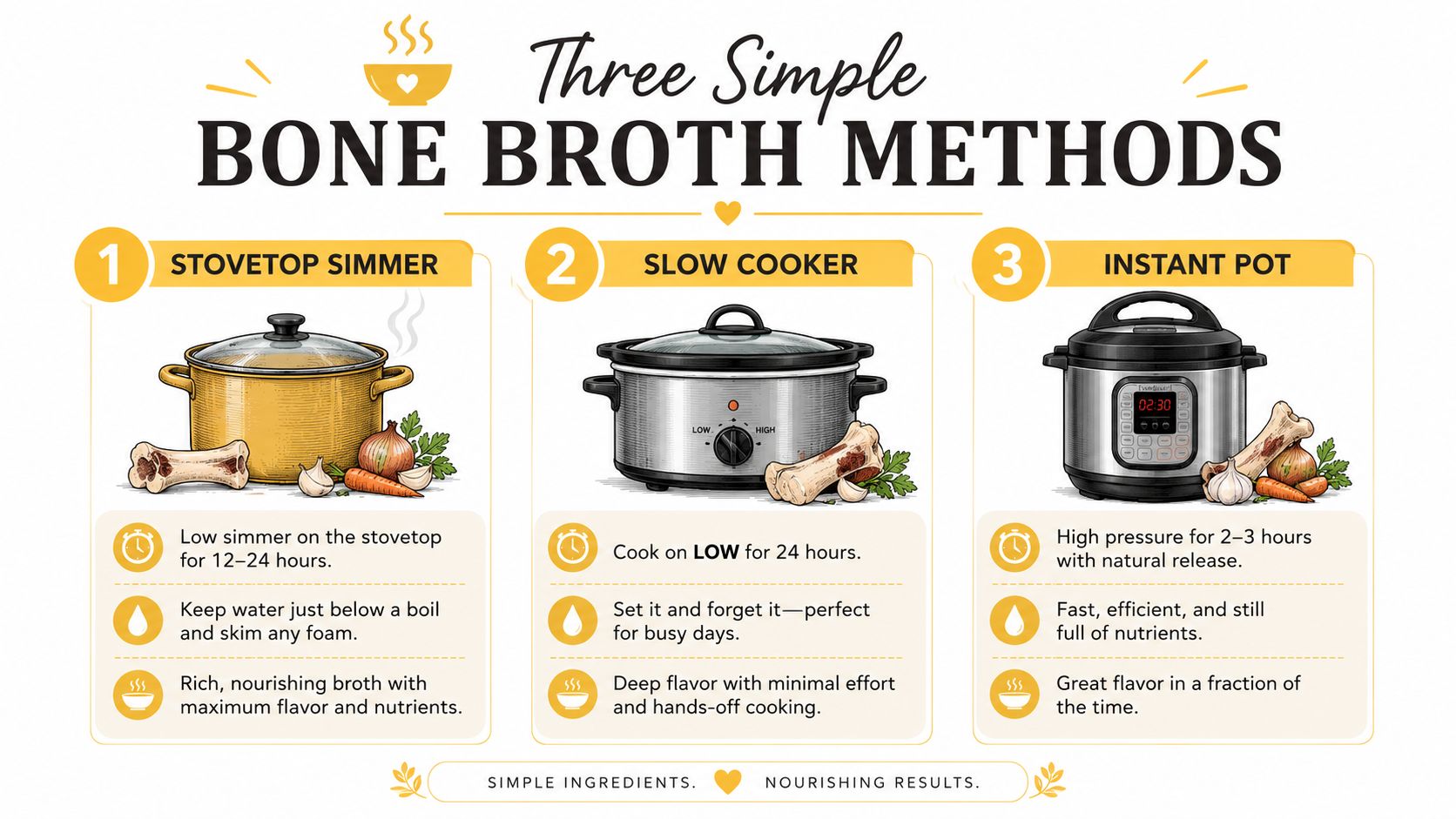
Stovetop Simmer
The stovetop method gives you the most control, and it asks for the most attention. Put the bones in a large pot, cover them with water, add a small splash of apple cider vinegar, and bring the pot to a very gentle simmer. Keep the heat low and check the liquid level often, because evaporation can leave bones exposed if you step away for too long.
This method works well if you want to watch the broth as it develops. It also makes it easier to skim foam early and adjust the simmer before it turns rough. The trade-off is simple, you need to stay nearby, and that makes this a poor choice if you know you will be distracted for long stretches.
Slow Cooker
A slow cooker is the easiest option for most home kitchens. Add the bones, water, and vinegar, then set it on low and let it cook while you handle the rest of the day. It suits the long extraction time that broth needs, and recipes aimed at dogs often recommend a long simmer for better gelatin release, as noted in Dogs Naturally Magazine.
That long cook time has a real purpose. It helps the bones give up more body, which is what turns a thin stock into something with a richer texture. If your schedule is tight, the slow cooker is the method that makes homemade broth practical instead of a weekend project you keep postponing.
Instant Pot
A pressure cooker is the fastest route, but it changes the feel of the broth. It can still produce a useful batch when you need something for the week, especially if you want a smaller amount without leaving the stove on for hours. The main safety steps do not change. Strain it well, let it cool fully, and chill it before you portion it out.
Pure Paw Labs' dog gut health guidance is a useful reminder that convenience should never override a dog's medical needs. If you are cooking for a dog with pancreatitis risk, kidney disease, or a sodium-sensitive diet, the method matters less than the final ingredients and fat level. A pressure cooker can save time, but it does not make broth automatically safe for every dog.
If you want speed, this method earns its place. If you want the deepest, most slowly developed flavor, the slow cooker usually gives you the better result.
Serving Guidelines and Important Safety Precautions
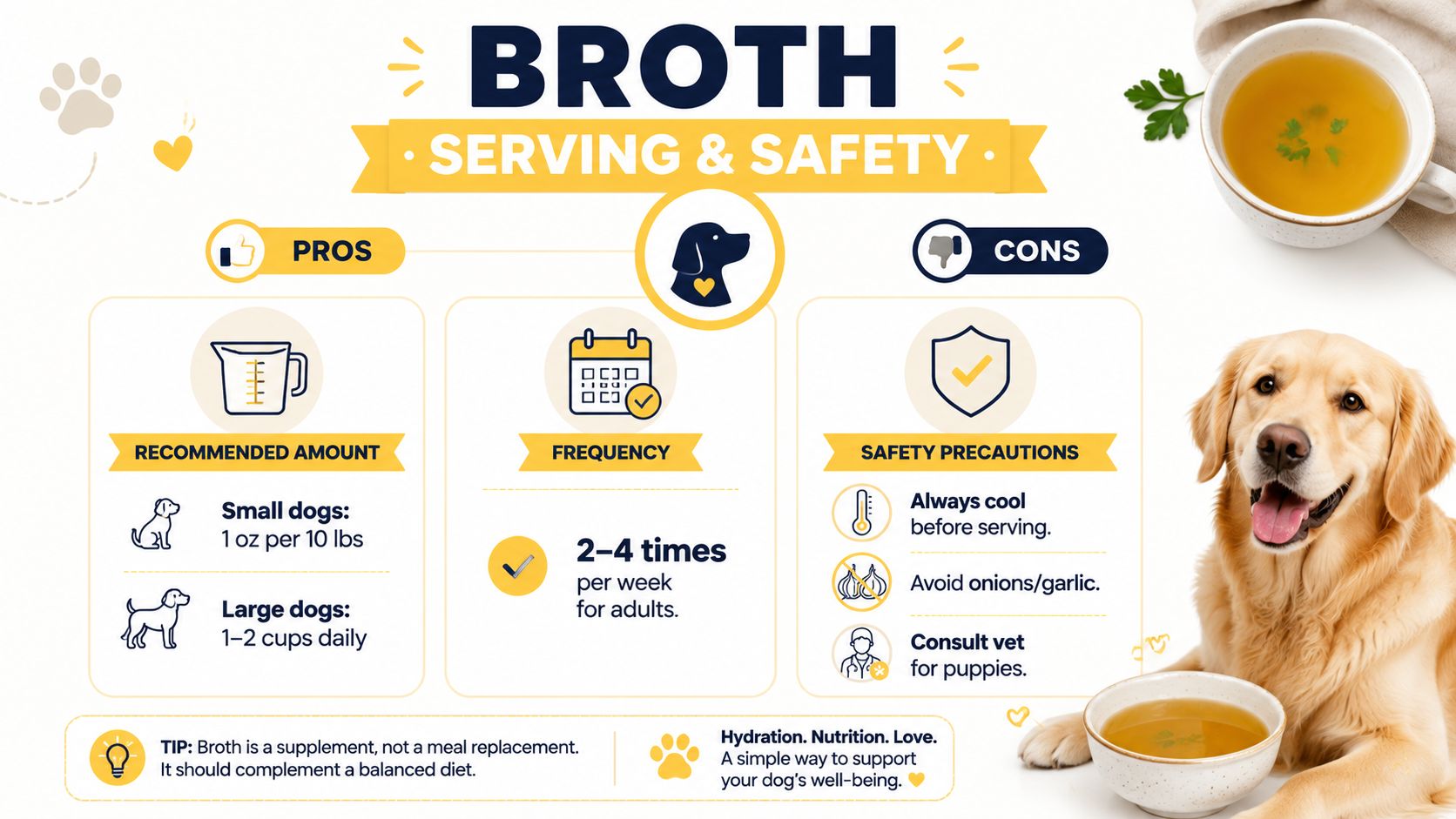
Once the broth is made, portioning matters more than enthusiasm. A practical rule is 1 ounce per 10 pounds of body weight per serving, which gives you a clear way to keep portions small and consistent instead of pouring by instinct, as noted in Chewy's bone broth guidance. That same guidance treats broth as something to divide across meals, which matches how it works best in real life, as a topper or supplement, not something to pour freely over every bowl.
Who should be careful
Dogs with pancreatitis risk need extra caution because broth can still hold fat, even after chilling and skimming. Dogs with kidney disease or sodium-sensitive diets need a different kind of caution, since homemade broth is not automatically low in minerals or salt just because it was made in your kitchen. Puppies should also get a vet check before broth becomes a regular habit, because their diets need tighter control than adult dogs.
Broth also deserves a closer look if your dog has a sensitive stomach or a history of digestive upset. A good place to read more about that is Pure Paw Labs' dog gut health guidance, since a mild topper can still be a poor fit for a dog whose gut does not handle change well.
Bottom line: If your dog has a medical diet, broth is not a casual add-on.
There is a place for a structured daily supplement in some households, but it is a separate choice from homemade broth. For owners who want a ready-made option instead of kitchen prep, DA-1™ Daily All-in-One - Senior Dog Support, Joints, Skin/Coat & More is described as a multi-system powder with 18 human-grade ingredients and a 60-day money-back guarantee, which is a different solution from broth and not a substitute for medical feeding advice.
Signs to slow down
Start with a small amount, then watch your dog's stool, appetite, and energy after the first few servings. If your dog gets loose stool, seems nauseated, or already eats a restricted diet, broth may need to stay occasional rather than routine. The right call for a dog with a known condition is to check with your vet before adding it.
The safest approach is conservative. Broth should make meals easier, not add hidden risk.
How to Store and Serve Your Homemade Broth
A good batch can still go wrong at the end if you rush the cooling or storage. Let the broth cool fully, then chill it until the fat rises and firms on top, so you can skim it away before portioning. That gives you a cleaner broth and lowers the richness, which matters for dogs that should not get extra fat in their meals.
Short-term and long-term storage
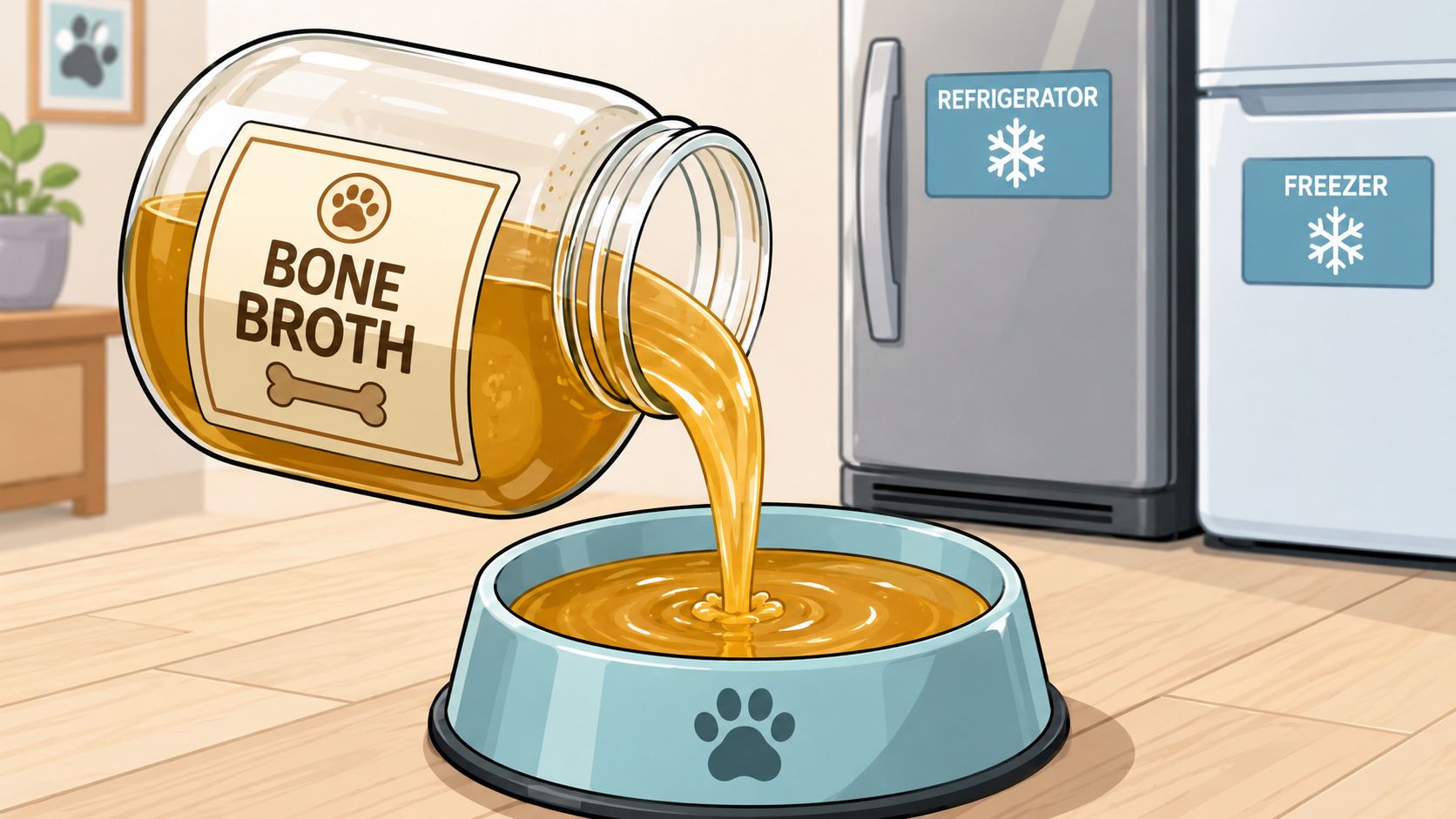
Refrigerated broth does not keep long, so it is better to treat it as a fresh topper rather than a pantry staple. I portion mine right away and freeze the extra in small containers or ice cube trays, because that makes it easy to thaw only what I need and avoids reheating a whole jar for one meal.
Strain the broth before freezing if you want the cleanest result. That helps keep out soft solids or any stray bits that should not end up in the bowl, and it makes serving simpler later. I also prefer smaller portions because they are easier to use up before the broth sits too long in the fridge.
Freeze in small portions first, then thaw only what you need.
Easy ways to serve it
A little broth can go over kibble, be mixed into a regular meal, or be frozen into a cool treat in warmer weather. If your dog likes a change in texture, a chilled cube can make dinner more interesting without changing the rest of the diet. A warm splash can also help if your dog needs food to smell and feel more appealing.
Keep the health trade-offs in mind. Dogs with pancreatitis, a history of fat sensitivity, or kidney disease may need extra caution, because even a simple broth can be the wrong fit if the ingredients or richness do not suit their condition. For dogs on a restricted diet or any dog with a known medical issue, check with your vet before making broth a habit.
If you want a no-cook option for routine support, Pure Paw Labs' all-in-one dog supplement guide explains how a daily supplement fits a different job than homemade broth.
A well-portioned broth should be easy to reach for, not something you keep rediscovering in the back of the fridge.
A Simpler Option for Everyday Wellness
Homemade broth is satisfying to make, but it still takes planning, simmer time, cooling, straining, and careful storage. That works for a cook who likes the routine and wants an occasional topper. It is a poorer fit if the primary goal is steady daily support without turning the kitchen into a repeat project.
Broth also has limits for dogs with certain health issues. A dog with pancreatitis, fat sensitivity, or kidney disease may need stricter ingredient control than a homemade batch can provide, especially if the broth is rich, salty, or made from bones that leave behind a heavy residue. For dogs on a restricted diet or any dog with an ongoing medical condition, the safest move is to ask your vet before making broth part of the routine.
For owners who want daily support with less prep, Pure Paw Labs' all-in-one dog supplement guide explains a different approach. It is built for routine use rather than batch cooking, which makes it easier to keep up when consistency matters more than a cooking ritual. The broader point is simple, broth suits the kitchen, while a daily supplement suits the schedule.
That does not make broth pointless. It just gives it a narrower job. A homemade batch is a topper with a short ingredient list and a hands-on process, while a daily supplement is better for owners who want a repeatable, no-prep routine for ongoing support.
If you want a practical place to start, visit Pure Paw Labs and look at the nutrition options that fit your dog's needs and your schedule.