


You're on the couch, your dog is half asleep, and you catch that warm corn-chip smell when you rub a paw. Most owners go straight to the wrong question, “How do I get rid of this odor?”, when the question is, is this just normal dog-paw smell, or is it the first sign of a problem? That's the line that matters with frito feet in dogs.
A faint Frito smell by itself is often harmless. But when the odor shows up with licking, redness, swelling, discharge, pain, or limping, stop guessing and treat it as a paw issue, not a quirky scent. Veterinary literature describes pododermatitis as inflammation of the paw skin and related structures, and it's a complex, multifactorial condition, not a single disease (PMC review on canine pododermatitis).
Table of Contents
- Why Your Dog's Paws Smell Like Corn Chips
- The Four Real Causes Behind the Smell
- How to Check Your Dog's Paws at Home
- A Simple Home Care Routine for Frito Feet
- When the Smell Means a Vet Visit
- Prevention Habits That Keep the Odor Down
- Key Takeaways for Managing Frito Feet
Why Your Dog's Paws Smell Like Corn Chips
The first time you notice it, the dog is calm and the smell is almost funny. You lift a paw, sniff once, and there it is, that warm, salty, corn-chip odor that seems to come from nowhere. That smell usually points to normal skin microbes living on the paw, not dirtiness or neglect.
The sniff itself is only the starting point
Dog paws are a good place for odor to build because they're warm, a little moist, and full of tiny spaces between toes and around nail folds. Veterinary sources describe the odor as commonly linked to the normal microbiome on the paw, especially when moisture hangs around in the crevices (VIN discussion of canine pododermatitis). That's why a dog can smell like chips even when the paws look fine.
Practical rule: A faint, familiar corn-chip smell with clean skin and normal behavior is usually just baseline paw odor.
The mistake is treating the sniff test like a diagnosis. It isn't one. The scent matters only when it changes, intensifies, or shows up with other signs. Veterinary guidance keeps circling back to that same threshold, odor plus symptoms is where you should pay attention.
A dog who smells a little Frito-ish after a nap is in one category. A dog whose paws smell strong, linger across the room, and come with licking or red skin is in a different category. The goal is not to eliminate every trace of odor, because some odor is normal. The goal is to spot when the smell stops being a quirky baseline and starts being a clue.
The Four Real Causes Behind the Smell
The smell usually comes from a few things working together, not one lone culprit. Frito feet in dogs often starts with normal microbes, then gets stronger when moisture, paw shape, or irritation gives those microbes a better place to grow. Owners get stuck because the same corn-chip odor can be harmless in one dog and a warning sign in another.
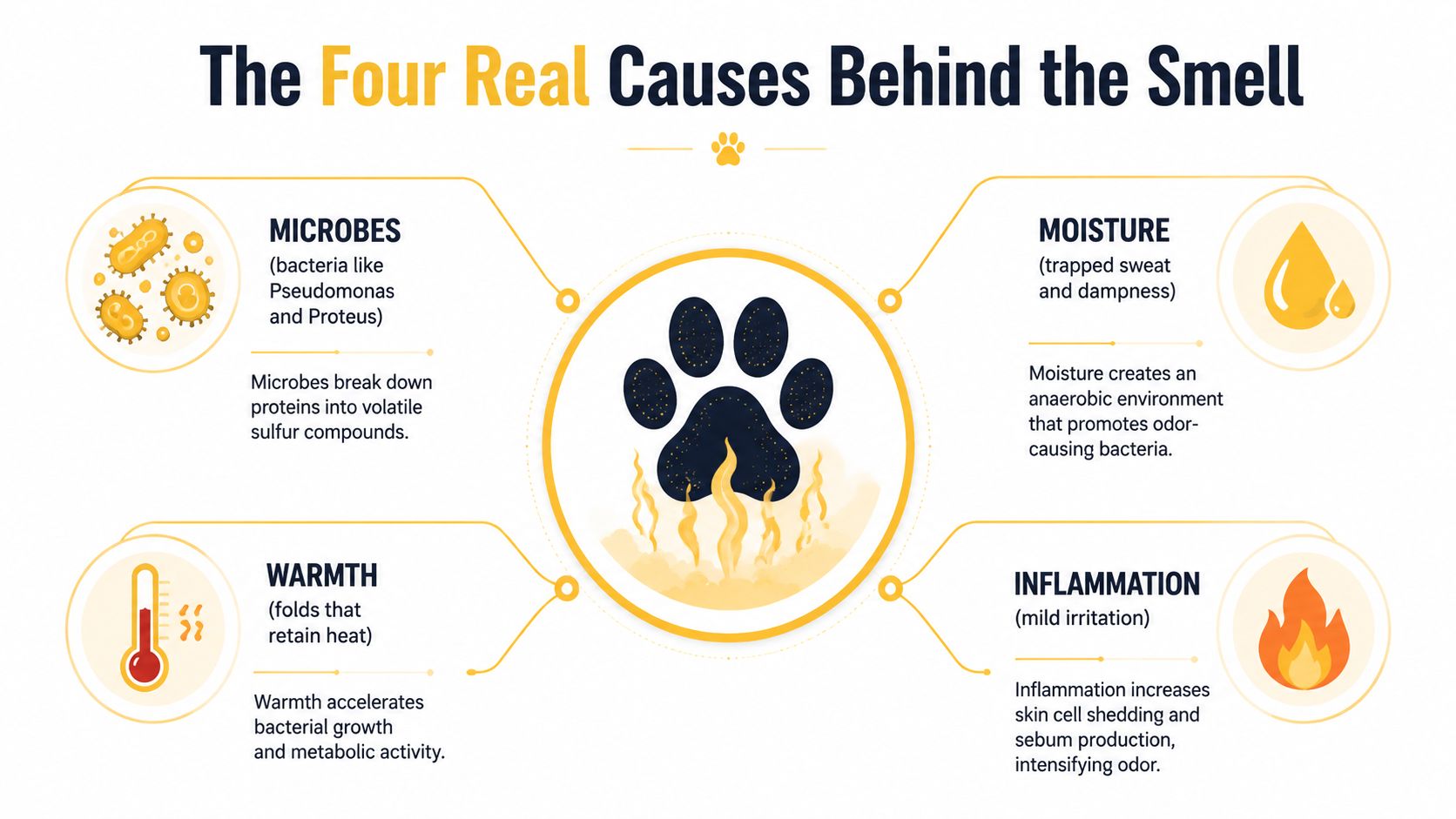
Microbes set the baseline odor
Normal paw skin carries bacteria and yeast. That alone does not mean infection. As noted in the pododermatitis review, microbes such as Pseudomonas and Proteus can contribute to the corn-chip scent when they live on warm, slightly damp skin (PMC review on pododermatitis). The smell becomes obvious when the balance shifts and the paw stays moist.
Moisture and paw shape make it worse
Deep toe webs, skin folds, and wet grass trap water. Once that moisture hangs around, the odor gets louder. A dog that comes inside from a wet yard, settles down, and smells stronger afterward usually has moisture in the mix. That is normal chemistry, not bad hygiene.
Allergy-driven licking keeps the cycle going
Paw licking is a loud clue. Allergies, whether from the environment or food, often show up there first. Licking keeps the skin wet, irritates it, and feeds microbial overgrowth. If the smell comes with itching, ear trouble, or face rubbing, stop calling it simple foot odor and look at the whole skin picture. A helpful place to start is this guide on dog skin and coat care, because paw odor often tracks with broader skin irritation.
Small injuries open the door
A cracked pad, a cut, a burr between toes, or a grass awn breaks the skin barrier. Once that barrier is damaged, the paw is easier to inflame and infect. The smell can shift from faint and familiar to heavier, dirtier, and hard to ignore.
That is the line to watch. Mild odor with clean skin and normal behavior is one thing. Strong odor with redness, swelling, discharge, pain, or nonstop licking is a different problem and needs attention.
How to Check Your Dog's Paws at Home
A home check should be quick. You are looking for the point where ordinary corn-chip odor stops being harmless and starts looking like a paw problem.
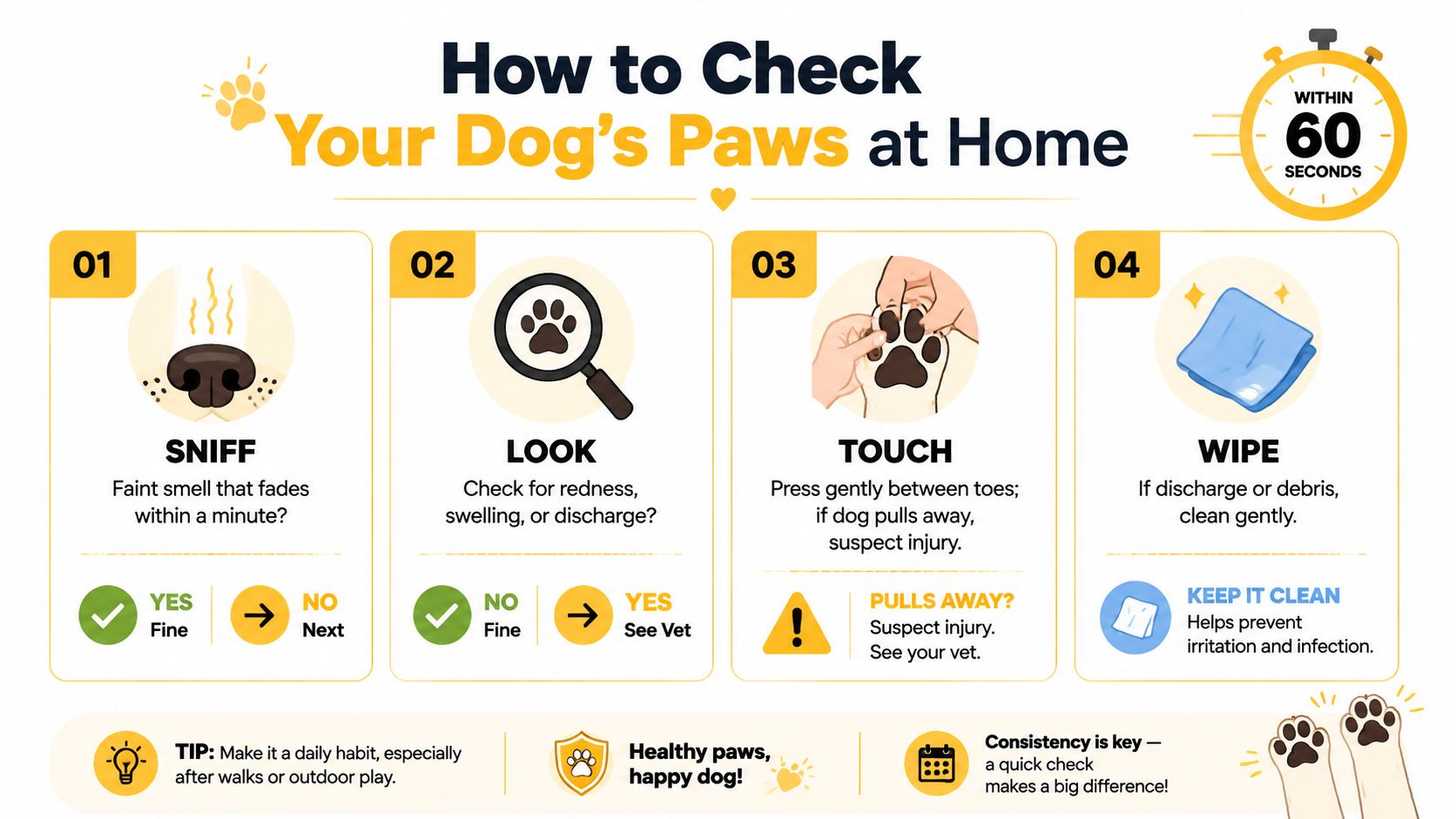
Start with the smell, then check the skin. A faint odor that fades fast and a dog that stays comfortable usually points to normal moisture, dirt, or routine paw bacteria. A stronger smell, a sudden change, or odor that hangs around calls for a closer look.
The fast yes or no checklist
- Look for redness or swelling. Normal skin should look calm, not pink, puffy, or shiny.
- Check between the toes. Discharge, brown staining, or crusting is not just “dog smell.”
- Press lightly. Pulling away, flinching, or obvious heat points to pain or inflammation.
- Watch the behavior. Licking, chewing, limping, paw sliding on floors, or waking up to lick paws matters more than odor alone.
- Think back on the environment. Mud, wet grass, snowmelt, and repeated licking after walks all push moisture and irritation higher.
Simple threshold: If two or more signs show up together, or the smell keeps returning after basic cleaning, stop treating it like a smell issue and treat it like a paw issue.
If you are trying to tell rough, dry pads from true inflammation, this guide to dog callus on paw is useful. Texture changes can fool owners, but irritation usually leaves more clues than just a rough surface.
That is the decision point. A little corn-chip odor with clean skin and normal behavior is usually fine to manage at home. Odor plus pain, redness, discharge, or behavior changes is not a wait-and-see situation.
A Simple Home Care Routine for Frito Feet
A sane paw routine is boring, and that's a compliment. You're not trying to sterilize the paws, you're trying to keep them dry, clean, and calm enough that the normal microbiome doesn't tip into trouble.
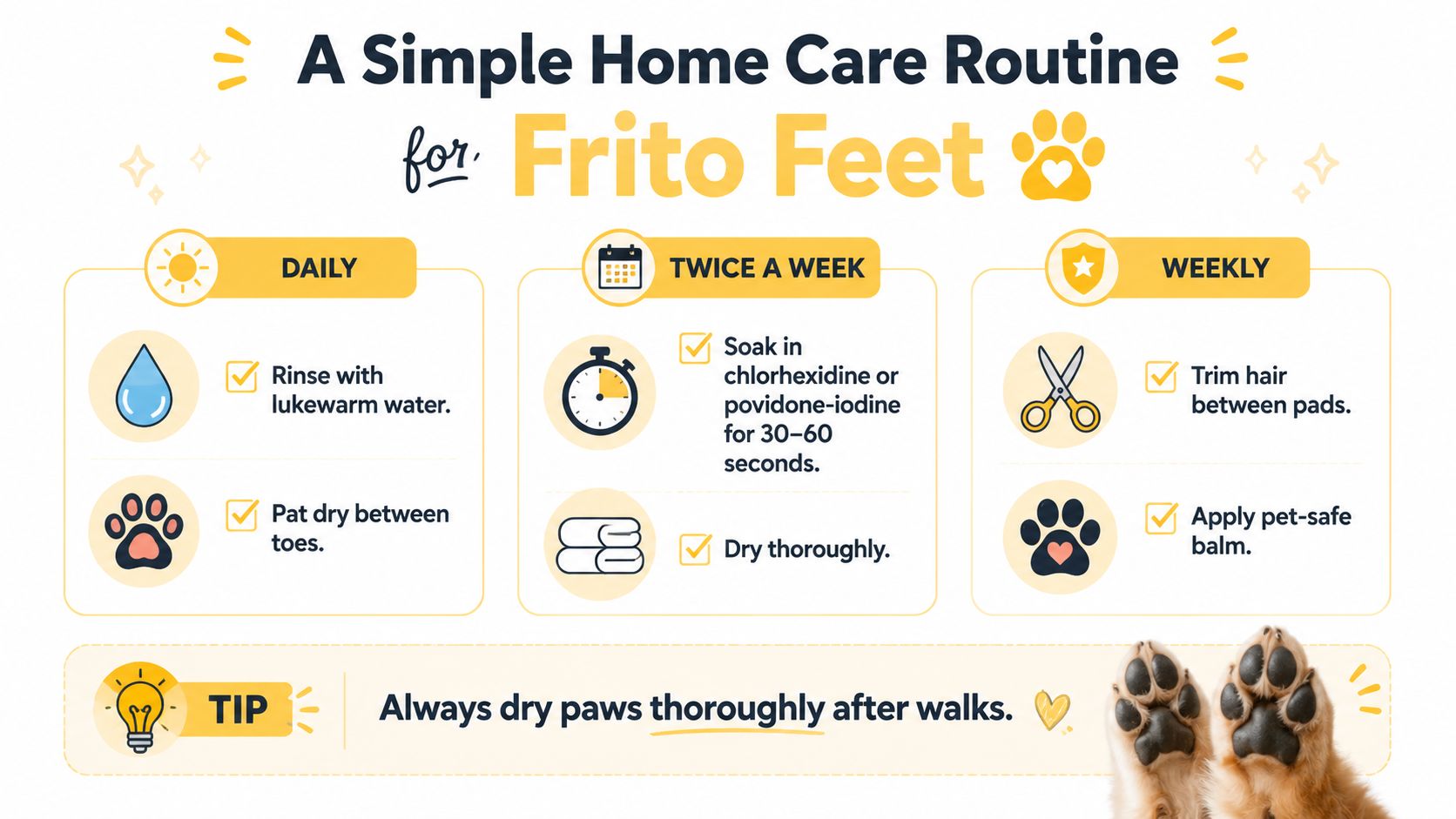
Daily care keeps moisture from winning
After walks, give the paws a quick rinse with lukewarm water only if they're dirty, then dry between every toe. If your dog has been in mud or wet grass, don't let the debris dry in place. A damp towel left between the toes is basically an invitation for odor to get stronger.
Twice-weekly care is for dogs who need more than a wipe
For dogs with recurrent odor or mild skin issues, a chlorhexidine or povidone-iodine paw soak for 30 to 60 seconds can help when your vet recommends it. Dry thoroughly afterward, because the drying matters as much as the soak. If you leave the feet damp, you've wasted the point of cleaning them.
Weekly grooming helps prevent odor traps
Trim the hair between the pads so it doesn't hold dirt and moisture. Keep the nails short enough that the paw lands cleanly and the skin around the foot isn't constantly irritated. After the grooming step, use a dog-safe paw balm or barrier wipe if your dog's pads tend to crack or feel rough.
Avoid the common bad ideas. Human antibacterial soaps, undiluted essential oils, vinegar straight from the bottle, and alcohol-based wipes are not clever shortcuts. They can sting cracked skin and disrupt the paw surface you're trying to protect.
Good habit: End every paw-care session with a 10-second sniff check so you learn your dog's normal baseline and notice change early.
If you want a broader skin-support routine that fits into daily feeding, DA-1™ Daily All-in-One is one formula marketed for multiple systems, but it doesn't replace paw cleaning, drying, or a vet exam when the skin is clearly irritated.
When the Smell Means a Vet Visit
Your dog's paws should not keep smelling like corn chips after a basic clean-up. If the odor comes back fast, or it shows up with visible skin changes, stop guessing and book the exam.
| Warning Sign | Likely First-Line Workup |
|---|---|
| Persistent odor despite cleaning | Paw exam, cytology to check for yeast or bacteria |
| Red or rust-colored staining between toes | Cytology and skin check for dermatitis or infection |
| One swollen paw | Exam for foreign body, trauma, or localized infection |
| Broken skin, sores, or pus | Cytology, possible culture, and treatment planning |
| Obsessive licking that interrupts sleep | Exam for allergy, pain, or inflammatory skin disease |
| Odor plus ear or facial itching | Allergy-focused evaluation and skin testing as needed |
Veterinary review of pododermatitis describes a broad paw problem that can involve the pads, toe webs, nail folds, nails, and nearby skin. The causes range from allergies and trauma to foreign bodies, demodicosis, tumors, and autoimmune disease. A corn-chip smell by itself is one thing. A smelly paw with redness, swelling, or pain is something else.
Clinics usually start with cytology to separate yeast from bacteria, then add a skin scrape, fungal culture, or other tests if the pattern is unclear. Recurrent cases often need a deeper allergy workup, including a diet elimination trial or other allergy evaluation. Treatment may include medicated wipes, oral antifungals or antibiotics, anti-itch medication, and allergen management, depending on what the exam shows.
If the odor is strong and the dog is licking, limping, or swollen, book the visit fast. Don't wait for it to settle down on its own.
For dogs whose paw issues travel with itchy skin and repeat flare-ups, this overview of yeast pills for dogs is a useful companion read, because the smell is often only one part of the skin problem.
Prevention Habits That Keep the Odor Down
The best prevention is annoyingly simple. Keep moisture off the paws, keep the skin barrier intact, and don't let itch or trauma build into a bigger problem. That's the whole game.
Match the habit to the cause
- For microbes, use a gentle chlorhexidine wipe-down after damp outdoor play when your vet says it's appropriate. You're not trying to erase all microbes, just keep overgrowth from getting comfortable.
- For moisture and folds, towel-dry every paw after rain, baths, pool time, or wet grass. Then trim the hair between the pads so air can move through the foot.
- For allergies and diet, work with your vet before changing food. If a food trial is needed, it should be consistent and deliberate, not random swapping. Skin support needs patience.
- For trauma, keep nails short, file rough edges, and check for foxtails, burrs, or cuts after hikes or rough ground.
A lot of people blame diet first because it feels tidy. That's often the wrong instinct. Moisture, warmth, grooming, and underlying skin disease are the usual drivers when odor gets worse. A cleaner environment helps more dogs than a dramatic food change.
If airborne allergens are part of the issue, reducing dust and dander in the home can help overall skin comfort. If you're comparing ways to do that, this HEPA air purifier comparison is a practical place to start because cleaner indoor air can make life easier for dogs with itchy skin.
A simple weekly cadence works better than random overcleaning. Do a daily sniff and dry-off, a twice-weekly check with targeted paw care if needed, and a monthly full inspection of nails, pads, and toe webs. If your dog is older and skin issues are piling up with other changes, Pure Paw Labs also makes a multi-system daily supplement, but paw odor still needs the basics, cleaning, drying, and observation, first.
Key Takeaways for Managing Frito Feet
A mild corn-chip smell on its own is usually just normal paw microbes plus moisture. It's not proof your dog is dirty, and it's not automatically a disease. The smell becomes a real signal when it shows up with redness, swelling, discharge, bleeding, limping, or nonstop licking, because that pattern points toward pododermatitis and should be checked by a vet.
Start with the simple stuff and stay consistent. Wipe paws after walks, wash only when they're dirty, dry every crease, keep nails and fur trimmed, and look at the four main drivers once the smell changes, microbes, trapped moisture or folds, allergies or diet, and trauma or irritation. That's the threshold rule: odor alone usually means manage at home, odor plus symptoms means it's time to act.
The single best habit to start this week is a post-walk paw check and dry-off. Do it every day, compare left and right paws, and write down recurring redness, odor, or licking so your vet gets a clean timeline instead of a vague story.
If you're trying to keep your dog's skin, paws, and everyday comfort on track without juggling a mess of products, Pure Paw Labs focuses on science-backed daily support for dogs. Visit Pure Paw Labs to see how its supplement approach fits alongside the plain, practical paw care that keeps Frito feet from turning into a real problem.