


Your dog settles down for the night, then the scratching starts again. A back paw hammers at the neck. Then comes the paw licking, the chewing at the legs, the ear rubbing on the carpet, and that worried look that says, “Something feels wrong, and I can't fix it.”
If you're here, you're probably trying to sort through a noisy market of powders, chews, oils, probiotics, and “allergy blends” that all promise relief. It's exhausting when your dog is uncomfortable and every product label sounds reassuring.
The good news is that dog supplements for allergies can play a useful role. The less comfortable truth is that they work best when you understand what they can do, which ingredients deserve the most trust, and how they fit into a bigger care plan. The smartest approach isn't grabbing the longest ingredient list. It's choosing support that makes biological sense, has some evidence behind it, and is realistic enough to use every day.
Table of Contents
- Why Is My Dog Constantly Scratching
- Understanding Canine Allergies
- Key Ingredients That Support Allergic Dogs
- How to Choose a High-Quality Allergy Supplement
- Integrating Supplements Into Your Dog's Routine
- When You Must See a Veterinarian
- Frequently Asked Questions About Dog Supplements
Why Is My Dog Constantly Scratching
A lot of owners first notice the pattern in small pieces. Their dog seems “a little itchy” after walks. Then the licking starts every evening. Then the paws look rusty from saliva. Then there's an ear flare, a rough patch on the belly, or a sudden obsession with chewing at the base of the tail.
That spiral is frustrating because it rarely feels dramatic at first. It just keeps going. You try a bath. You switch treats. You clean the bedding. You buy a chew that says “skin and immune support.” Your dog may get a little better, or not at all, and now you're stuck wondering if you chose the wrong product or missed the underlying cause.
Allergies are one common reason this happens, but itch isn't a diagnosis by itself. It's a signal. Sometimes supplements help calm part of the problem. Sometimes they support the skin while you and your veterinarian figure out what's driving the reaction. Sometimes they're useful, but not enough on their own.
Practical rule: Treat supplements as support for an itchy dog, not as proof that you've identified the cause.
That mindset helps you make better decisions. Instead of asking, “What's the miracle ingredient?” ask, “What kind of support does my dog need right now?” A dog with red, inflamed skin may need anti-inflammatory support. A dog with recurring digestive upset and itch may need gut-focused support alongside a deeper workup. A dog with seasonal flares may need a long-term plan rather than a quick fix.
If your dog's symptoms sound familiar, this guide on dog allergies and itching gives a helpful overview of common patterns owners notice at home.
What scratching often looks like at home
- Feet and legs: Constant licking, chewing, or stained fur between the toes
- Ears: Head shaking, rubbing, odor, or repeat irritation
- Belly and armpits: Pink, red, or darkened skin
- Face and rear end: Rubbing on furniture, scooting, or restless grooming
Relief usually comes from matching the tool to the problem. That starts with understanding what an allergy is.
Understanding Canine Allergies
An allergy starts when a dog's immune system reacts to something harmless as if it were a threat. That overreaction can be triggered by pollen, a food ingredient, flea saliva, dust, or other everyday exposures. What you notice at home is the result of that reaction. Itch, red skin, ear irritation, licking, chewing, and sometimes digestive upset.
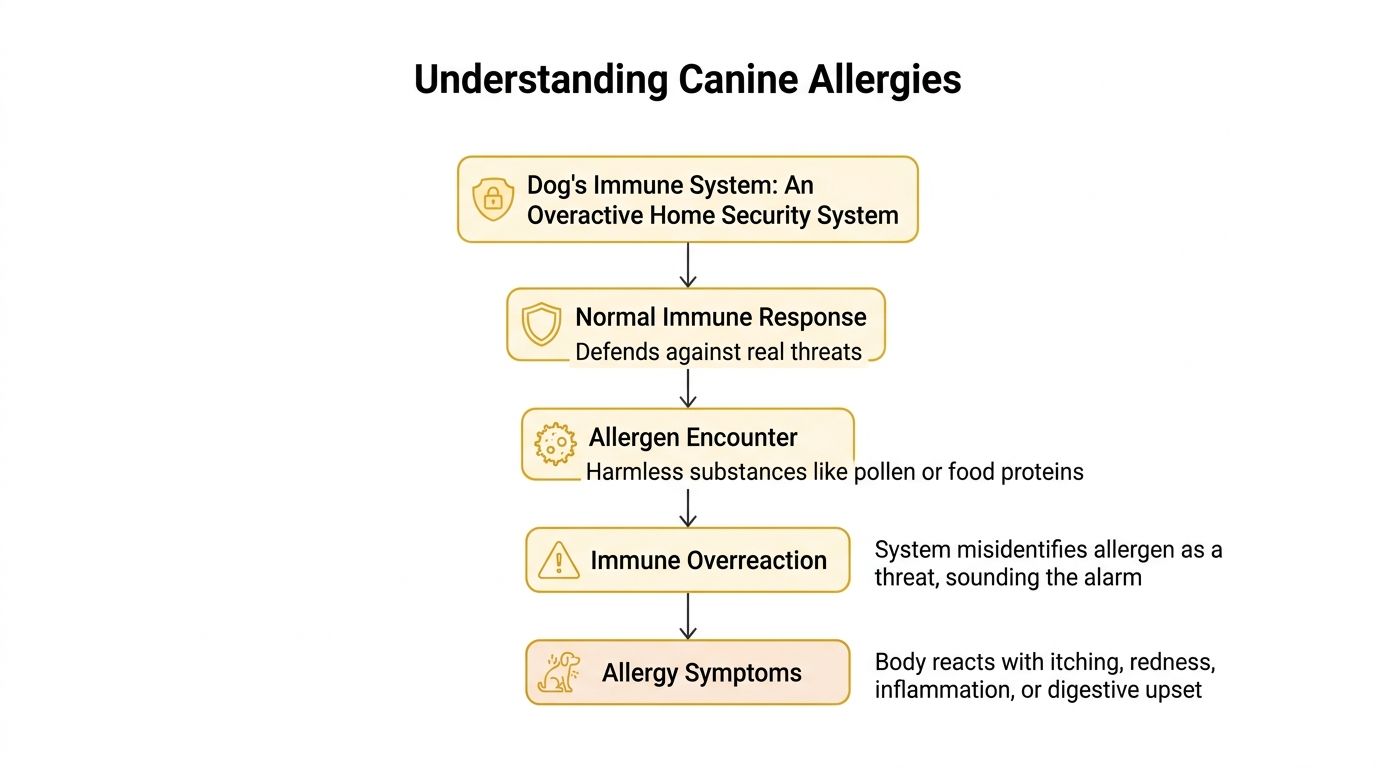
That can feel confusing because the trigger and the symptoms are not always in the same place. A dog may react to grass but show the problem mostly in the paws. A food reaction may look like ear trouble or chronic licking. The body is responding as a whole, even when the signs show up in one area.
What an allergic reaction really is
Skin plays a bigger role than many owners realize. Healthy skin works like a protective wall. Skin cells form the structure, and oils and barrier materials fill the gaps so moisture stays in and irritants stay out.
During an allergic flare, inflammation can weaken that barrier. Once the surface becomes irritated and more permeable, allergens and microbes have an easier time getting in. Then the immune system reacts again. That is how a short flare can turn into a stubborn cycle of itch, licking, redness, and secondary irritation.
The scratching you see on the surface often reflects two problems at once. Immune overreaction and a skin barrier that needs support.
This is also why an all-in-one supplement can make sense in some dogs. One ingredient may target inflammatory pathways. Another may support skin lipids. Another may help gut balance, which can matter in dogs with food-related sensitivity. The value is not just in having a long ingredient list. It is in whether the formula covers the main pressure points involved in allergic skin disease and uses forms that are worth giving.
If you are sorting through options, this guide on whether dogs can have fish oil safely and how to choose one can help you evaluate one of the most commonly used support ingredients.
The three big allergy categories
Most canine allergy cases fall into three broad groups:
-
Environmental allergies
These include reactions to pollen, mold, dust mites, and similar exposures. Some dogs flare during certain seasons. Others have symptoms most of the year. Paw licking, belly redness, face rubbing, and recurring ear irritation are common patterns. -
Food allergies
These are reactions to ingredients in the diet, often proteins. Some dogs show mostly skin signs. Others also have loose stool, gas, or other digestive changes. Diagnosis usually requires a structured diet trial and patience. -
Flea allergy dermatitis
Some dogs are highly reactive to flea bites. Even a small number of bites can cause intense itch. The lower back, tail base, and rear legs are common trouble spots.
These categories matter because they do not respond to support in the same way. A supplement may help calm inflammation, reinforce the skin barrier, or support the gut, but it does not identify the trigger for you. That is the framework to keep in mind while shopping. Ask whether a product supports the parts of the allergic process your dog is struggling with, and whether it fits into a larger plan that includes trigger control, diet review, flea prevention, and veterinary care when needed.
Key Ingredients That Support Allergic Dogs
The label on an allergy supplement can look impressive fast. Fish oil, probiotics, collagen, herbs, vitamins, mushrooms, antioxidants, and botanical blends all packed into one scoop or chew. More ingredients can sound better, but only if those ingredients do something useful and appear in a form worth taking seriously.
Omega-3s as the evidence-backed foundation
If you remember one ingredient category, make it omega-3 fatty acids, specifically EPA and DHA. Right now, only one supplement category currently has peer-reviewed evidence for effectively treating established dog allergies: omega-3 fatty acids. The evidence summarized by The Allergic Dog's review of dog allergy supplements notes that EPA and DHA have been shown in multiple published studies to reduce inflammatory markers and improve clinical signs in dogs with atopic dermatitis.
That matters because inflammation is a major part of allergic itch. Omega-3s act a bit like internal firefighters. They don't erase the cause of the blaze, but they can help calm the inflammatory heat that makes skin miserable.
If you're evaluating fish oil specifically, this guide on whether dogs can have fish oil can help you think through safety and product form.
Skin barrier support matters too
Even when the immune system starts the problem, the skin barrier often keeps it going. That's why supportive ingredients for the barrier can still be useful in a broader plan.
Think again about the brick wall:
- Collagen can be thought of as structural support.
- Ceramides are like part of the mortar that helps seal the wall.
- Essential fats support the surface so skin stays more resilient.
These ingredients don't have the same evidence status for treating established allergy disease as EPA and DHA, but they fit the biology of itchy skin well. If your dog's coat looks dull, the skin seems flaky, or the irritation gets worse after every small trigger, barrier support can make practical sense.
Probiotics and postbiotics as gut support
The gut and skin talk to each other constantly through the immune system. That's why probiotics get so much attention in dog supplements for allergies.
There's an important nuance here. Veterinarians and industry experts emphasize that while probiotics are promising, many commercial products still lack the rigorous evidence needed to reliably treat established allergic disease. At the same time, a 10-week randomized controlled trial of a probiotic-nutraceutical blend containing postbiotics found that treated dogs had faster resolution of pruritic dermatitis than placebo, with significant score improvement after just 2 weeks, and the blend also changed fecal microbiota diversity in a favorable way, according to the published trial in PMC.
So how do you reconcile those two ideas? Like this:
- Probiotics are not automatically effective just because a label says “contains probiotics.”
- Some targeted blends show real promise.
- Product quality, strain choice, and formulation matter a lot.
I think of probiotics and postbiotics as gut gardeners. Their job isn't to smother symptoms directly. Their job is to help shape a healthier internal environment that may support calmer immune signaling.
Comparison table
| Ingredient | Primary Function | Best For |
|---|---|---|
| Omega-3 fatty acids EPA and DHA | Helps calm inflammation | Dogs with allergic skin disease, redness, and ongoing itch |
| Probiotics and postbiotics | Supports gut and immune balance | Dogs with itch plus digestive sensitivity, or owners wanting microbiome support |
| Collagen | Supports skin structure | Dogs with fragile skin or coat quality concerns |
| Ceramide-focused support | Helps maintain skin barrier | Dogs with dry, compromised, or reactive skin |
| Quercetin | Often used for histamine-related support | Mild seasonal support as part of a broader formula |
A useful all-in-one formula doesn't win because it has the most ingredients. It wins when the ingredients work together logically. One group calms inflammation. Another helps rebuild the skin barrier. Another supports the gut-immune conversation. That's the kind of synergy worth looking for.
How to Choose a High-Quality Allergy Supplement
A good label should answer your questions, not create new ones. If a company makes it hard to see what's inside, how much is included, where it's made, or how it's tested, that's a warning sign.
Read the label like a skeptic
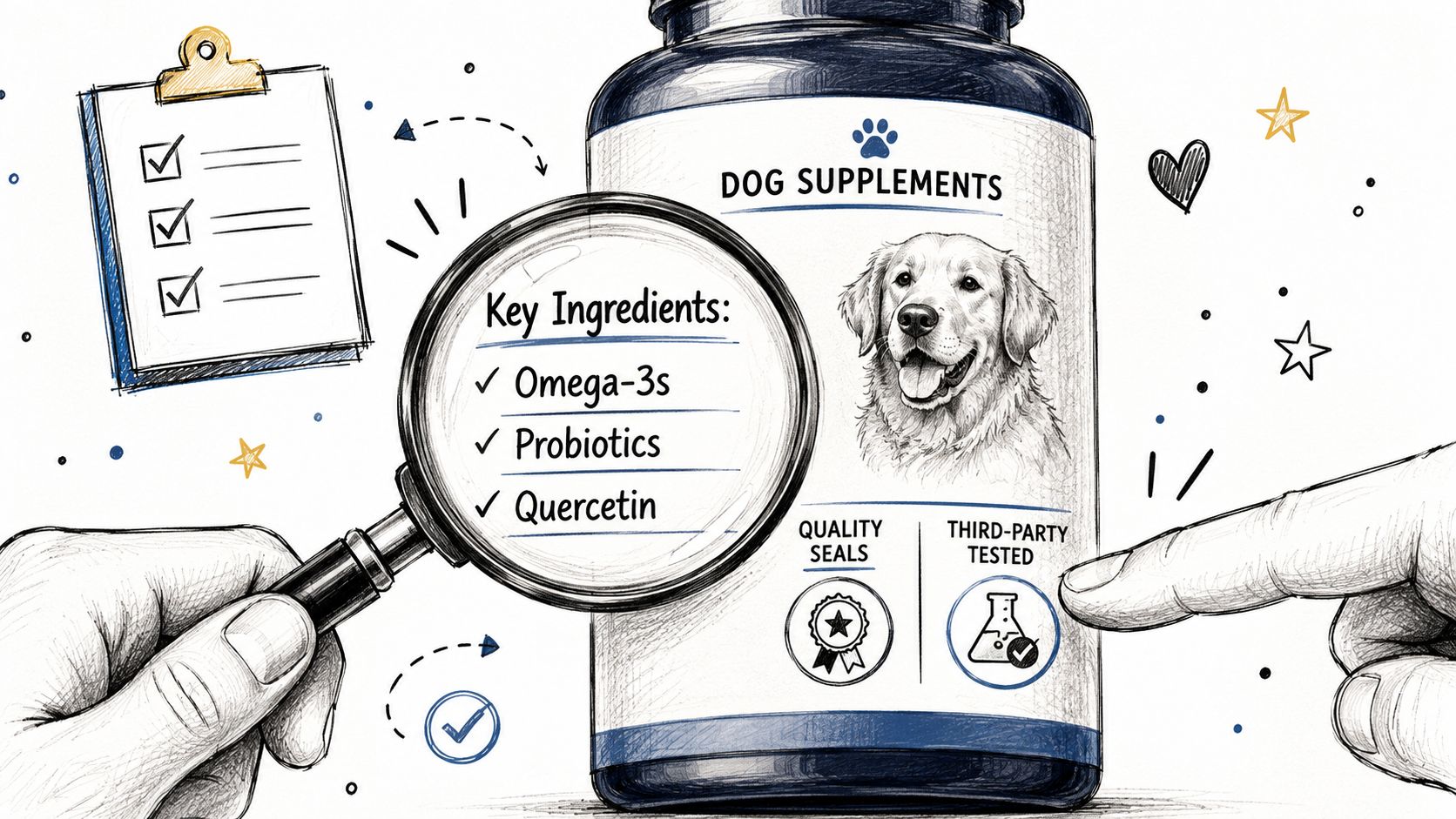
Start with the active ingredients. You want a clear list, understandable forms, and transparent amounts. Vague “proprietary blends” make it difficult to judge whether the formula is built around meaningful support or just marketing language.
Use this quick checklist:
- Transparent actives: The front of the package may sell the dream, but the supplement facts panel tells the truth.
- Minimal filler load: A cleaner formula leaves less room for fluff. Pure Paw Labs states that its Daily All-in-One formulation contains 99.8% active ingredients with no fillers.
- Manufacturing details: Look for production in an FDA-registered facility and third-party testing when a company provides that information.
- Form that fits dosing: Powders can be practical because they're easy to mix with food and can simplify daily use.
A complicated label usually makes a simple problem harder. Clear dosing and clear ingredient disclosure are better signs than flashy packaging.
Why all-in-one can help or hurt
An all-in-one formula can be helpful if it solves a real-life owner problem, which is supplement stacking. One jar for skin, another for joints, another for gut support, another for calming. Before long, the routine is messy and inconsistent.
The risk is that some all-in-one products sprinkle in trendy ingredients without enough clarity. The benefit is that a well-built formula can support several systems at once and make daily use more realistic.
That's why I'd judge an all-in-one product on three points:
-
Does the formula show logic?
For allergic dogs, that means inflammatory support, skin support, and gut support should fit together. -
Does the company show its work?
If a product leans on probiotic claims, remember that the published 10-week randomized controlled trial discussed earlier involved a specific probiotic-nutraceutical blend with postbiotics, not every probiotic product on the shelf. -
Can you stick with it?
The best supplement is useless if your dog refuses it or you forget half the doses.
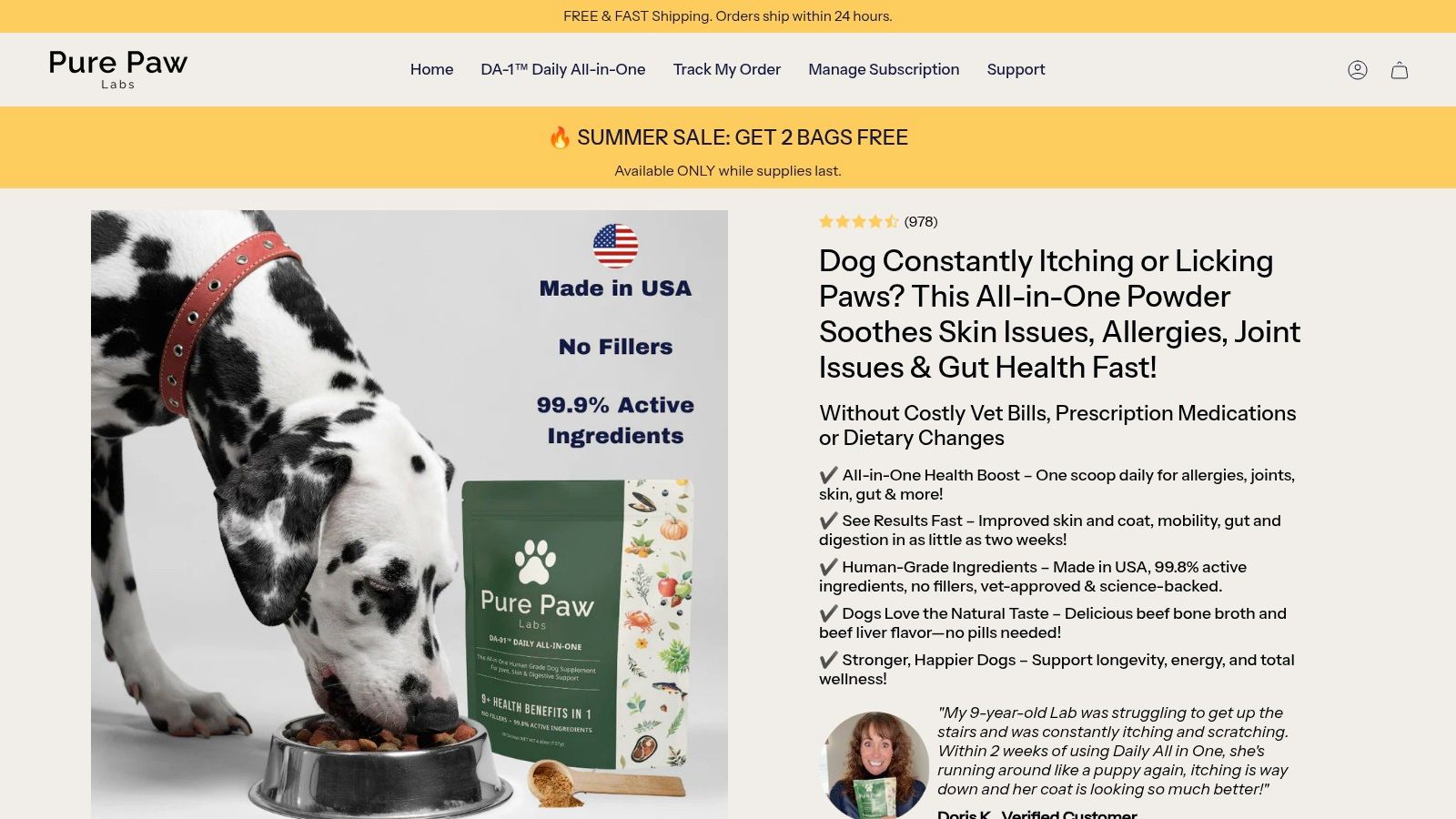
One example of the all-in-one approach is DA-1™ Daily All-in-One - Skin/Coat, Joints, Gut Health & More, which Pure Paw Labs describes as a once-daily human-grade powder designed to combine support for skin and coat, joints, digestion, immunity, and anxiety relief in one food topper.
Integrating Supplements Into Your Dog's Routine
You buy the powder, open the jar, mix the first scoop into dinner, and then spend the next week wondering whether anything is changing. That waiting period is where many allergy routines break down. Owners want relief fast, but skin usually improves on a slower schedule.
Start gently, then give it time
A new supplement is easiest to judge when you change one thing at a time. Mix a small amount into a full meal and watch the basics first: stool quality, appetite, and whether your dog still wants the food.
Then stay patient.
Skin support works more like repairing a worn brick wall than flipping on a light switch. The skin barrier has to rebuild, inflammation has to settle, and irritated tissue needs time to calm down. As noted earlier, omega-3 support for seasonal itching often takes several weeks of steady daily use before owners notice a clear difference.
A simple schedule helps:
- Days 1 to 3: Start with a partial serving mixed with food.
- Days 4 to 7: Increase toward the full serving if your dog is doing well.
- Weeks 2 to 6: Keep the routine steady and avoid changing products too quickly.
- Ongoing: Track scratching, paw licking, ear flare-ups, stool, and coat condition in a note on your phone.
That last step matters more than it seems. When you see your dog every day, gradual improvement is easy to miss.
Build a routine your household can actually keep
Many owners do not struggle because they do not care. They struggle because the plan asks too much of real life. One chew in the morning, an oil at night, a probiotic at lunch, and a missed dose every time the day gets busy is a setup for inconsistency.
An all-in-one formula can solve that problem if the ingredient mix has a clear job. For an allergic dog, the goal is not to throw many ingredients into one scoop. The goal is to support connected systems at the same time. Skin, gut, and inflammatory balance affect each other, so a formula should reflect that relationship.
For older dogs with allergy-related skin concerns plus age-related needs, DA-1™ Daily All-in-One - Senior Dog Support, Joints, Skin/Coat & More is described by Pure Paw Labs as a multi-system powder with 18 human-grade ingredients for skin and coat, joints, gut health, and cellular support. The practical advantage is routine simplicity. One daily topper is often easier to use consistently than several separate products.
Consistency usually does more for an itchy dog than a complicated supplement shelf.
Keep the plan boring enough to repeat every day. That is often what turns a promising formula into something that helps.
When You Must See a Veterinarian
Supplements have a place. They do not replace a diagnosis.
If your dog keeps scratching despite your efforts, the most helpful next step may be a veterinary exam, not another jar. Many problems can look like allergies from across the room. Skin infections, parasites, food reactions, and other medical issues can overlap in a way that's hard to sort out at home.
Red flags that need professional care
Book a veterinary visit promptly if you notice any of the following:
- Open sores or raw skin: Constant self-trauma can lead to pain and infection.
- Bad odor, pus, or crusting: These can suggest a secondary skin or ear infection.
- Major ear pain or repeated head shaking: Ear disease can worsen quickly and may need targeted treatment.
- Severe lethargy or marked behavior change: Itch alone shouldn't make a dog shut down.
- Breathing trouble or facial swelling: Treat this as urgent.
Bring your supplement list to the appointment. That includes oils, powders, chews, toppers, and “natural” products. Your veterinarian needs the full picture to avoid interactions and to judge whether what you're using matches your dog's problem.
A good care plan is collaborative. The veterinarian identifies the cause, rules out lookalikes, and treats active disease. Supplements can then support the skin, gut, or inflammatory load in a way that makes the bigger plan easier to maintain.
Frequently Asked Questions About Dog Supplements
Can I give allergy supplements to my puppy
Sometimes, but don't guess. Puppies can have sensitive digestion, different nutritional needs, and skin issues that aren't allergies at all. Ask your veterinarian before starting any supplement, especially if your puppy is very young, small, or already eating a complete puppy diet.
Is it safe to combine multiple supplements
It can be, but stacking products creates overlap fast. You may double up on similar ingredients without realizing it. It's usually smarter to choose a clear goal, like omega-3 support or a single all-in-one formula, and review the full routine with your veterinarian.
What is the difference between human and dog supplements
Dog supplements are formulated with canine use in mind, including flavor, serving format, and ingredient choices that fit dogs better. Human products may contain additives, sweeteners, or dosing assumptions that aren't appropriate for pets. If you're considering any human supplement for your dog, get veterinary guidance first.
How long should I try a supplement before judging it
Give it a fair trial based on the kind of support you're using. Some products, especially those aimed at inflammation and barrier support, need steady daily use rather than occasional dosing. Keep notes so you can judge changes based on patterns, not memory.
If you want a simpler way to think through daily wellness support, Pure Paw Labs focuses on human-grade dog supplements designed to reduce supplement stacking and make once-daily routines easier to maintain.