


You've just heard the words no dog owner wants to hear, and your mind probably jumped straight to the same question many people ask in that moment, “What else can I do for my dog right now?” That urge is completely human. For a lot of families, the first search after a cancer diagnosis is dog supplements cancer, because supplements feel like a concrete way to help when everything suddenly feels uncertain.

You're not alone in that instinct. In a 2023 NIH-indexed survey of 123 dogs with cancer, 61.3% of owners reported giving supplements after diagnosis, and the most common category was joint support products, used in 35.0% of dogs (survey data). That doesn't mean every supplement is useful, or safe, but it does show how common this search is when owners want to stay proactive.
Table of Contents
- Navigating Your Options After a Cancer Diagnosis
- The True Role of Supplements in Canine Cancer Care
- Evidence-Based Supplements to Discuss With Your Vet
- Unproven Claims and Supplements to Approach with Caution
- Critical Safety Interactions With Cancer Treatments
- How to Choose High-Quality Supplements
- Your Vet Conversation Guide and Next Steps
Navigating Your Options After a Cancer Diagnosis
The first supplement search usually starts in a very real place. Your dog is still the same dog, but the diagnosis has changed the room, the schedule, and the questions in your head. One owner may be trying to help a dog who has lost weight and seems tired. Another may be staring at a cabinet full of treats, joint chews, and powders and wondering whether any of it matters now.
That feeling pushes people toward action. Sometimes that action helps, sometimes it only adds clutter. The goal is to separate the two, so you can make choices that support your dog without drifting into expensive guesses or unsafe combinations.
Practical rule: if a supplement sounds like a cure, it deserves extra skepticism, not extra trust.
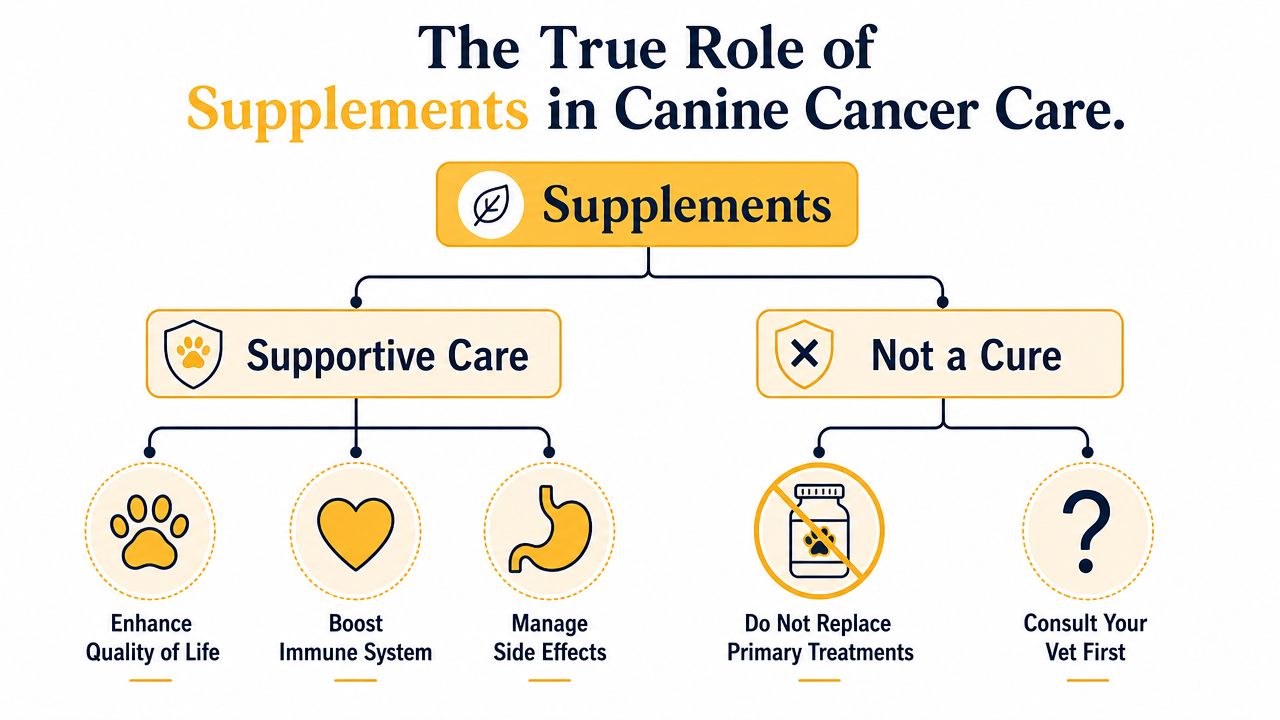
A useful way to understand this is that supplements sit beside cancer care, not in front of it. The main job of cancer treatment is to address the disease directly, while supplements are usually there to support comfort, intake, and overall condition. Veterinary oncology guidance emphasizes keeping the diet balanced and meeting calorie needs, because there is no strong evidence that any specific supplement strategy can prevent cancer or slow its progression in pets. The infographic makes the same point visually, supplements can provide supportive care, but they are not a cure.
That distinction matters because supplement marketing often blurs it. A product may be framed as if it can do the work of treatment, yet its actual role is usually much narrower. The safest questions are simple ones, such as whether the product helps a dog eat, digest, or stay more comfortable during treatment.
One practical example helps. If a dog is receiving treatment and appetite dips, the main question is often whether a supplement is helping maintain intake, comfort, or stool quality. It is not whether the product can fight cancer on its own. That keeps decisions grounded and makes it easier to spot claims that sound hopeful but are not realistic.
A good starting point is to write down everything your dog already gets, including powders, chews, oils, and treats. Then separate the list into items meant for comfort or maintenance, and items that claim to affect cancer. Bring the full list to your vet before adding anything new, especially if your dog is already on treatment, because the safety question is often about how one product fits with another.
The True Role of Supplements in Canine Cancer Care
A dog with cancer often needs more than one kind of support, and that is where supplements can fit in. They may help with appetite, digestion, comfort, or general condition, but they do not replace the treatments that target the disease itself. Surgery, chemotherapy, and radiation work directly on cancer. Supplements support the dog around those treatments, like a steady hand beside the main therapy.
That distinction matters because supplement marketing can blur it. Veterinary oncology guidance says there is no strong evidence that a specific supplement strategy can slow cancer in pets, even though antioxidants and phytonutrients are often promoted that way. The more realistic role for supplements is practical care, not cancer control. They may help a dog eat a little better, keep stools more stable, or stay more comfortable while treatment is ongoing.
Supportive care has a narrower job
Supportive care often looks modest from the outside, but its effects can be meaningful. A dog that keeps eating, has less digestive upset, or moves with a little more ease is usually coping better with the day-to-day strain of cancer care. Those small gains matter when treatment already places stress on the body.
A simple way to judge a supplement is to ask what job it is supposed to do. Does it help with intake, comfort, or quality of life, or is it being sold as if it can treat cancer on its own? Pure Paw Labs' fish oil guide is a useful reminder that even common products need to be chosen with care, because a support item still has to fit the dog's larger treatment plan. A product like DA-1™ Daily All-in-One - Senior Dog Support, Joints, Skin/Coat & More may be described as a multi-system formula, but any multi-ingredient supplement still needs a vet check before it is used in a dog with cancer.
Keep the goal tied to quality of life
The better question is not whether a supplement sounds natural. The better question is whether it helps the dog feel and function better without creating problems during treatment. That keeps the decision grounded and makes it easier to separate support from hype.
A supplement can make sense when it fills a clear gap. It becomes risky when it is chosen because the label promises more than the evidence can support. The safest approach is to treat supplements as part of a shared plan with your vet, especially when your dog is already receiving cancer care.
Evidence-Based Supplements to Discuss With Your Vet
The most useful supplement conversations are narrow and specific. You're not looking for a giant wellness stack. You're looking for a few ingredients that may have a plausible benefit, along with the honesty to accept that the evidence is still limited.
Omega-3 fatty acids are one of the clearest examples. A systematic review found some supportive evidence for EPA/DHA as an adjunct in canine lymphoma, but it also emphasized a moderate-to-high risk of bias in the available studies and said better methods are needed before strong clinical claims can be made (systematic review). That's the right mindset. Some promise, not a cure.
What to ask about first
If your dog's vet thinks a supplement may help, the discussion usually starts with a specific target.
- Omega-3 fatty acids: These are often discussed for dogs that need general inflammatory support or adjunctive nutritional support. The science is promising, but still cautious, so dosage and product choice matter.
- Digestive support ingredients: Treatment can affect the gut, so vet-guided gut support may be discussed when appetite, stool quality, or tolerance becomes a problem.
- Antioxidant-containing formulas: These need extra scrutiny, because “antioxidant” is not automatically a green light during active treatment.
Practical rule: the more ingredients a product has, the more important the label review becomes.
If you want a plain-language overview of one common omega-3 category, the article on can dogs have fish oil gives helpful background on how that ingredient is usually used in dogs.
A simple evidence snapshot
| Supplement | Potential Supportive Role | Level of Evidence | Key Consideration |
|---|---|---|---|
| Omega-3 fatty acids, EPA/DHA | Adjunctive support, especially in some cancer contexts | Limited but promising | Review dose and product quality with your vet |
| Gut-support supplements | Help maintain digestive comfort and intake | Varies by ingredient | Match the product to the problem, not the trend |
| Antioxidant-heavy formulas | Sometimes promoted for general wellness | Weak for cancer control | May need to be paused during treatment |
The big takeaway is that “evidence-based” doesn't mean “proven to treat cancer.” It means there's enough reason to discuss the ingredient thoughtfully, instead of choosing it because it sounds harmless. That's the standard that protects dogs best.
Unproven Claims and Supplements to Approach with Caution
A worried owner can easily feel pulled toward anything that sounds hopeful. The supplement market knows that, and some products rely on that pressure by sounding more certain than the evidence allows.
A veterinary oncology review from UC Davis says there is no strong evidence that any specific supplement strategy can slow cancer progression in pets, and it notes that antioxidants and phytonutrients are often promoted even without that support. That is why a product can talk about “support” while indirectly implying it functions like treatment.
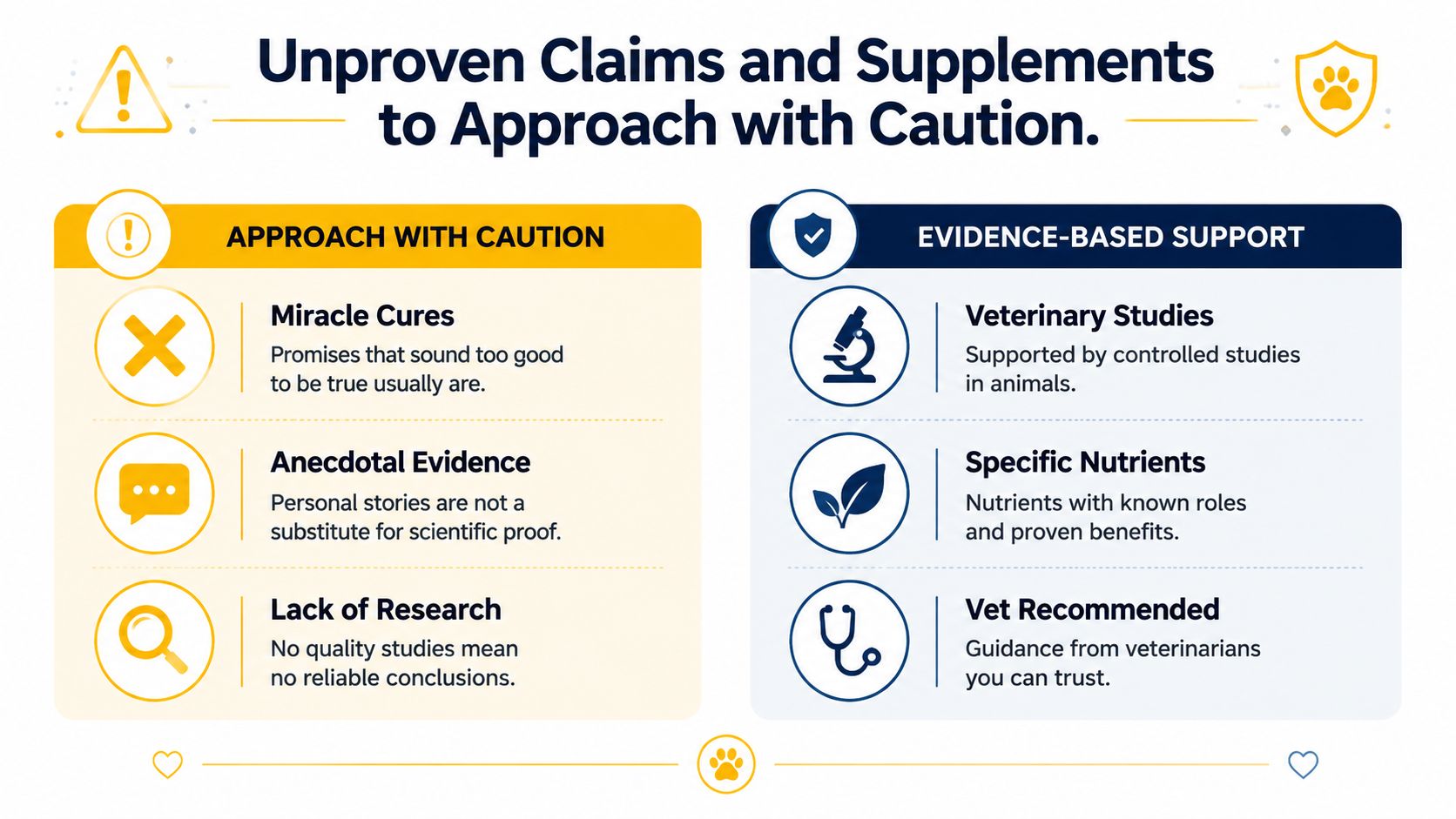
Signs a product deserves skepticism
A supplement deserves closer scrutiny when it relies on broad promises instead of a clear ingredient-by-ingredient explanation. “Supports the body's natural defenses” may sound reassuring, but it still does not tell you what the product does or whether it fits with treatment.
A few warning signs are worth watching for:
- Miracle cure language: If a product claims to reverse cancer, stop there.
- Anecdotes instead of data: One dog's story is not the same as evidence.
- Vague blending of ingredients: The more crowded the formula, the harder it is to tell what is helping, what is neutral, and what might cause trouble.
- Cancer-specific promises without vet oversight: Products built around bold claims should be handled carefully, especially during active treatment.
The practical problem is not only wasted money. It is lost time. A dog can move through weeks of unhelpful products while the actual care plan gets delayed.
Owners often want a plain way to judge common over-the-counter products, not just the dramatic “anti-cancer” claims. That is why a consumer-checklist mindset matters, and why a guide such as natural dog supplements can help with label reading even though it is not a cancer treatment plan.
What “promoted often” doesn't mean
A product can be popular and still be unproven. It can be natural and still have no meaningful role in cancer care. It can also seem gentle while still being a poor fit for a dog already managing medication changes, appetite swings, or planned procedures.
Skepticism is not cynicism. It is a way to protect your dog's body and your own energy while you sort through claims that sound helpful but have not earned that trust.
Critical Safety Interactions With Cancer Treatments
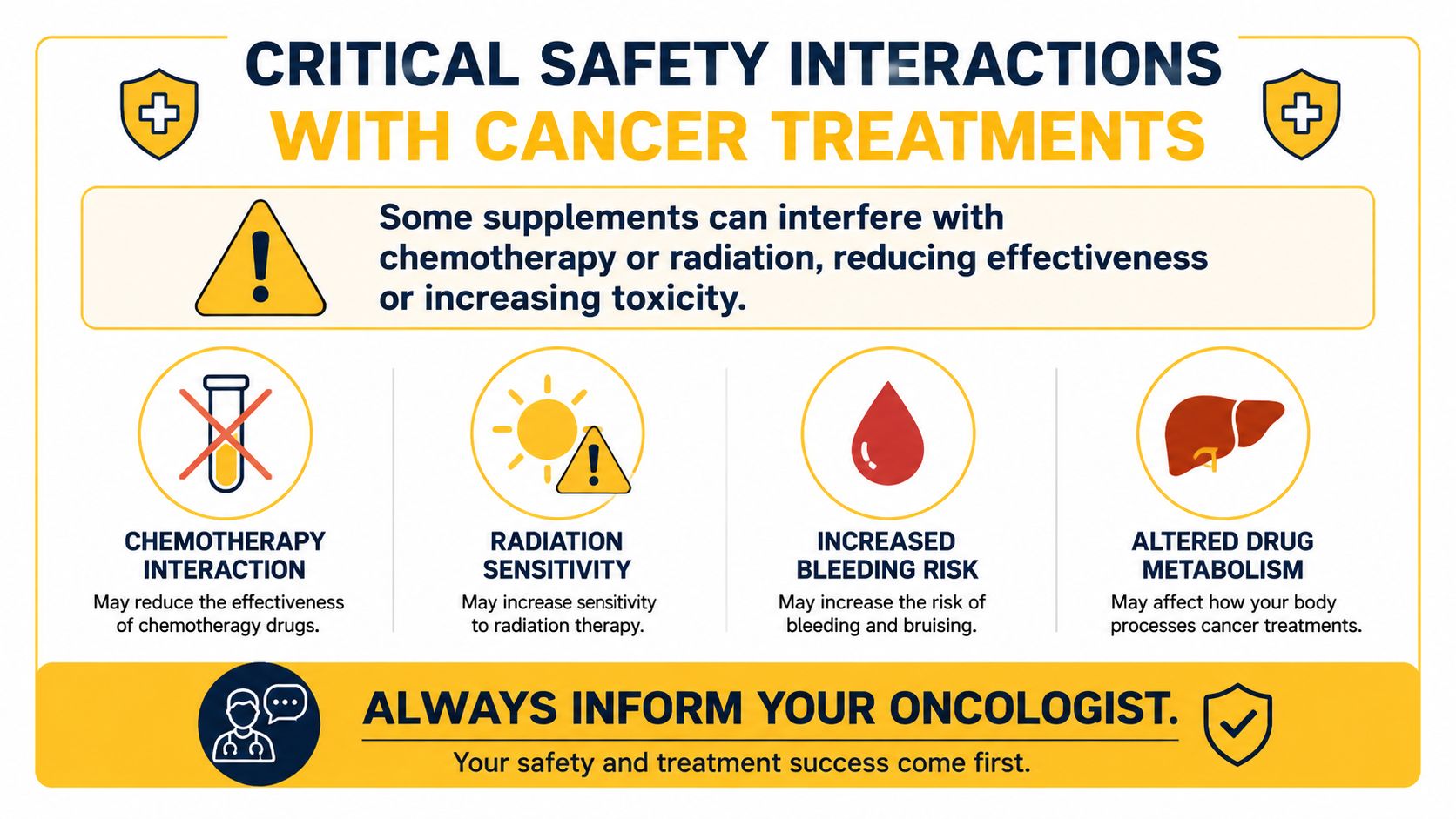
Safety is the part that gets missed most often. Many owners are told to look for what might help, but they are not given a clear way to judge what could interfere. That gap matters because some supplements can affect anesthesia, chemotherapy, or radiotherapy, and veterinary oncology sources say they should be reviewed with the veterinarian before treatment.
Why natural doesn't mean harmless
A supplement can change how a drug behaves in the body. It can also create a mismatch between what the oncology team expects and what the dog is receiving. That is why “natural” is not a safety label.
The biggest concern is simple. Some ingredients may work against the treatment goal. Veterinary literature warns that so-called “anticancer” supplements could be harmful and may hinder chemo or radiation, which is exactly why disclosure matters before any treatment starts. If a product is meant to do something biologically active, it can also create biological conflict.
What to disclose every time
Your oncologist needs the full list, not just the “main” supplement. That includes joint formulas, multivitamins, powders, food toppers, oils, calming chews, and herbs. The reason is straightforward. A multi-ingredient product can contain something that should be paused even if the product as a whole looks harmless.
This is especially important for products that include certain antioxidants, because oncology-focused sources highlight the need to review or pause some ingredients around active treatment so they do not blunt the intended effect. The same caution applies when owners assume a joint supplement cannot matter because it was not bought for cancer at all.
Always tell the oncology team about every supplement before surgery, chemotherapy, or radiation starts.
That conversation is not about permission alone. It is about timing, ingredient conflicts, and whether a product should be held temporarily. A well-timed pause can be safer than a well-meaning addition.
If you are thinking about powders or mixed formulations, the article how to choose a homemade dog food supplement powder explains why ingredient clarity matters even more when a dog is already in treatment.
How to Choose High-Quality Supplements
Once safety is clear, quality becomes the next filter. A supplement can still disappoint you if the label is sloppy, the formula is under-dosed, or the manufacturing standards are unclear. Good-quality products make it easier for your vet to judge what's inside and how it may fit your dog's plan.
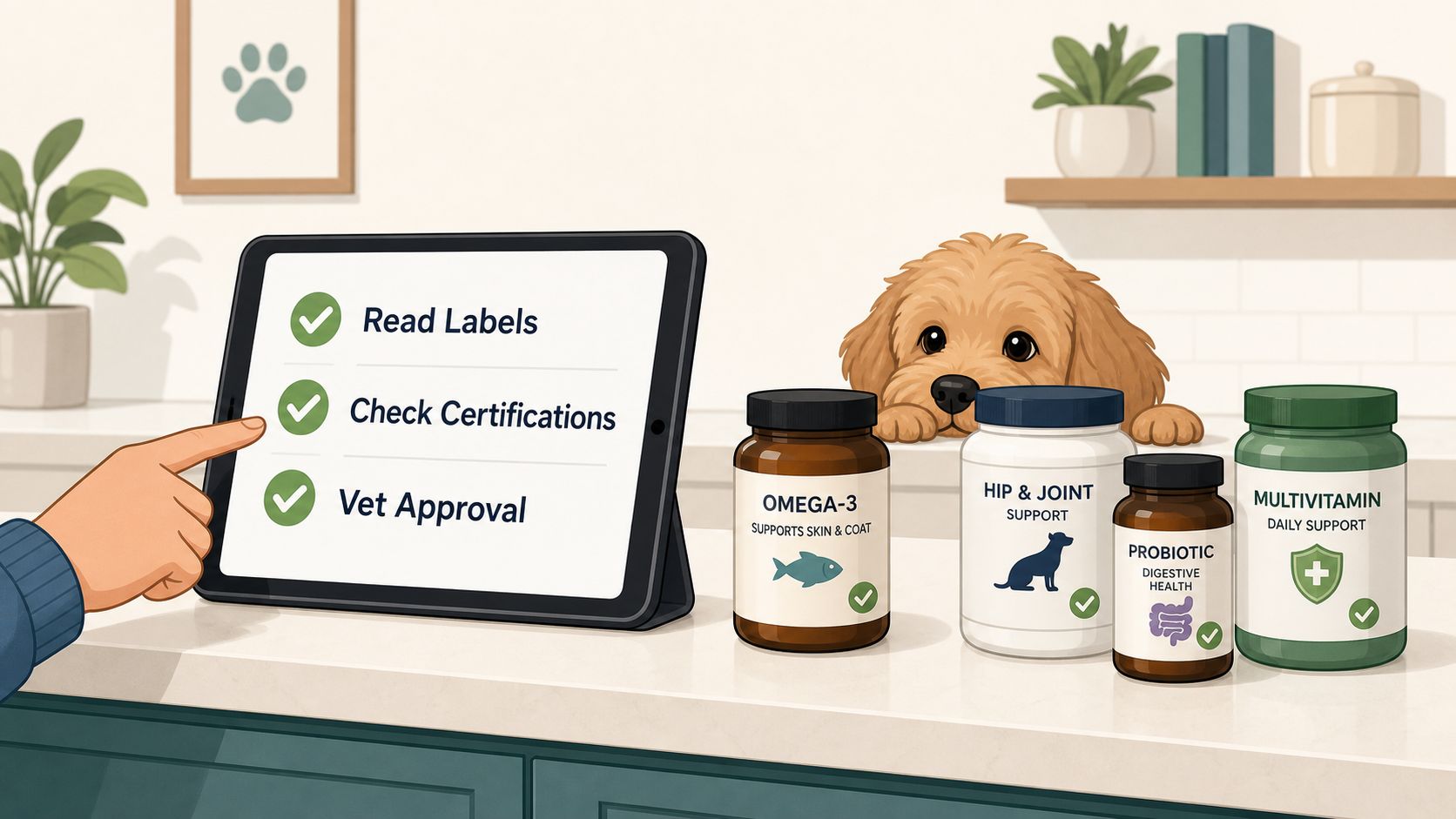
A smart label read starts with the basics. Look for the active ingredients, not just the front-panel claims. Then scan the inactive ingredients for anything your vet may want to avoid, especially when treatment is active or surgery is planned.
A practical quality checklist
- Clear ingredient panel: You should be able to tell what the product contains without decoding marketing language.
- Third-party testing: Independent testing helps verify purity and potency.
- Manufacturing transparency: Facilities that follow strong quality standards give you more confidence in consistency.
- Simple formulas when possible: Fewer ingredients can make interaction review easier, especially in oncology care.
A supplement doesn't have to be flashy to be useful. In some cases, simple is safer because it's easier for the vet to evaluate.
If you're thinking about powders or mixed formulations, the article on homemade dog food supplement powder can help you think about ingredient stacking and label reading before you add anything new.
Why label complexity matters
A single scoop can hide a lot. Joint support blends, multivitamins, and “complete” wellness powders often bundle ingredients that may be fine for a healthy dog but need review in a dog with cancer. That doesn't mean they're automatically bad. It means the burden is on you and your vet to verify fit.
The safest products are the ones you can explain plainly to a clinician. If you can't summarize what a supplement is for in one sentence, it's probably too vague for oncology use.
Your Vet Conversation Guide and Next Steps
The best next move is a real conversation, not another late-night search. Bring the product labels, the treatment plan, and a short list of your goals. That keeps the appointment focused on safety, comfort, and fit.
Use these questions:
- Is this supplement safe with my dog's current chemotherapy, radiation, or anesthesia plan?
- Should any ingredients be paused before treatment or procedures?
- What problem is this product meant to help, appetite, gut comfort, mobility, or something else?
- What dose makes sense for my dog's size and medical situation?
- Are there ingredients in this blend that you'd rather I avoid?
- If you want me to choose one product, which type would you prioritize first?
If your vet says yes to a supplement, ask how they want you to monitor your dog once it starts. Appetite, stool quality, energy, and tolerance are all worth tracking. Small changes can tell you whether the product is helping, doing nothing, or creating a problem.
A thoughtful supplement plan only works when it's tied to your dog's actual treatment, not internet promises. If you want a simpler way to choose products, talk with your veterinarian, keep the ingredient list short, and look for brands that prioritize transparency and routine-friendly support. A careful, vet-guided approach is the most practical way to protect your dog while still doing something meaningful, and Pure Paw Labs is one place to start that conversation.