


Your dog finishes dinner, walks away, then starts licking their lips, pacing, or leaving a softer stool by the back door. That's the moment a lot of owners reach for a dog probiotic for sensitive stomach support, not because they want a trend, but because they want the next meal to go down without a fight.
The problem is that a sensitive stomach can mean a lot of different things. Sometimes it's a short stretch of stress-related diarrhea. Sometimes it's a food reaction, a medication upset, or a bigger gastrointestinal issue that needs a vet, not a supplement.
That's why the order matters. The smartest first move isn't grabbing the first probiotic tub you see, it's figuring out whether a probiotic makes sense at all, then learning how to choose one that fits the dog in front of you.
Table of Contents
- When a Sensitive Stomach Has You Reaching for a Probiotic
- What a Dog Probiotic Is and How It Works in the Gut
- Strain Specificity and the Evidence Behind Sensitive-Stomach Claims
- Ingredients to Look For and Additives Sensitive Dogs React To
- How to Choose, Dose, and Introduce a Probiotic Safely
- Probiotic, Prebiotic, and Postbiotic Approaches Compared
- When an All-in-One Daily Supplement Makes Sense
- Signs a Probiotic Is Working and When to Call the Vet
When a Sensitive Stomach Has You Reaching for a Probiotic
The pattern is familiar. Your dog seems fine in the morning, then dinner happens, and an hour later you're watching for signs that the stomach is off again. Maybe the stool is loose but not dramatic, maybe there's extra gas, maybe appetite dips for a meal or two, and you're left wondering whether this is just a blip or the start of a cycle.
That's exactly when owners start looking for a dog probiotic for sensitive stomach support. The urge makes sense, because probiotics are often talked about as a simple fix for digestive upset, but the evidence shows the decision is more specific than that. In canine GI literature, the most consistent benefit shows up when the product, strain, and indication are well matched to the problem, not when a generic gut formula is used as a catch-all.
Start With the Triage Question
Ask three things before you buy anything. Is this likely a short-lived stress issue, a diet mismatch, or a sign that your dog needs a veterinary exam? Has the stool changed suddenly, or has it been softly off for weeks? Is there vomiting, blood, weight loss, or lethargy?
Practical rule: if the stomach upset is persistent, severe, or paired with low energy, don't treat the supplement aisle like the answer.
A sensitive stomach can also be deceptive because the dog may still eat, play, and beg for snacks. That normal behavior can make owners delay a vet visit longer than they should. A probiotic can be a reasonable first step for mild digestive sensitivity, but it shouldn't postpone care when the pattern looks bigger than simple stool softness.
The right frame is calm, not reactive. Start by matching the tool to the problem, then look at strain, dosage, and ingredient tolerance only after that.
What a Dog Probiotic Is and How It Works in the Gut
A probiotic is a live microorganism, usually a bacterium or yeast, given in a form that can survive long enough to reach the digestive tract and do useful work there. For a dog with a sensitive stomach, the goal is to make the gut less reactive and more steady, especially when stool quality keeps slipping from day to day.
A useful way to understand the gut is to treat it like a crowded neighborhood. Helpful microbes, less helpful microbes, and the gut lining all live in close contact, and small changes can affect the whole area. A well-chosen probiotic may help shift that balance in a better direction, support the lining, and influence how the immune system responds at the intestinal surface. In canine probiotic literature, these effects are described as modulating gut microbiota, increasing short-chain fatty acid production, and supporting mucosal immunity and barrier function. For a reactive gut, that can show up as firmer stools and fewer digestive setbacks.
Probiotic, Prebiotic, and Postbiotic Are Not the Same Thing
A probiotic is the live organism. A prebiotic is the food for beneficial microbes, usually a fermentable fibre. A postbiotic is the beneficial compound left behind after microbes do their work, so it does not depend on live cultures reaching the gut intact. That difference matters because a dog with a sensitive stomach may tolerate one format better than another.
A label should tell you what you are buying. If it only says “gut support” or “digestive blend,” you still do not know whether it is a live microbe, a fibre source, or a metabolic byproduct. The more specific the label, the easier it is to predict how the dog's gut may respond.
Some formulas combine several functions in one scoop, which can be convenient for dogs with broader daily needs. A product like DA-1™ Daily All-in-One - Senior Dog Support, Joints, Skin/Coat & More is positioned as a multi-system powder, so it fits better as a broad daily routine than as a narrow, strain-specific digestive trial.
For owners comparing a probiotic trial with a clearer strain-based approach to diarrhea support, this guide to the best probiotic for dog diarrhea explains why the strain name, dose, and use case matter.
Strain Specificity and the Evidence Behind Sensitive-Stomach Claims
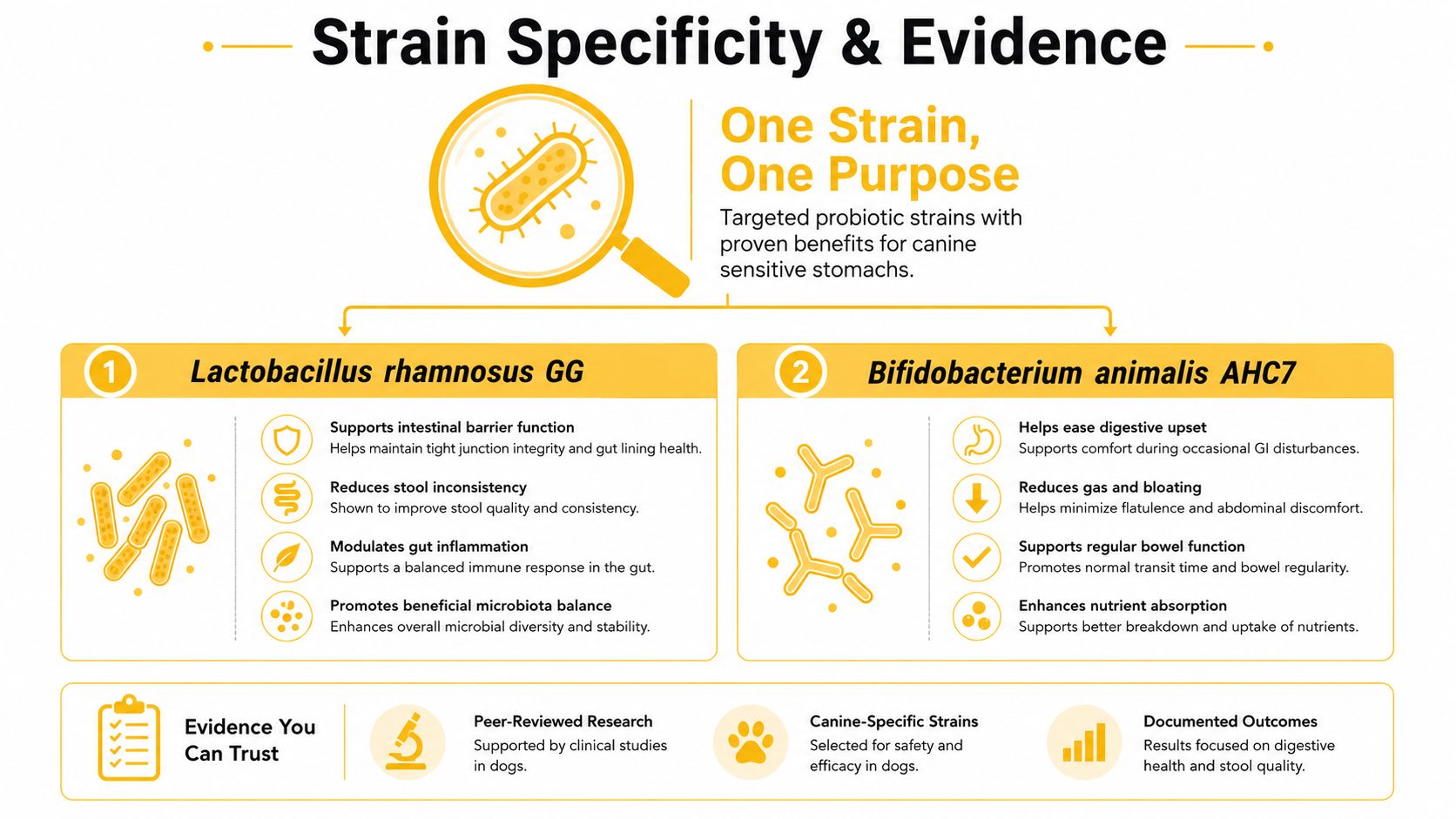
The biggest mistake owners make is treating every probiotic as interchangeable. They're not. The strain matters, the dose matters, and the reason you're using it matters. A dog with a one-off loose stool after stress doesn't need the same product logic as a dog with recurring GI sensitivity.
A canine review of 17 GI studies found that for acute gastrointestinal disease the overall probiotic effect was limited and possibly clinically unimportant. That doesn't mean probiotics never help. It means generic claims overreach. In the same body of literature, a 14-day study using Bifidobacterium animalis AHC7 reported diarrhea duration of 3.9 ± 2.3 days versus 6.6 ± 2.7 days in controls, and that difference was statistically significant, while another randomized trial in acute diarrhea showed a shorter time to acceptable fecal consistency without clear statistical significance.
The message is simple. Strain-specific products can help in specific settings, but the label has to match the use case. If the product doesn't name the strain, the dose, and the CFU at end of shelf life, you're making a blind guess.
What the Evidence Suggests Owners Should Demand
- Exact strain name. “Lactobacillus” alone is too vague.
- Defined use case. Look for support tied to diarrhea, stool consistency, or a documented digestive context.
- CFU at end of shelf life. That's the number that matters in the jar the dog will use.
- Veterinary direction when symptoms are ongoing. A probiotic is an adjunct when the problem is more than a mild blip.
The label should read like a clinical summary, not a marketing slogan.
That's also why the article below on dog diarrhea is worth reading if the loose stool is the main issue: best probiotic for dog diarrhea.
Ingredients to Look For and Additives Sensitive Dogs React To
The active strain is only half the story. Sensitive dogs often react to the rest of the formula first, especially when the product is flavored, heavily blended, or built like a treat instead of a supplement. A short ingredient list is often easier on a reactive gut than a glossy one.
Start with the dog's symptom pattern before you start reading labels. If the main issue is loose stool, gas, or occasional upset after diet change, the first question is whether the probiotic formula adds anything the dog needs. If the gut is already reactive, every extra flavor, binder, or filler becomes another variable to sort out.
Good-Fit Ingredients Usually Serve a Narrow Purpose
Prebiotic fibres can help feed the microbes already living in the gut. Digestive enzymes may help some dogs process food more smoothly. Pumpkin is often used because it is gentle and familiar, and soothing ingredients like ginger also show up in digestive blends made for short-term stomach support. Those ingredients can make sense, but only when the dog tolerates them.
The risk comes when a formula piles on extras the dog does not need. Artificial flavorings, unnecessary binders, dairy-based components that may bring lactose, and multi-protein bases can complicate things for a stomach that already reacts quickly. A highly reactive dog often does better with a simpler starting point than with an all-in-one blend that tries to solve five problems at once. That is why a focused option is usually easier to interpret before moving to broader daily support, such as the type discussed in this guide to a probiotic supplement for dogs.
Read the Label Like a Filter
Before buying, ask a few plain questions.
- Does it name the active strain or just say probiotic?
- Are there flavorings, fillers, or binders that add nothing to the digestive goal?
- Is the format one the dog eats without stress, like a powder mixed into food?
- Does the formula combine digestive support with other goals your dog does not need right now?
A multi-ingredient product can be useful when a dog needs broader daily support, but it is a poor first test if you are trying to figure out what the stomach will tolerate. In that case, less is often easier to troubleshoot. The best starting formula is the one that lets you see whether the strain helps, or whether another ingredient is the trigger.
The canine literature also describes certain probiotic and synbiotic interventions as shortening self-limiting diarrhea by 32% to 41% versus controls in multiple trials, but that benefit still depends on the right strain and the right use case. If the formula is cluttered with extras that upset the dog, the potential benefit never gets a chance to show up.
How to Choose, Dose, and Introduce a Probiotic Safely
Start with the format that fits the dog's eating style. Powders mix well into meals, pastes are easy for short-term digestive support, and chews can be convenient if the dog treats them like a snack. The best format is the one the dog will take consistently without turning mealtime into a battle.
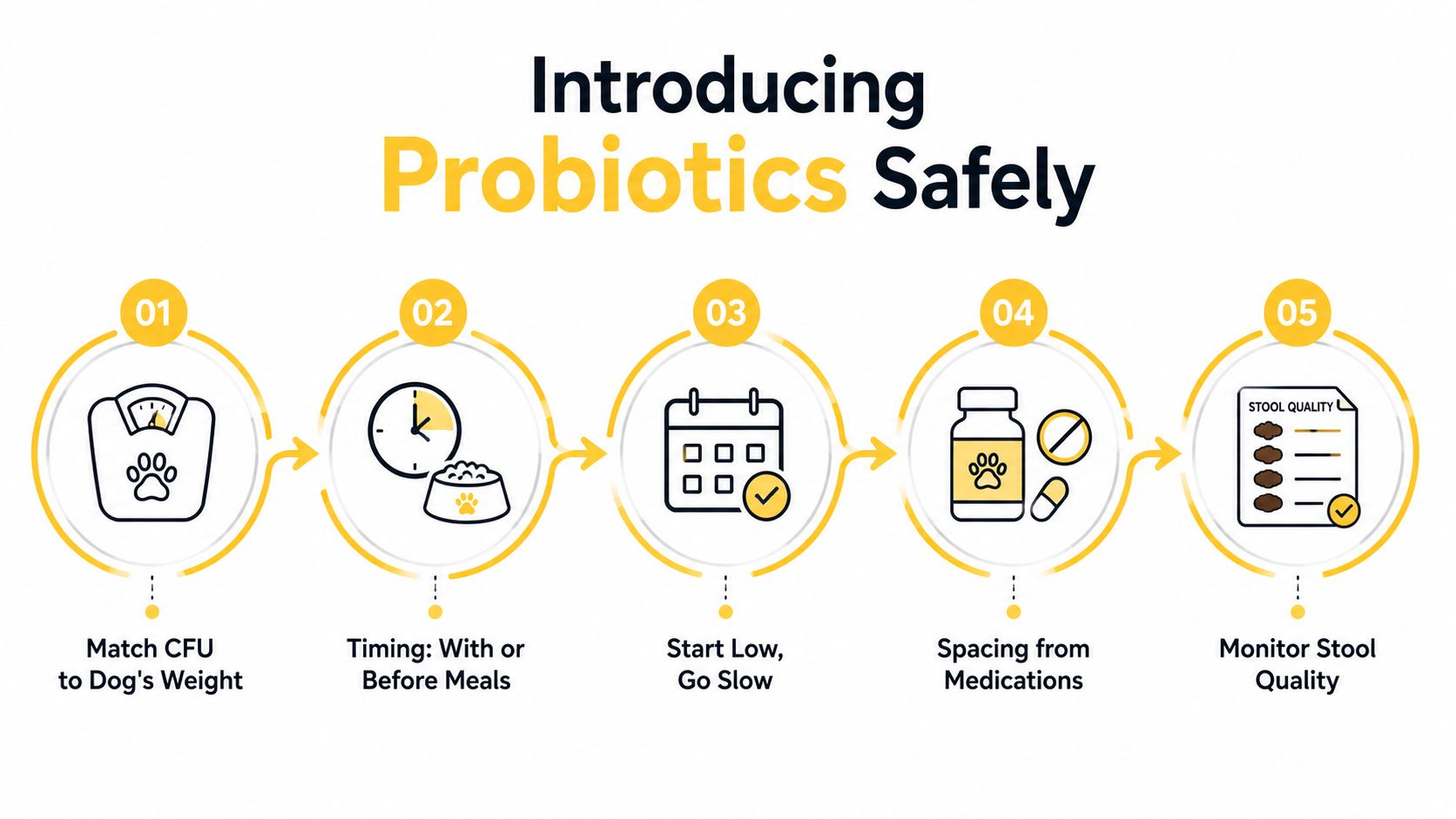
When you introduce a new product, don't throw the full amount at a reactive gut on day one. A gradual ramp gives you a cleaner read on tolerance, especially if the dog already tends toward loose stools. If the product is meant to be used around stress, antibiotics, or a schedule change, timing matters too.
A Safe Starting Routine
- Pick the narrowest formula that fits the problem. If the stomach is the only issue, skip extras you don't need.
- Give it with food unless the label says otherwise. That usually improves tolerance.
- Start low and watch the stool. If the product causes more gas or looseness, pause and reassess.
- Separate it from medications when advised by your vet. That's especially important around antibiotic use.
- Track stool quality, appetite, and energy for two to four weeks. That gives you a real signal instead of a guess.
The 2026 canine supplement study in healthy dogs showed what a well-matched product can look like over a month. Very moist or liquid stools fell from 23% to 12%, vomiting reports dropped from 67% to 16%, and owner-reported flatulence declined from 96% to 51% over 28 days. Another randomized trial found a 2.8-fold decrease in E. coli at week 4 and a diarrhea incidence signal of 0% versus 16% in controls after 4 weeks of synbiotic supplementation.
For a broader daily routine, an all-in-one powder may suit families who want one scoop instead of several. More detail on that format is covered in probiotic supplement for dogs.
Probiotic, Prebiotic, and Postbiotic Approaches Compared
| Approach | What It Provides | Best For | Watch Out For |
|---|---|---|---|
| Probiotic | Live beneficial microbes | Dogs that may benefit from direct microbial support and stool regularity | Strain specificity matters, and live cultures may be a poor fit for some very reactive stomachs |
| Prebiotic | Food for the existing gut microbes | Dogs that tolerate fibre well and need support for their current microbiome | Can create gas or softer stool if introduced too quickly |
| Postbiotic | Beneficial microbial byproducts | Dogs that may need a gentler option and don't need live cultures | May not address microbiome diversity in the same way as a live product |
The practical choice depends on the dog. If the gut seems underfed rather than overwhelmed, a prebiotic can help. If live cultures make the dog gassy or unstable, a postbiotic may be easier to tolerate. If the problem is a short-term flare, a targeted probiotic can still be the most direct option.
A synbiotic combines these ideas, usually pairing a probiotic with a prebiotic so the microbes have help getting established. That can be useful for dogs whose digestive sensitivity overlaps with broader wellness goals, but it's not the automatic winner for every stomach. A very reactive dog may do better starting with one narrow intervention and building up only if the first step is tolerated.
For a deeper breakdown of the non-live side of gut support, the companion guide on postbiotics for dogs is the next place to look.
When an All-in-One Daily Supplement Makes Sense
An all-in-one formula works best when the dog's issues travel together. A stiff senior who also has a touchy stomach, dull coat, or stress around routine changes may do better with one daily scoop than with a pile of separate products. That kind of setup lowers the chance of missed doses and keeps the routine manageable.
A product like DA-1™ Daily All-in-One - Senior Dog Support, Joints, Skin/Coat & More is built as a multi-system daily powder, so it fits owners who want a single routine for gut, joint, and skin support. For digestive sensitivity, the right way to think about that kind of formula is daily resilience and stool regularity, not treatment of disease.
When It's a Good Fit
- The dog needs more than digestive support. Joint comfort, skin, or stress are part of the same daily routine.
- The dog handles powders better than chews or capsules.
- The family wants fewer products and fewer chances to forget a dose.
When to Pass and Start Simpler
- The dog has reacted to multi-ingredient blends before.
- You're still trying to identify the trigger for the stomach upset.
- The digestive issue is the only problem and you want a cleaner trial.
That balance matters. An all-in-one can be practical, but a single-strain product is sometimes the safer starting point when the gut is highly reactive. The right choice is the one that gives you a clean read on tolerance and outcome, not the longest ingredient panel.
Signs a Probiotic Is Working and When to Call the Vet
Track the same few things every day for the first couple of weeks, stool texture, frequency, vomiting, appetite, and energy. If the product is a good match, you're looking for fewer loose stools, less urgency, less gas, and a more normal eating pattern. Many owners can spot a meaningful change within 14 to 28 days when the strain and indication fit the dog well.
Watch for patterns, not one-off good days. A single normal stool after three bad ones doesn't tell you much. A consistent shift toward firmer, easier-to-pass stool is the signal that matters.
Call the vet sooner if you see blood in stool, repeated vomiting, weight loss, worsening diarrhea, or a dog that's dull, painful, or refuses food.
That rule matters even more if the problem started after a diet change, medication, scavenging episode, or a stressful event and doesn't settle. A probiotic is not a reason to delay care when the dog's condition is getting worse. It's only useful when the dog is stable enough for a trial.
If you're unsure, stop the supplement and ask your vet before layering on more products. Yogurt, human probiotics, and dog probiotics aren't interchangeable, and a reactive stomach often needs a more disciplined plan than random trial and error.
If you want a simple daily routine that combines gut support with broader wellness without piling on extra pills, take a look at Pure Paw Labs. Their DA-1™ Daily All-In-One fits dogs whose digestive sensitivity overlaps with joint, skin, or stress needs, and it can help you decide whether a broader scoop or a narrower probiotic is the better next step.