


You may be here because your dog seems a little “off,” but not obviously sick. Maybe recovery after a long outing takes longer than it used to. Maybe allergy season hits harder each year. Maybe your older dog used to bounce back quickly and now seems more fragile after boarding, grooming, or a minor stomach upset.
That concern is reasonable. A dog's immune system affects far more than whether they catch an infection. It also shapes inflammation, skin comfort, vaccine response, recovery, and how well the body handles daily stress. The tricky part is that the supplement aisle often turns this into a simple sales pitch: add an immune booster and your dog will be stronger.
Real life isn't that simple.
Dog immune system supplements can be helpful in the right dog, at the right time, for the right reason. They're not magic. They're not harmless in every situation either. Some ingredients have meaningful evidence behind them. Others are sold in ways that sound scientific but leave out the questions that matter most: Does my dog need this? What problem am I trying to solve? Could too much be a problem?
Think of this as a practical guide for worried dog owners who want clear answers instead of hype. We'll look at how the immune system works, which ingredients have real support, when supplements make sense for puppies, seniors, and dogs with health challenges, and how to use them safely without falling for the “more is better” myth.
Table of Contents
- Introduction Why Immune Health Matters for Your Dog
- How Your Dog's Immune System Works
- Evidence-Backed Ingredients in Immune Supplements
- The Benefits and Limitations of Immune Supplements
- When to Consider an Immune Supplement for Your Dog
- How to Choose a High-Quality Supplement
- Safely Using Supplements and Monitoring Your Dog
Introduction Why Immune Health Matters for Your Dog
A strong immune system doesn't mean a dog never gets sick. It means the body can recognize problems, respond appropriately, and settle back down without staying stuck in inflammation. That balance matters whether you have a growing puppy, an active adult, or a senior dog who's beginning to show age-related changes.
Owners often notice immune-related issues indirectly. The first clue may be recurring itchy skin, slower recovery after illness, repeated digestive upset during stress, or a dog who seems to struggle more during boarding or seasonal changes. Those patterns don't automatically mean your dog needs a supplement, but they do deserve attention.
The biggest mistake I see is treating “immune support” like a switch. It isn't. You're not trying to crank the immune system higher and higher. You're trying to support a well-coordinated response. In some dogs, that means helping barrier function in the gut. In others, it means supporting antioxidant defenses or recovery after illness. In still others, the best answer is no supplement at all, just a better look at diet, stress, sleep, and underlying health.
Practical rule: Ask “why now?” before you ask “which supplement?”
That question changes everything. A puppy entering new environments may need different support than a senior with chronic inflammation. A dog recovering from surgery has different needs than a healthy adult eating a complete, balanced diet. Once you think in terms of timing and purpose, the noise around dog immune system supplements gets much easier to filter out.
How Your Dog's Immune System Works
The immune system is a security team
Your dog's immune system works like a well-run kingdom defense system. The skin, gut lining, tears, and mucus are the outer walls and moat. They block trouble before it gets inside. If those barriers weaken, unwanted visitors get more chances to slip through.
Inside the gates are the fast responders. This is the innate immune system. Think of it as patrol guards who react quickly to anything suspicious. They don't always know exactly who the invader is, but they know it doesn't belong. These responses include inflammation, fever, and immune cells that attack broadly.
Then there's the adaptive immune system, which acts more like trained specialists. It learns. It remembers. It creates a more precise response to a known threat. Antibodies are part of this system, and so are important white blood cells that coordinate targeted defense.

This is why immune support is rarely about one ingredient doing one job. Different nutrients and supplement types may help different parts of the defense system. A product such as DA-1™ Daily All-in-One - Skin/Coat, Joints, Gut Health & More is described as an all-in-one human grade powder used once daily on food to combine support across joint health, skin and coat, digestion, immunity, and anxiety relief. That kind of format may appeal to owners trying to reduce supplement stacking, but the more important question is still whether the dog needs added support in the first place.
Why the gut matters so much
The gut is more than a digestion tube. It's also a major training ground for the immune system. A healthy gut lining helps separate “friend” from “foe,” while the microbes living there influence how immune cells behave.
That's one reason gut health and immune health are so closely linked. When the gut environment is unsettled, some dogs show it first through stool changes, while others show it through skin flare-ups or increased sensitivity during stress. If you want a plain-language overview of that connection, this guide on dog gut health is a useful companion read.
The goal isn't an immune system that reacts to everything. The goal is one that reacts appropriately, then calms down.
When owners understand this, supplement decisions get sharper. Instead of asking for a generic “booster,” they start asking whether their dog needs help with barrier protection, inflammation control, gut resilience, or recovery support.
Evidence-Backed Ingredients in Immune Supplements
Vitamins and minerals with targeted roles
Some vitamins are marketed as if they generally “support immunity,” but the more useful question is whether a specific vitamin has shown a measurable effect in dogs. Vitamin E and vitamin C are the clearest examples in the verified evidence. High-dose vitamin E significantly reduced inflammatory markers in dogs, and a combined low-dose regimen of vitamin E and vitamin C increased CD4+ T-cell counts and enhanced lymphocyte activity. The same review also notes that excessive vitamin C intake inhibited those immune benefits, which is an important reminder that more isn't always better. You can read that summary in this review of functional ingredients for canine immune support.
Vitamin E also has a more specific role in some allergic dogs. It acts as an antioxidant, reduces the biosynthesis of prostaglandin E2, inhibits IgE formation, and decreases overall IgE amounts in dogs with moderate atopic dermatitis, improving clinical status in that setting. That doesn't mean every itchy dog should be put on vitamin E blindly. It means targeted supplementation can make sense when the dog's clinical picture fits.
Mineral form matters too. The same body of evidence reported that organic sources of zinc and selenium outperformed inorganic forms in immune-related outcomes. Organic zinc improved T-cell differentiation, and an organic selenium source enhanced vaccine antibody responses and cytokine production while modulating immune-related gene expression.
Protein and gut-focused ingredients
Bovine colostrum is one of the more interesting immune support ingredients because it doesn't just sit in the “antioxidant” bucket. In a study published in the British Journal of Nutrition, dogs fed a complete, balanced diet supplemented with bovine colostrum showed a significant increase in serum IgA concentration and a higher percentage of blood lymphocytes. The study also reported no detectable side effects on food intake, body weight, blood composition, or CRP. See the bovine colostrum study in dogs.
That matters because IgA helps defend mucosal surfaces, especially in the gut. Colostrum also contains components such as lactoferrin and milk proteins that may help limit pathogen attachment and support a healthier gut environment. In that same research area, gamma-lactalbumin given at 15 mg/kg body weight increased phagocytic activity and vaccine-specific response in healthy adult dogs, showing that some protein-based supplements can have precise immune effects when used thoughtfully and at studied dosages, again from the same bovine colostrum research source.
Probiotics are where many owners get misled. “Probiotic” is not one uniform ingredient. It's a category. According to this review on probiotic strain-specific immune effects in dogs, only specific strains have documented immune-modulating effects, including strains tied to Th1 cell-mediated responses. Generic probiotic marketing often skips that detail, which can leave owners buying products that sound right but aren't linked to the outcome they want.
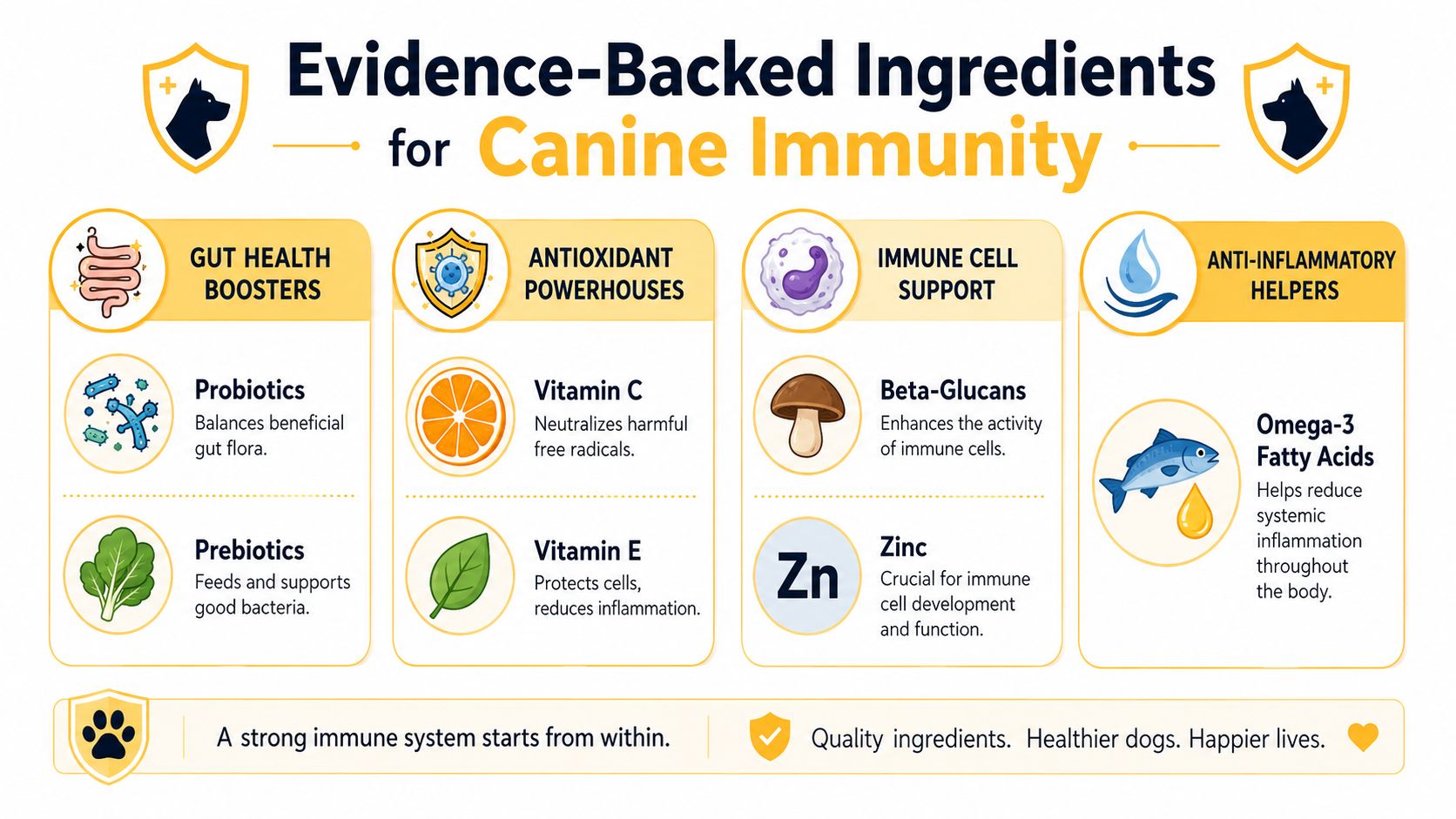
Fatty acids often come up in immune discussions because they influence inflammation. If your dog's bigger issue is inflammatory burden, this explanation of whether dogs can have fish oil can help you think through that piece of the picture.
Comparison of Common Dog Immune Supplement Ingredients
| Ingredient | Primary Immune Function | Best For | Evidence Level |
|---|---|---|---|
| Vitamin E | Antioxidant support and inflammation modulation | Dogs needing targeted support for inflammatory or allergy-related issues under veterinary guidance | Verified canine evidence described above |
| Vitamin C with vitamin E | Supports cellular immune activity in a targeted combination | Dogs where a veterinarian wants focused antioxidant and immune cell support | Verified canine evidence described above |
| Organic zinc | Supports immune cell development and T-cell differentiation | Dogs with a documented need for added trace mineral support | Verified canine evidence described above |
| Organic selenium | Supports vaccine response and immune signaling | Dogs with specific nutritional or clinical needs, not routine blanket use | Verified canine evidence described above |
| Bovine colostrum | Supports mucosal and systemic immune responses | Dogs under stress, in recovery, or needing gut-immune support | Verified canine evidence described above |
| Probiotics | May modulate gut and immune signaling depending on strain | Dogs where a specific strain matches the goal | Evidence is strain-specific, not generic |
| Beta-glucans | Often used to support immune cell activity | Dogs needing general immune support, only if the full formula is appropriate | Qualitative support only here |
| Omega-3 fatty acids | Helps manage inflammatory tone | Dogs whose immune concerns overlap with inflammation | Qualitative support only here |
Choose ingredients by function and fit, not by how long the label looks.
The Benefits and Limitations of Immune Supplements
Where supplements can help
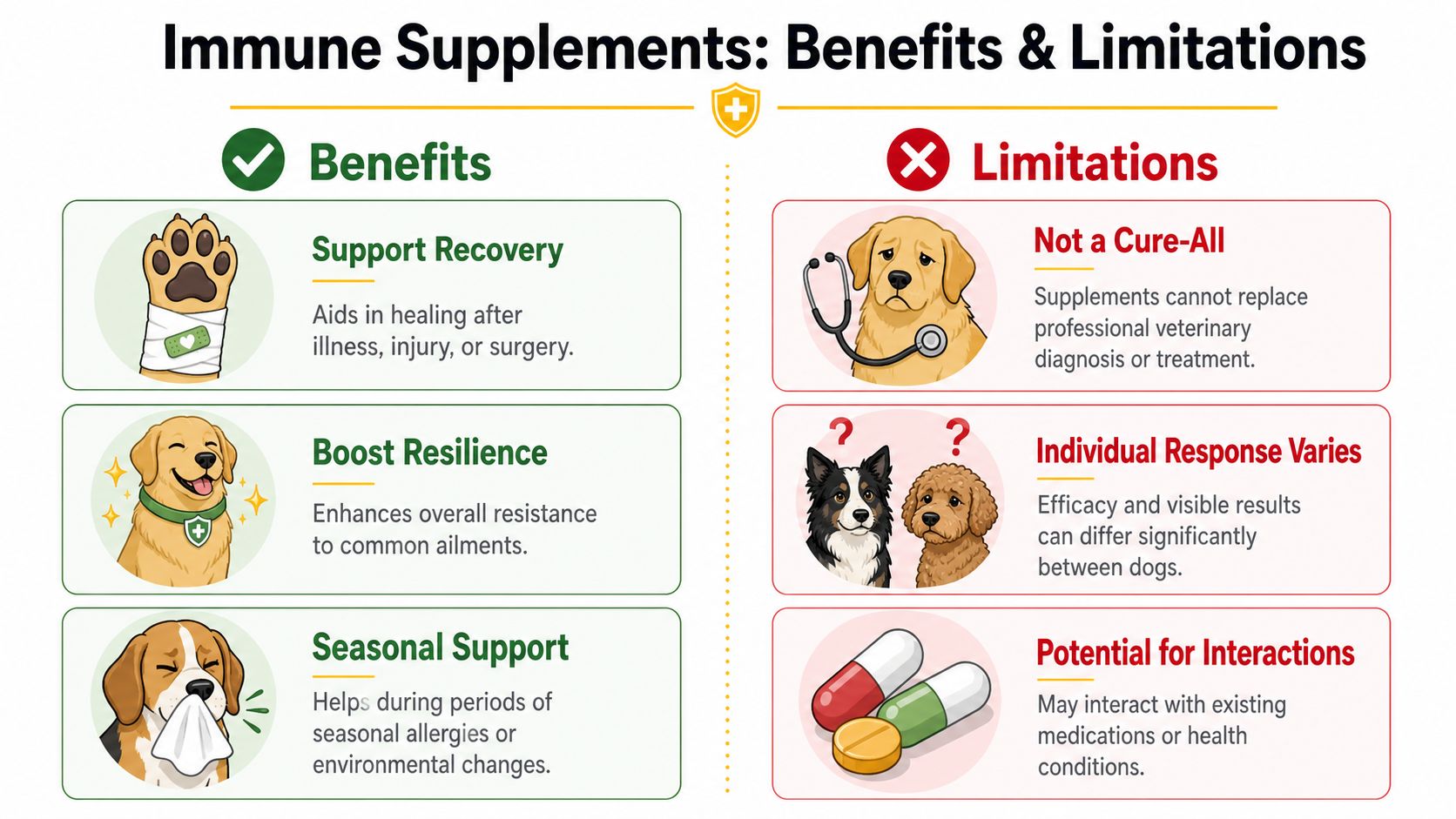
Used well, dog immune system supplements can support the body during times of strain. A senior dog may need help maintaining resilience as age changes the way immune cells respond. A dog recovering from illness or surgery may benefit from nutritional support while rebuilding. A dog facing temporary stress, such as travel or boarding, may do better when gut and immune function are supported together.
Some dogs also have immune-related issues that owners don't immediately label as “immune” problems. Seasonal flare-ups, recurrent skin sensitivity, and slower post-illness recovery often push owners to look for support. In these situations, a supplement may be one useful tool in a broader plan that also includes diet review, stress management, routine veterinary care, and treatment of any underlying disease.
Where supplements cannot replace care
Supplements do not diagnose disease. They do not replace treatment for infections, endocrine disease, severe allergies, cancer, autoimmune conditions, or chronic digestive disease. If a dog has persistent symptoms, the first step is figuring out what's driving them.
Marketing claims can be dangerous: “Immune boosting” sounds positive, but the immune system isn't a battery you charge up. In some dogs, the problem isn't too little immune activity. It's misdirected immune activity, poor regulation, chronic inflammation, or a damaged barrier in the gut or skin.
A good supplement can support a dog. It cannot fix a mismatched diet, poor sleep, ongoing stress, or an untreated medical problem.
If a product sounds like it works for every dog, every age, and every immune problem, that's a reason to slow down, not speed up.
Another limitation is variability. Two dogs can take the same supplement and respond differently because their diets, microbiomes, ages, and medical histories differ. That's normal. The goal is not a dramatic overnight transformation. The goal is a safer, more thoughtful layer of support when the situation justifies it.
When to Consider an Immune Supplement for Your Dog
Dogs more likely to benefit
The best time to consider immune support is when your dog has a clear reason for it.
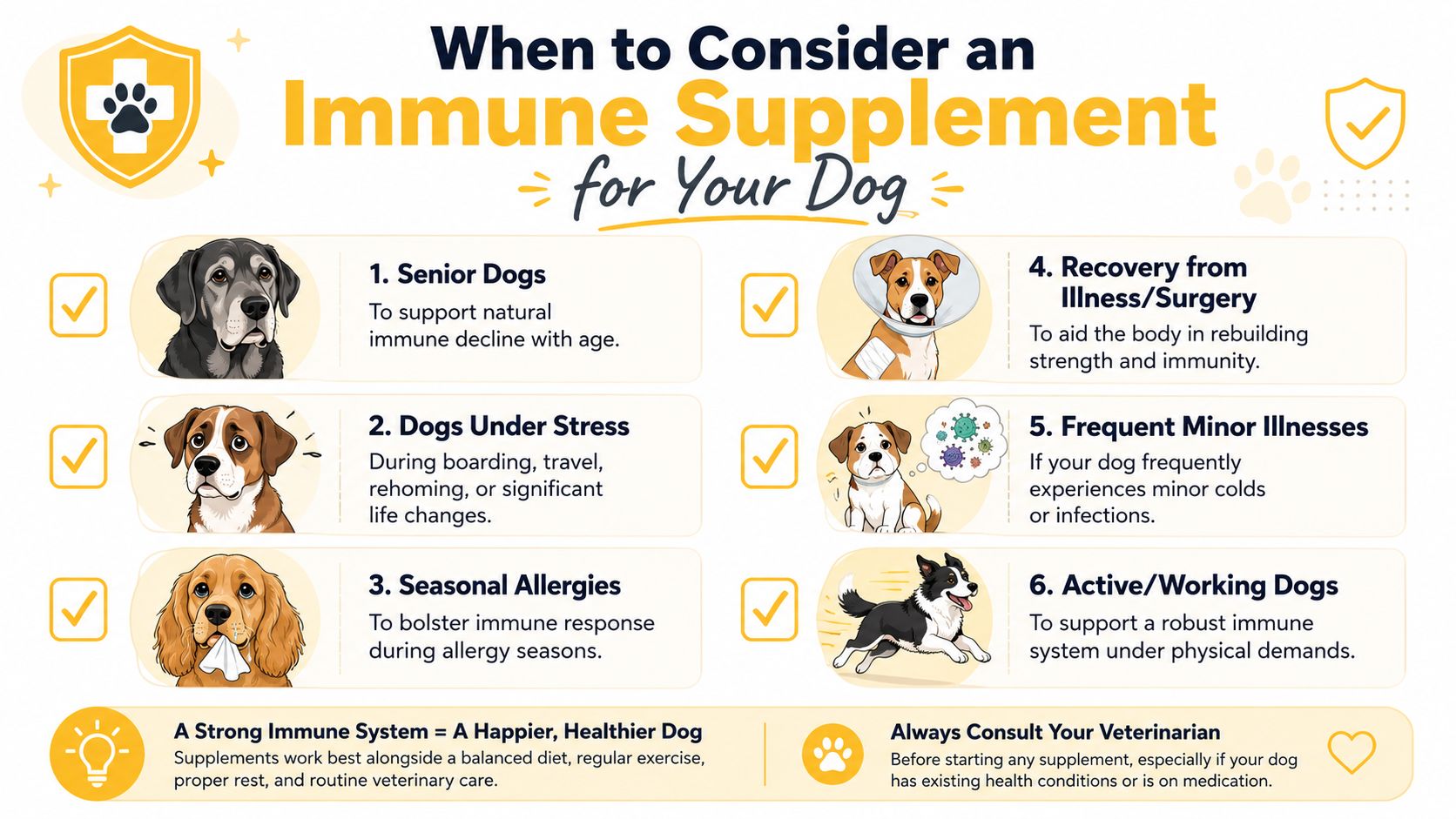
Seniors often fit this category. As dogs age, immune responses can become less efficient and recovery may take longer. Older dogs also tend to carry more inflammatory wear and tear, even when they still seem active and happy.
Dogs with chronic illness or those in recovery may also benefit from targeted support. These dogs are already asking more of their bodies, and the nutritional demands around healing, inflammation control, and gut stability can shift.
Dogs under stress are another common group. Travel, boarding, rehoming, new pets, intense activity, and major routine changes can affect appetite, digestion, and overall resilience. In those dogs, support aimed at the gut-immune connection can make more sense than a vague “booster.”
Some puppies may be candidates too, especially during transitions such as weaning, environmental change, or high exposure periods. But puppies aren't small adults, and supplement choices should be made carefully with veterinary input.
Dogs who may not need one
This is the part many guides skip. Veterinary guidance emphasizes that a complete, balanced diet provides baseline micronutrients for most healthy dogs, and targeted supplementation should be reserved for dogs such as seniors, dogs with chronic disease, or dogs in recovery. That same guidance warns that indiscriminate use of certain minerals can disrupt immune function. You can review that discussion in this article on dog immune nutrition and the risks of over-supplementation.
That means a healthy adult dog eating a well-formulated complete diet may not need an immune supplement at all.
A simple decision filter helps:
- Clear need: Your dog is aging, recovering, dealing with chronic issues, or struggling during stress.
- Defined goal: You want support for gut resilience, inflammation balance, or recovery, not a vague wellness promise.
- Veterinary context: Your vet agrees the dog's history supports adding something targeted.
- No “just in case” mindset: You're not layering minerals and vitamins onto an already complete diet because the label sounded reassuring.
If that last point stings a little, good. It protects dogs from over-supplementation.
How to Choose a High-Quality Supplement
What to look for on the label
Start with transparency. You want to know what the active ingredients are, why they're included, and how they're presented. Vague proprietary blends make it harder to judge whether a supplement is thoughtfully designed or mostly marketing.
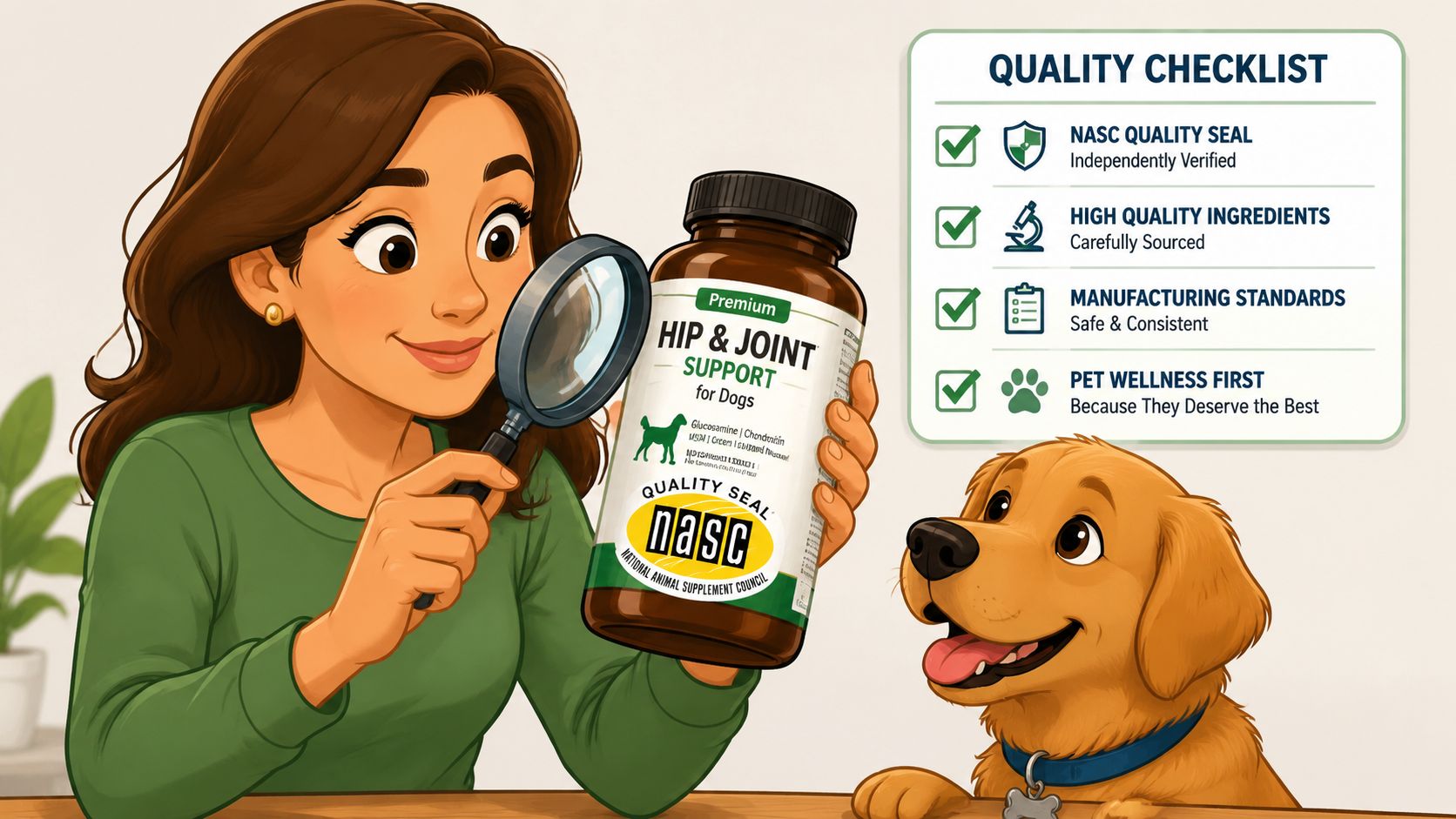
Look for quality signals that show the company takes formulation seriously. That may include third-party testing, clear manufacturing standards, and straightforward labeling. Human-grade ingredients and manufacturing in an FDA-registered facility can also matter to owners who want stronger quality controls, though those terms still don't replace the need to evaluate the formula itself.
Avoid products that try to win you over with a huge ingredient list and little context. More ingredients can mean more overlap, more unnecessary stacking, and a harder time figuring out what helped or caused a problem.
If you're comparing general approaches, this guide to natural dog supplements can help you think through label language and formulation style.
A simple quality checklist
When owners feel overwhelmed, I tell them to slow down and review a product in this order:
- Purpose first: Does the formula match your dog's situation, such as recovery, senior support, or gut-related resilience?
- Specific ingredients: Are the ingredients named clearly, rather than hidden inside a blend?
- Appropriate scope: Is it targeted, or is it trying to claim support for every disease and every dog?
- Quality controls: Does the company disclose testing and manufacturing standards?
- Ease of use: Will you give it consistently, or will it become one more half-used jar in a cabinet?
Consistency matters because even a sensible supplement won't help if the routine is too complicated. Some owners prefer a single daily formula over managing several separate powders or chews, especially when they're already balancing meals, medications, and training schedules.
A short walkthrough can help you evaluate labels more calmly:
One more point. A high-quality supplement should sound boring in the best possible way. Clear ingredients. Clear use case. Clear limits. That's usually a better sign than a dramatic promise.
Safely Using Supplements and Monitoring Your Dog
How to start carefully
Talk with your veterinarian before starting any immune supplement, especially if your dog has a chronic disease, takes medication, is very young, or is in recovery. This matters even more when a product contains vitamins or minerals that could overlap with the diet or with another supplement already in use.
Start gradually if your veterinarian approves it. Adding one new supplement at a time makes it easier to notice both benefits and problems. Keep the rest of the routine stable for a while so you're not guessing whether a change came from the supplement, food, stress, or something else.
What to watch for
Positive signs are usually subtle at first. You may notice steadier stools, fewer flare-ups during stress, more comfortable skin, or smoother recovery after routine disruptions. Improvement often looks like resilience, not excitement.
Stop and check in with your veterinarian if you notice vomiting, diarrhea, worsening itch, unusual lethargy, reduced appetite, or any change that seems out of character. Those signs don't always mean the supplement is harmful, but they do mean it's time to reassess.
Keep a simple log with the start date, dose, and any changes you observe. That small habit turns guesswork into useful information.
If you want a simpler way to think about daily support, Pure Paw Labs offers science-backed, human-grade dog supplements designed to reduce supplement stacking and make routines easier to manage.