


The most popular advice about dog anxiety supplements is also the least useful: pick a calming chew, give it before the scary event, and expect your dog to relax. That approach turns a complicated behavioral problem into a shopping decision. A supplement can support a dog, but it can't teach a terrified dog that being alone is safe, change a painful medical condition, or replace a carefully designed behavior plan.
The need is real. A 2025 report on pet anxiety solutions places the global market at $4.8 billion in 2025, with a projection of $8.9 billion by 2033 and a 7.4% CAGR. Supplements represent 26.1% of the market and are projected to grow at an 8.3% CAGR, according to the 2025 pet anxiety solutions market report. Those figures describe commercial growth, not proof that every product works.
The more important question is narrower: Which ingredient has a realistic job for this dog, in this situation, and alongside which other intervention?
Table of Contents
- What Dog Anxiety Supplements Can and Cannot Do
- The Main Calming Ingredients and How They Work
- Safe Dosing, Onset Times, and What to Expect
- The Gut-Brain Connection and Probiotic Calming
- Matching the Right Supplement to the Right Situation
- Why a Single Daily All-in-One Beats a Stack of Bottles
- Your Vet-Style Checklist for Trying a Supplement
What Dog Anxiety Supplements Can and Cannot Do
Over-the-counter calming products aren't interchangeable with anxiety treatment. That distinction matters because “calming” can mean anything from taking the edge off a noisy evening to managing a dog who panics, injures themselves, or destroys a door while alone.
For a dog with mild or moderate, predictable stress, a well-chosen supplement may help shift the nervous system toward a calmer state. It may reduce low-grade reactivity, support better rest, or make the dog more receptive to gradual desensitization. It won't necessarily make the dog look sleepy, and lack of sedation isn't evidence that the product has failed.
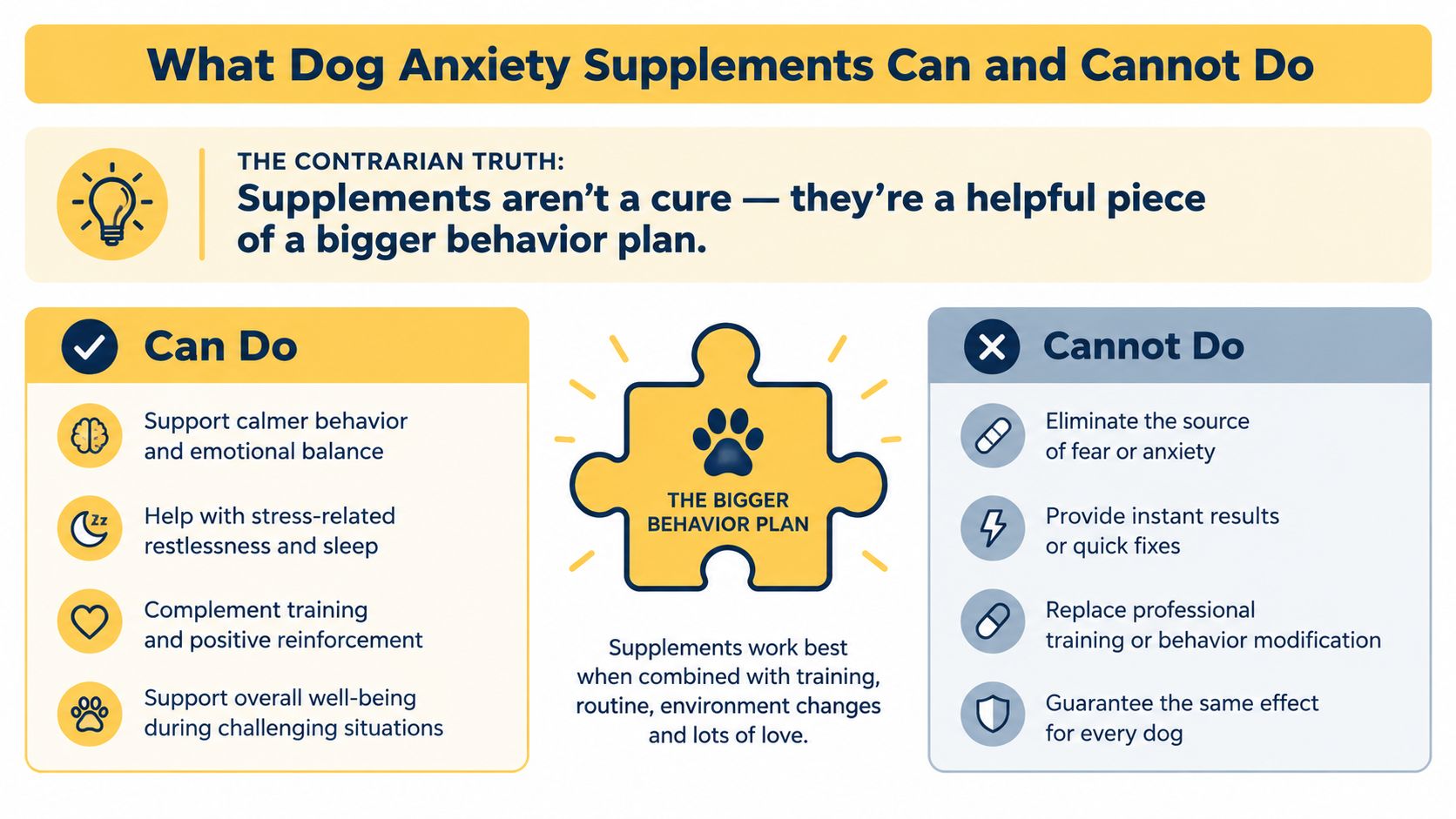
Use supplements as support, not the whole plan
A useful protocol has several parts:
- Lower the trigger load: Close curtains during fireworks, provide a quiet retreat, and reduce unnecessary exposure.
- Build new associations: Pair a manageable version of the trigger with food, play, or rest. Increase intensity gradually.
- Support the body: Address pain, poor sleep, digestive upset, insufficient exercise, and other factors that can raise arousal.
- Measure behavior: Track pacing, barking, hiding, appetite, recovery time, and stool quality instead of relying on a vague impression.
The underlying burden is substantial. A 2025 report cited findings that 49.9% of U.S. dogs displayed moderate to severe anxiety, while 85.9% showed moderate to severe separation anxiety. A Finnish study of 13,700 dogs found noise sensitivity in 32% of the sample. These findings are summarized in reported behavioral research on anxiety supplements for dogs. Common doesn't mean simple, and it certainly doesn't mean one formula will suit every case.
Practical rule: If the supplement is the only part of the plan, you're asking a nutritional product to do a behavior therapist's job.
Expectancy effects can confuse the picture. Owners may interpret a quieter evening as improvement, while a dog may be tired, less exposed to the trigger, or responding to a changed routine. Controlled trials can also produce placebo-like outcomes even when owners perceive a benefit. That isn't a criticism of owners. It's why a baseline log matters.
For severe separation distress, rescue-level fear, compulsive behavior, sudden anxiety, or self-injury, speak with a veterinarian. The most responsible choice may include veterinary behavior therapy, prescription medication, or both. For less severe cases, choose a product based on ingredient-specific evidence for the trigger you're targeting, not on the number of ingredients printed on the front of the package.
The Main Calming Ingredients and How They Work
A long ingredient list is not a treatment plan. Each ingredient needs a clear job, a plausible mechanism, and a stated amount that is not hidden inside a proprietary blend. The right question is whether the formula fits the dog's anxiety pattern, such as noise, separation, travel, sleep disruption, or gut-linked stress.
Match the ingredient to the anxiety job
L-theanine is used for relaxed alertness. It is associated with alpha brain-wave activity and may influence inhibitory signaling, which makes it a reasonable option for noise, visitors, and general reactivity. It should help a dog stay more settled without acting like a sedative. Evidence varies by product and dog, so a calmer response is possible, not guaranteed.
Alpha-casozepine is a milk-derived peptide with controlled canine support for stress-related behavior. It may fit planned support for noise sensitivity and other predictable fear situations. Its slower onset makes it less suitable as a last-minute rescue immediately after a trigger begins.
Tryptophan contributes to serotonin production, but its effect depends on the wider diet, dose, and behavior plan. A recent systematic review found moderate evidence that dietary tryptophan can reduce anxiety-related behavior in adult dogs, while also concluding that it is not enough as a stand-alone treatment. The review is available in the systematic evidence review on dietary tryptophan. It is best understood as an adjunct, not a complete answer.
Chamomile and valerian are traditionally used for restlessness and sleep-linked difficulty settling. Their effects may involve GABA-A receptor activity, and mild sedation can occur. That may be unhelpful when the dog needs to remain alert and engaged during training.
Melatonin fits sleep disruption and altered day-night patterns, including some situations involving senior dogs. It is not a universal anxiety treatment. Veterinary guidance matters when a dog has another condition or takes medication.
CBD and hemp blends act on the endocannabinoid system, but canine anxiety results remain mixed. A dog whose distress is intensified by discomfort may respond differently from one with learned fear of departure. Broad marketing claims deserve caution because the ingredient does not define the anxiety problem on its own.
GABA is often added because its name sounds calming. Oral availability and practical canine evidence are less convincing than the label may suggest. Ginger may help with nausea during travel, but it does not treat anxiety by itself.
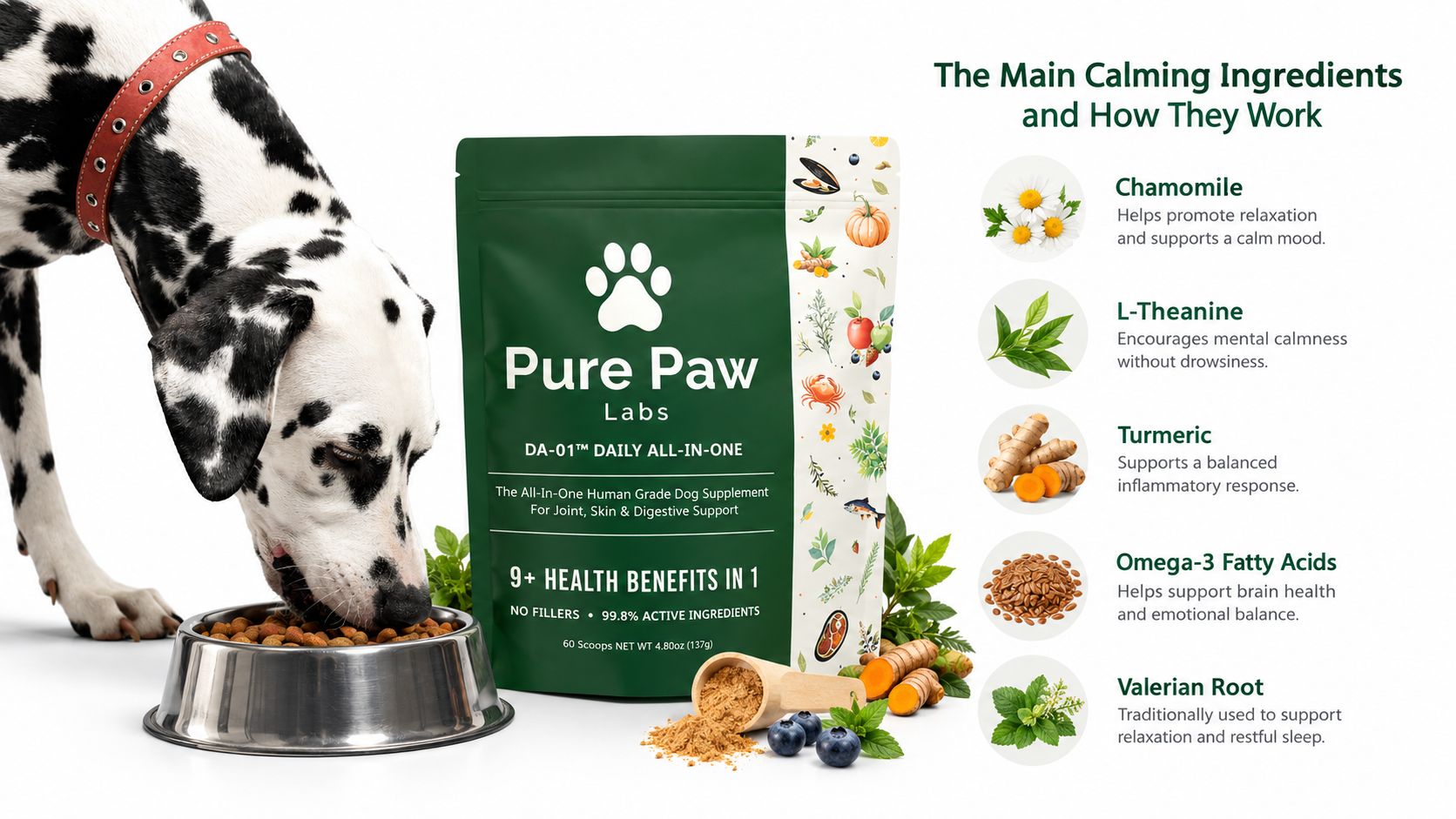
For broader daily support, DA-1™ Daily All-in-One - Senior Dog Support, Joints, Skin/Coat & More is described as a once-daily scoop containing 18 human-grade ingredients for cells, gut, and joints. That is a broader purpose than an acute noise product. Read the active-ingredient panel and decide whether the formula addresses the problem you need to manage.
Evidence is ingredient-specific
A placebo-controlled crossover study of a probiotic containing Bifidobacterium longum NCC3001, also called BL999, reported improvement in 90% of dogs across behaviors including barking, jumping, spinning, and pacing. The study also reported lower salivary cortisol and improved heart-rate variability. Those findings support a possible gut-brain mechanism rather than a simple sedative effect, as described in the canine stress study summary.
| Ingredient | Mechanism | Best For | Evidence Strength |
|---|---|---|---|
| L-theanine | Supports relaxed alertness and inhibitory signaling | Noise, visitors, general reactivity | Ingredient-specific canine support, not a universal cure |
| Alpha-casozepine | Milk-derived peptide associated with calming support | Planned noise or situational stress | Controlled canine evidence with condition-specific limits |
| Tryptophan | Supports serotonin-related pathways | General reactivity as an adjunct | Moderate evidence in a recent systematic review |
| Melatonin | Supports sleep timing and rest | Sleep disruption and selected senior-dog patterns | Useful in selected situations, not broad anxiety |
| Chamomile or valerian | May influence GABA-A activity | Restlessness and settling | Mixed evidence, with possible sedation |
| CBD or hemp blends | Interacts with the endocannabinoid system | Some pain-linked or situational cases | Mixed results |
| BL999 probiotic | May influence the gut-brain axis | Anxiety with digestive or daily behavioral signs | Promising controlled canine data, but strain-specific |
A single daily all-in-one can simplify mild-to-moderate cases when it supplies several relevant ingredients in visible amounts. It cannot make mismatched ingredients appropriate, and it should not replace behavior work. For more detail on choosing a formula, use this guide to stress support supplements. The practical test is simple: are the active amounts visible, and do they match the anxiety job you need the product to do?
Safe Dosing, Onset Times, and What to Expect
The safest first rule is simple: don't stack products just because each one is sold as calming. Check the label for active amounts, convert your dog's weight to kilograms, and ask your veterinarian to review the plan if your dog has a medical condition or takes medication.
Acute and daily use are different. A situational product may be given before a known trigger, while a foundational formula needs consistent use before you can judge its effect. The practical timing depends on the ingredient and the dog.
Use timing as a testable plan
Plan the first trial around a quiet day rather than the biggest storm of the year. Give only the labeled amount, observe your dog's alertness, appetite, stool, and coordination, and record what happens. If the response is poor, adding another product immediately makes the result harder to interpret.
Common starting guidance may include L-theanine at roughly 2 mg per kilogram and melatonin at 1 to 6 mg total per dog, but these are starting ranges to confirm with a veterinarian, not universal prescriptions. Alpha-casozepine may begin working within 30 to 60 minutes, melatonin within 30 minutes, L-theanine may peak around 30 to 60 minutes, and CBD often takes 1 to 2 hours. These timing ranges come from the provided clinical guidance and should be treated as approximate rather than guaranteed.
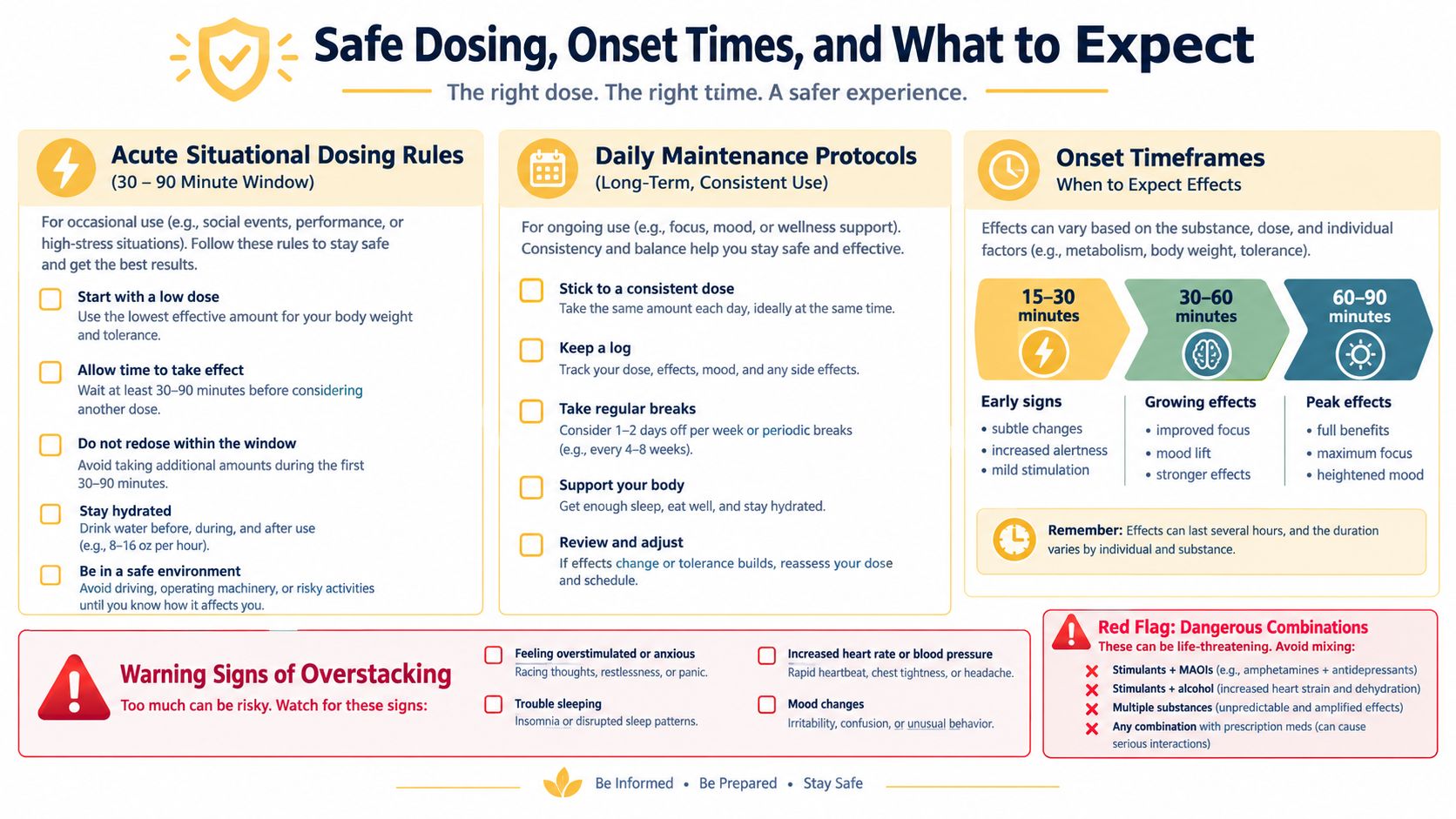
For a daily foundational effect, “too soon to tell” generally means you haven't completed at least 2 to 3 weeks of consistent use. Probiotic and postbiotic products may need longer because the target is the gut environment, not an immediate change in arousal.
Watch for excessive sedation, soft stool, vomiting, or paradoxical restlessness. Ask your veterinarian before combining a calming supplement with NSAIDs, gabapentin, fluoxetine, trazodone, or other medication. A product that makes a dog unsteady or unusually difficult to rouse isn't providing useful calm.
The Gut-Brain Connection and Probiotic Calming
A stressed dog often has a stressed stomach. Loose stool during separation, reduced appetite before a thunderstorm, and digestive disruption after travel may reflect the way stress changes gut movement and appetite. They can also signal illness, so don't assume every digestive symptom is anxiety.
The gut-brain axis provides a plausible biological bridge. Signals travel through the vagus nerve, immune pathways, metabolic products, and neurotransmitter-related compounds. Gut microbes can contribute to compounds associated with GABA activity and serotonin precursor pathways, but that doesn't mean any probiotic will produce a predictable mood change.
Strain identity matters
The strongest canine example in the supplied evidence is Bifidobacterium longum NCC3001, or BL999. In a placebo-controlled crossover study, 90% of dogs improved on several day-to-day anxious behaviors, and researchers reported changes in salivary cortisol and heart-rate variability. The result is encouraging, but it applies to that studied strain and formulation, not automatically to every product described as “probiotic calming.”
Other strains, including Lactobacillus rhamnosus and Enterococcus faecium SF68, may appear in canine gut products, but broad claims about anxiety remain unsettled. Recent coverage describes new trial findings for a gut supplement, including a mean anxiety-score change from 4.29 to 3.23 out of 5 in one phase and improvement in 38 of 42 anxious dogs in another. Those figures come from the veterinary coverage of replicated canine gut-supplement trials. The same evidence remains mixed overall, so strain, study design, and product composition matter.
Expect a microbiome-focused approach to work gradually. A 4 to 6 week trial is more informative than judging the product after one stressful afternoon. During that period, pair gut support with trigger management and behavior work. For fireworks or travel, a gut product is better viewed as a foundation layer than as the only fast-acting option.
Look for:
- A named strain: “Probiotic blend” is less informative than a full strain designation.
- A stated CFU amount: The label should identify what is provided per serving.
- Quality documentation: Third-party testing or a certificate of analysis can help verify identity and contents.
- A realistic claim: Gut support should not be presented as a replacement for treatment of severe anxiety.
Matching the Right Supplement to the Right Situation
The same dog may need different support for a thunderstorm and a car ride. Start by naming the trigger, then decide whether you need a fast response, a daily baseline, or help with a physical symptom such as nausea.
Use a situation-first decision guide
Thunderstorms and fireworks call for preparation. A fast-onset option such as L-theanine may help some dogs with arousal, while melatonin may fit a dog whose main difficulty is settling and sleeping. Neither should be expected to erase panic once the dog is already overwhelmed. Pair supplementation with a protected retreat, reduced sound exposure, and gradual sound desensitization outside the event.
Separation anxiety usually needs daily support plus a structured departure plan. Alpha-casozepine or tryptophan may be considered as adjuncts, but a dog who vocalizes, escapes, or self-injures needs professional guidance. The supplement can support the training window. It can't create emotional safety by itself.
Car and travel stress may have two components: fear and motion-related nausea. A calming ingredient may address the first, while ginger can be relevant to the second. If vomiting, drooling, or severe nausea is prominent, speak with a veterinarian rather than treating the entire episode as anxiety.
Vet and grooming visits are often predictable and brief. Trial the chosen product on a calm day first, then use the timing that produced a safe, alert response. Handling practice, food rewards, and shorter visits remain central.
Senior cognitive changes deserve a medical review. Sleep reversal, night pacing, confusion, and new clinginess can reflect cognitive decline or pain. Nutritional support for broader senior needs may be appropriate, but a calming label shouldn't hide an untreated condition.
| Anxiety Scenario | Top Ingredients | Onset Time | Best Format |
|---|---|---|---|
| Noise event | L-theanine, selected calming peptides, or melatonin when sleep is disrupted | Often planned before the trigger | Powder, chew, or measured capsule |
| Separation pattern | Alpha-casozepine or tryptophan as an adjunct | Daily foundation, not instant rescue | Daily powder or measured chew |
| Travel with nausea | Calming support plus ginger | Before departure, based on veterinary guidance | Food-mixed powder or chew |
| Vet or grooming visit | L-theanine or another tested situational option | Before the appointment | Small, accurately measured serving |
| Senior restlessness | Melatonin or broader support only after assessment | Depends on the cause | Daily measured powder |
Avoid combinations that merely duplicate sedation. A fast-acting addition to a daily foundation can make sense in selected cases, but your veterinarian should approve the combination.
Why a Single Daily All-in-One Beats a Stack of Bottles
More ingredients don't automatically mean more relief. Five bottles can create overlapping mechanisms, unclear dosing, and a frustrating question when your dog changes: Which product caused that?
Two GABA-oriented ingredients may add sedation without adding meaningful anxiety control. Tryptophan combined with a high melatonin dose may make a dog dull or unsteady rather than calmly engaged. A long ingredient list can also conceal tiny amounts of the ingredients that matter most.
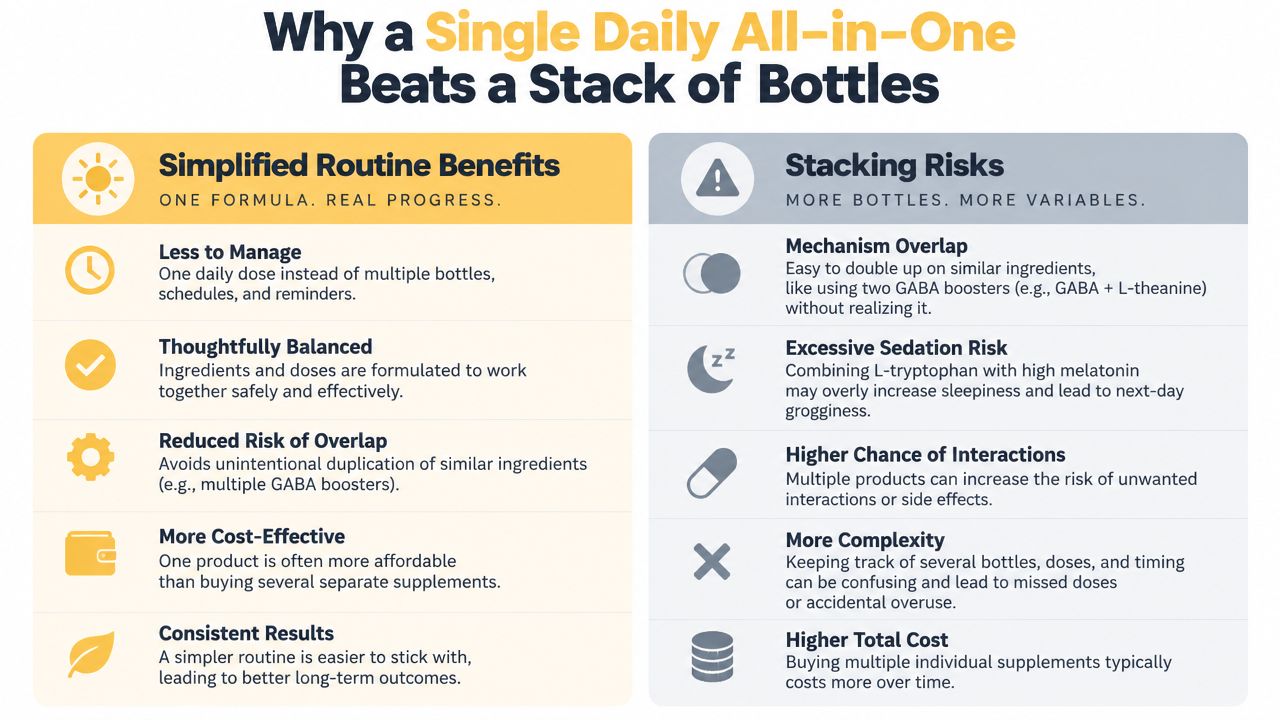
Simplicity improves the experiment
For mild to moderate, ongoing reactivity, one transparent daily formula can be easier to evaluate than a homemade stack. A sensible formulation might combine a daily calming ingredient, gut support, and broader nutritional support, provided the label shows meaningful active amounts and the product is appropriate for the dog.
That doesn't mean every all-in-one is automatically better. A broad wellness powder may not provide the same targeted support as a product designed for a single ingredient or a predictable noise event. Read the label, identify the actual anxiety-related actives, and separate those from flavoring, carrier material, and vague “proprietary calming matrix” language.
A useful approach is described in this guide to all-in-one supplements, but the principle applies beyond any one product.
| One daily formula | A stack of separate bottles |
|---|---|
| Fewer administration points | More chances to miss a serving |
| Easier to track cause and effect | Harder to identify what helped or caused an adverse effect |
| Lower risk of accidental overlap when formulated responsibly | Greater risk of duplicate calming mechanisms |
| Convenient for mild, ongoing support | More flexible for carefully supervised, situation-specific needs |
| Requires close label reading | Requires close label reading plus interaction review |
A limited stack can be justified. For example, a daily foundation may be paired with a situational product for a known event, or a senior-dog plan may include separate nutritional components for distinct needs. The exception should be deliberate, documented, and reviewed, not driven by the belief that more bottles must produce a stronger result.
Your Vet-Style Checklist for Trying a Supplement
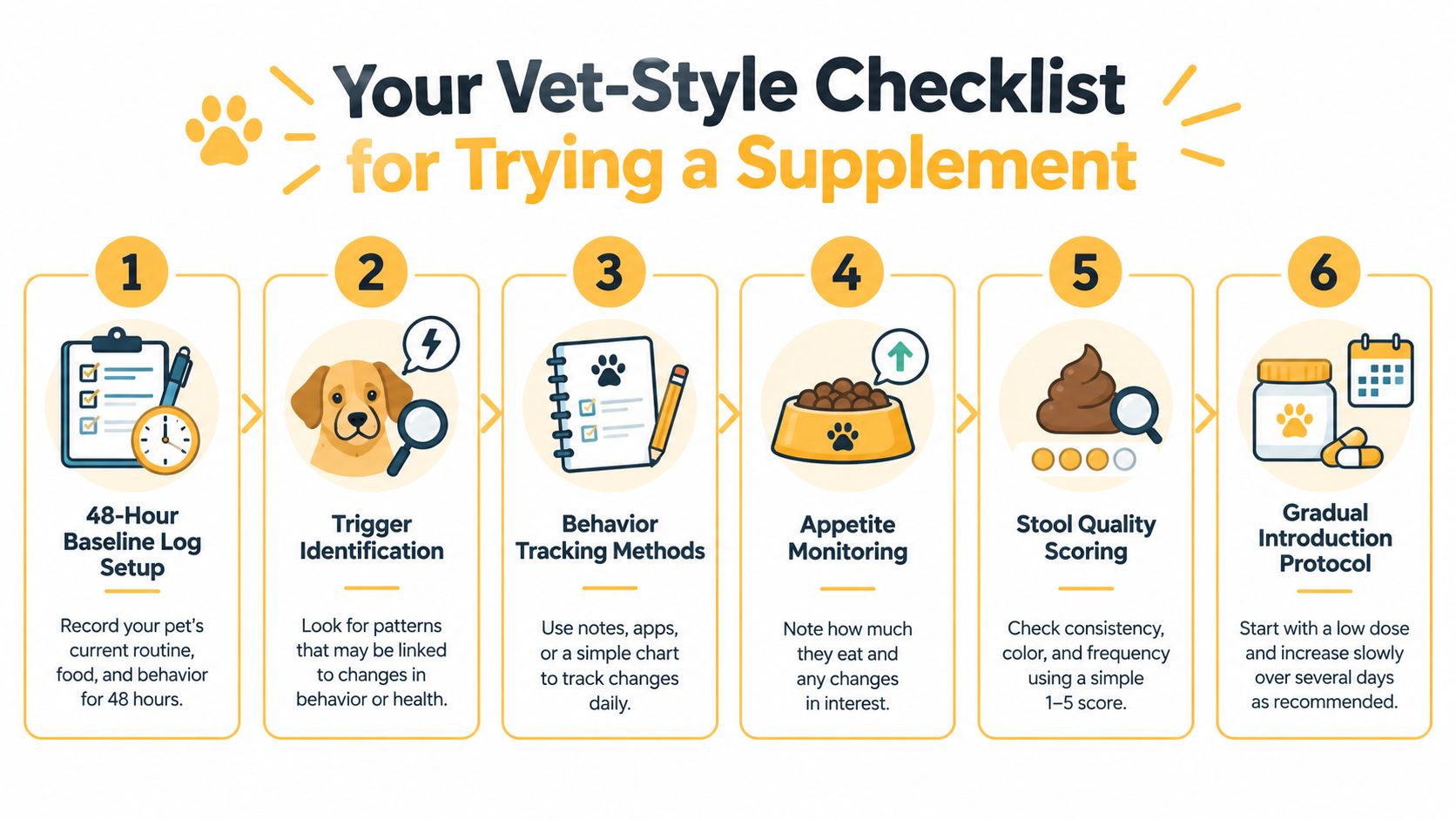
Start with a baseline, not a purchase. For 48 hours, record the triggers your dog encounters, the behavior that follows, appetite, sleep, and stool quality. Include short notes such as “paced during door closing” or “refused breakfast after overnight storm,” rather than writing only “anxious.”
Follow a controlled introduction
- Identify the trigger: Separate noise, departure, travel, handling, pain-related restlessness, and digestive-linked episodes.
- Check the product: Look for an NASC seal or third-party certificate of analysis, especially with CBD or hemp products.
- Convert the weight: Use kilograms when checking weight-based guidance, and confirm the active dose with your veterinarian.
- Change one thing: Don't introduce several new supplements at once.
- Track the response: Record onset, alertness, appetite, stool, and recovery after the trigger.
- Judge on the right timeline: Amino acid and herbal options may need a two-week trial, while probiotic and postbiotic products may need four to six weeks.
Stop the product and contact your veterinarian if your dog vomits, develops loose stool lasting more than 48 hours, becomes more than gently relaxed, or develops new skin itchiness. New anxiety in a previously settled dog also deserves a medical assessment, particularly in an older dog.
Environmental details can matter as much as the supplement. For example, smoke and strong fragrances may add respiratory or sensory stress during an already difficult period. This pet safety information about incense and household exposure is a useful reference when reviewing the dog's surroundings.
For label literacy, use this guide to reading supplement labels. You should be able to find the serving size, active amount, strain designation when relevant, and cautions without decoding marketing language.
Escalate promptly if your dog self-injures, escapes the home, or shows worsening panic despite support. Those signs call for professional behavior therapy, prescription anxiolytics, or both. A supplement may remain part of the plan, but it shouldn't delay treatment that protects your dog.
Pure Paw Labs offers human-grade daily supplements, including a multi-system powder designed to support gut, joint, skin and coat, immune, and stress-related needs in one scoop. If your dog has mild ongoing reactivity and you want a simpler routine to discuss with your veterinarian, visit Pure Paw Labs and review the formula and label before choosing.