


French Bulldogs are moderate shedders with a short single coat. They shed lightly year-round, more heavily in spring and fall, and sit at about 3 out of 5 on a common shedding scale.
That answer challenges the most popular advice about Frenchie grooming. “Short hair” doesn't mean “no cleanup,” and brushing isn't only a way to protect your sofa. Your Frenchie's shedding pattern can also give you useful clues about skin comfort, coat condition, and whether something needs a veterinarian's attention.
A healthy Frenchie will leave some hair on clothing, bedding, and furniture. The practical goal isn't to eliminate shedding, because normal coat turnover can't be switched off. It's to remove loose hair efficiently, protect the skin barrier, and recognize when hair loss looks different from your dog's usual pattern.
Table of Contents
- The Truth About French Bulldog Shedding
- Understanding the Frenchie Single Coat
- Normal Shedding Versus Skin Health Red Flags
- A Practical Grooming Routine for French Bulldogs
- Supporting Coat Health Through Nutrition and Supplements
- Managing Frenchie Hair Around Your Home
- Common Shedding Myths That Hurt Your Frenchie
- Frequently Asked Questions About Frenchie Shedding
The Truth About French Bulldog Shedding
French Bulldogs may look easy to maintain because their hair is short, but low-to-moderate shedders, not hypoallergenic dogs is the more accurate description. Their single coat releases fine hairs throughout the year, with shedding often more noticeable during seasonal changes. The commonly repeated 3-out-of-5 shedding score places them around the middle of the range, rather than at either extreme. Vetericyn's French Bulldog shedding guide also describes Frenchies as low-to-moderate, year-round shedders.
The amount of hair is only part of the story. Short hairs can settle into blankets, cling to dark clothing, and lodge in upholstery. Instead of one dramatic pile, owners often see a thin, steady layer appearing around the home.
Shedding is a coat signal
A healthy shedding pattern is usually fairly even across the body. Seasonal changes can increase loose hair, but the skin should remain comfortable, with no obvious bald patches, ongoing redness, strong odor, or intense scratching. A sudden increase may reflect irritation, allergies, parasites, or another health problem rather than ordinary coat turnover.
Brushing offers a useful health check. As you groom, look for flakes, bumps, changes in skin color, tenderness, or areas where the coat feels thinner. These details can reveal how well your Frenchie's skin barrier is coping, and they give your veterinarian better context if symptoms continue.
Practical rule: Manage routine shedding with grooming, but investigate a sudden pattern change instead of brushing harder.
A comparison with whether Pomeranian dogs shed shows why coat type changes the visible cleanup, but the Frenchie principle stays the same: loose hair is expected. Patchy loss, discomfort, or a clear change from your dog's normal pattern deserves attention, including a review of diet and veterinary triggers when appropriate.
Understanding the Frenchie Single Coat
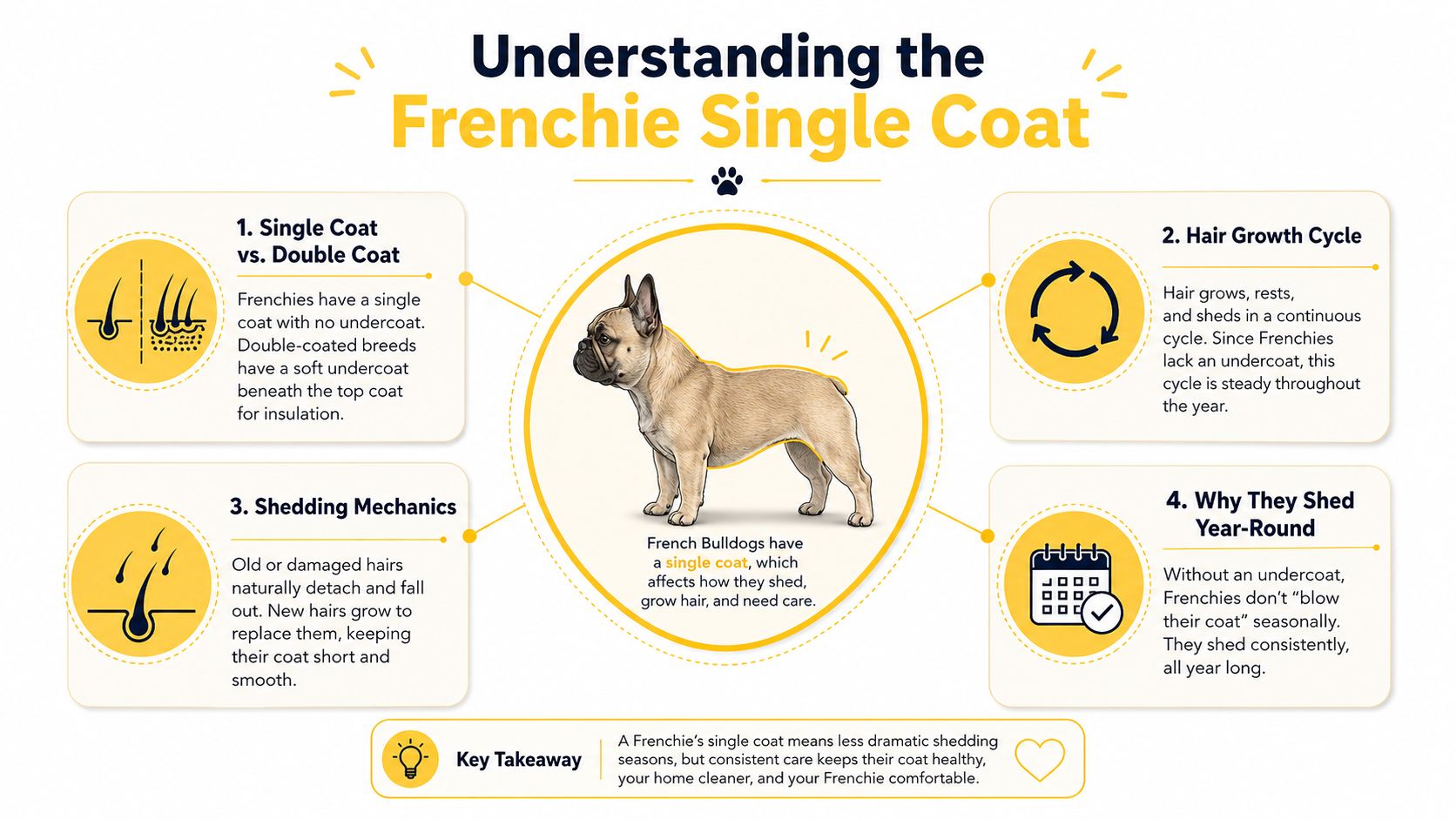
A French Bulldog's short coat can look low-maintenance, but its shedding pattern reveals more than hair length. Frenchies have a smooth, single-layer coat, unlike a double-coated dog with a topcoat and dense undercoat. Individual hairs finish their growth cycle and fall out steadily, so loose hair does not arrive only as one dramatic seasonal release.
Short hair is not the same as invisible hair. Fine strands may avoid tangles yet lodge firmly in blankets, upholstery, and clothing. Coat length changes how clearly hair shows and how it feels in fabric, not whether the dog sheds.
History shaped the modern coat
The breed's coat has not always looked completely uniform. Archival research describes variation in French Bulldog coat texture and color into the early 20th century, including longer, softer coats that modern enthusiasts may call “fluffy.” Breed standards became stricter around 1911, helping establish the short-coated appearance associated with Frenchies today. Archival research on French Bulldog colors and coats documents that change.
History also explains why two Frenchies can shed or feel different while both have healthy coats. Genetics, skin condition, environment, and life stage all shape what owners notice. Grooming is therefore a useful skin check, not merely a way to collect loose hair. A coat that feels unusually brittle, thin, or greasy can point toward a barrier problem that deserves attention to diet, irritation, or veterinary causes.
Puppy coat changes can look dramatic
Many French Bulldogs shed more noticeably between 6 and 12 months of age, as the puppy coat gives way to the adult coat. The transition often lasts about a month or less, according to the same breed-care source. The French Bulldog coat history and development overview provides those developmental markers.
Judge the skin as carefully as the amount of hair. Even, temporary shedding without redness or discomfort commonly fits normal development. Patchiness, sores, or persistent itching calls for veterinary advice rather than more vigorous brushing.
Normal Shedding Versus Skin Health Red Flags
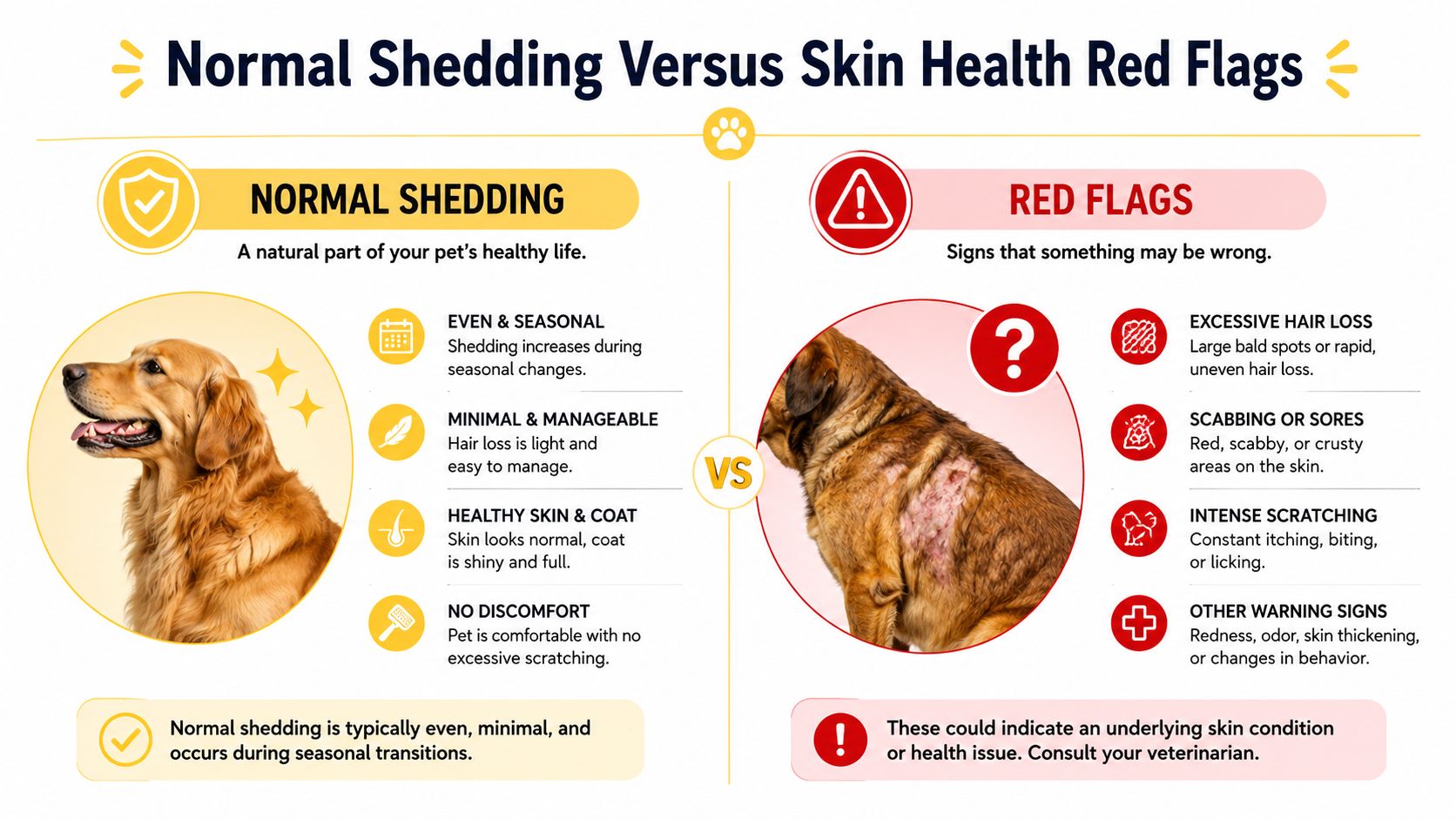
A Frenchie's shedding pattern can reveal more than how much hair ends up on your furniture. Even, gradual hair loss usually reflects normal coat turnover. A sudden change, especially alongside irritated skin, may signal that the skin barrier needs attention.
| Normal coat turnover | Possible skin health problem |
|---|---|
| Hair loss remains relatively even | Bald patches or sharply thinned areas |
| Seasonal increase follows your dog's usual pattern | Sudden increase without an obvious seasonal explanation |
| Skin looks comfortable | Redness, sores, scabbing, or inflammation |
| Your Frenchie isn't persistently scratching | Ongoing scratching, licking, or rubbing |
| Loose hairs brush away normally | Clumps of hair coming out or visible patchiness |
Look at the skin beneath the hair, not only at the brush. A healthy barrier helps retain moisture and protect against irritation. Allergies, parasites, fungal disease, inflammation, and stress-related skin issues can disrupt it, leading to abnormal hair loss. Brachycephalic dog care guidance on French Bulldog shedding identifies bald areas, marked thinning, redness, and persistent scratching as warning signs that differ from ordinary coat turnover.
Diet can also be part of the picture. Poor coat texture, increased dryness, or a greasy feel does not identify one specific cause, but it gives you a reason to review nutrition and discuss persistent changes with your veterinarian. A useful overview of dog skin and coat health explains why the skin and hair should be assessed together.
Why brushing can't solve every cause
Brushing removes hair that has already loosened. It cannot treat an allergy, eliminate parasites, resolve a fungal infection, or calm inflamed skin. If new thinning, redness, or discomfort continues, repeated brushing may make the coat look tidier while the underlying problem remains.
Watch your dog's behavior as closely as the coat. Scratching, licking, face rubbing, or visible discomfort warrants veterinary assessment, particularly when these signs appear with hair loss.
This short video provides another visual reference for distinguishing ordinary shedding from possible health concerns.
A Practical Grooming Routine for French Bulldogs
A Frenchie's short coat doesn't need complicated styling. It does benefit from gentle, consistent removal of loose hair and regular inspection of sensitive areas.
Use the lightest effective touch
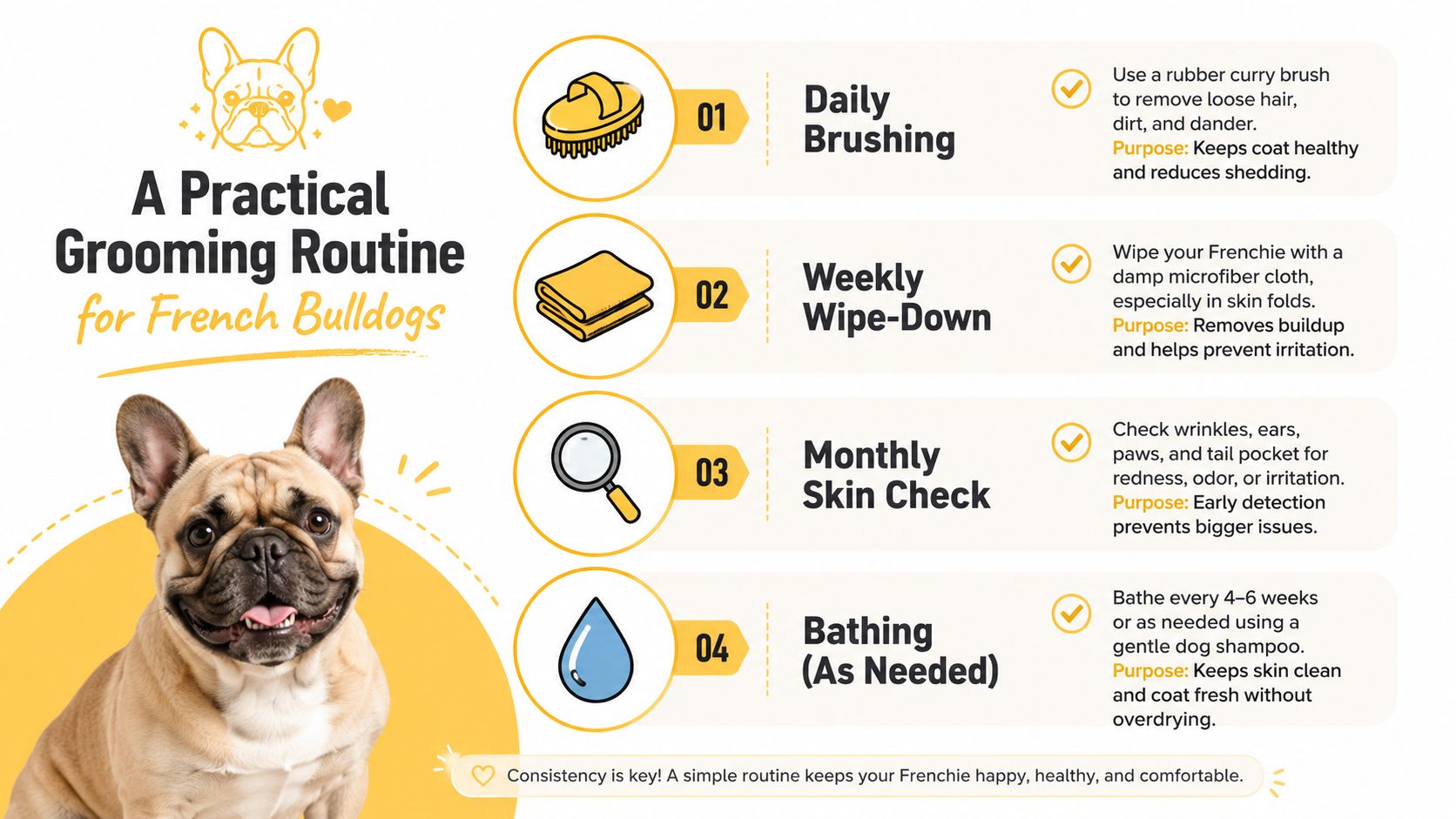
A rubber curry brush or soft bristle brush generally suits fine, short hair better than aggressive tools with sharp pins. A grooming glove can also help a dog who dislikes conventional brushes. Work in the direction of hair growth with light pressure, and stop if the skin becomes pink or your Frenchie shows discomfort.
Brush often enough to keep loose hair from accumulating, then adjust during spring and fall when shedding becomes more noticeable. The right frequency depends on your individual dog's coat and skin tolerance, so consistency matters more than force.
Keep bathing gentle
Bathe when your Frenchie is dirty, has a veterinarian-directed skin-care need, or needs routine cleansing with a mild, moisturizing dog shampoo. Harsh formulas and unnecessary bathing can strip surface oils, dry the skin, and make coat discomfort worse.
Rinse thoroughly, pat rather than scrub the coat dry, and check the skin folds once the dog is dry. Wrinkles around the face and tail pocket can trap moisture and debris. Clean them gently according to your veterinarian's advice, then dry them completely. A damp fold can become irritated even when the rest of the coat looks healthy.
Use each grooming session to check for:
- New redness: Look beneath the coat and inside folds.
- Flakes or sores: Note whether they recur after cleaning.
- Odor or moisture: Pay special attention to wrinkles and the tail pocket.
- Tender spots: Stop handling an area that seems painful and arrange veterinary advice.
Supporting Coat Health Through Nutrition and Supplements
Hair is produced by the body, so grooming can only address the outside of the problem. A balanced diet supplies the protein and nutrients needed for normal skin renewal, while fatty acids, biotin, and zinc are commonly considered in discussions of skin and coat support. Those ingredients shouldn't be treated as a substitute for diagnosis, especially when a Frenchie has itching, redness, or bald patches.
Nutrition becomes more relevant when the coat looks dull, the skin appears dry, or shedding changes alongside a diet disruption. Start by reviewing the complete diet with your veterinarian. A supplement may be useful for some dogs, but the right choice depends on the dog's food, health history, allergies, medications, and overall nutritional intake.
A 2026 canine study is explicitly evaluating shedding alongside redness, dryness, itchiness, coat shine, and softness. That research direction supports a broader view of shedding as part of skin-barrier health rather than an isolated cosmetic issue. The canine skin and coat study should be read as research context, not as proof that a particular supplement will treat your dog's condition.

Simplify only when the formula fits
Some owners prefer one routine instead of separate products for different goals. DA-1™ Daily All-in-One - Skin/Coat, Joints, Gut Health & More is described as a human-grade powder used as one scoop on top of a dog's food, combining support for skin and coat, joints, digestion, immunity, and stress-related needs. Its product information states 99.8% active ingredients with no fillers and includes a 60-day results-or-refund guarantee.
Treat those details as product specifications, not a promise that shedding will disappear. Introduce any supplement thoughtfully, follow the label, and ask your veterinarian before adding it to a Frenchie with a medical condition or a sensitive diet. The aim is a steady nutritional foundation that complements grooming and appropriate veterinary care.
For additional decision-making guidance, review this resource on the best supplement for dog coat, then compare the ingredient list with your dog's current food and care plan.
Managing Frenchie Hair Around Your Home
Frenchie hair often creates a visibility problem rather than a volume crisis. A short pale hair may disappear on a light rug, then become obvious on black trousers. Fine hairs can also catch in upholstery instead of collecting neatly where a vacuum can reach them.
Start with the places your dog uses. If your Frenchie naps on one chair, keep a washable throw over that surface. If bedding travels between the crate and the sofa, use a separate blanket that can go directly into the laundry rather than carrying hair through the house.
A practical cleanup sequence
- Lift hair from fabric first. Use an adhesive lint roller or a damp rubber surface to gather embedded hairs before vacuuming.
- Vacuum edges and seams. Pet-hair attachments and narrow upholstery tools help reach cushion gaps where short hairs settle.
- Use a rubber broom on hard floors. Rubber attracts and gathers loose hair more effectively than pushing it around.
- Wash dog bedding regularly. Shake items outdoors when possible, then launder them according to the fabric instructions.
- Protect high-contact fabrics. Smooth, tightly woven covers tend to release hair more easily than heavily textured upholstery.
During spring and fall, combine a fresh brush session with a deeper pass over favorite sleeping areas. You won't prevent every hair from landing, but removing loose coat before your Frenchie settles down reduces the amount that gets pressed into fabric.
A useful home rule: Clean the places your Frenchie sleeps most, not every surface with equal intensity.
Common Shedding Myths That Hurt Your Frenchie
Short hair tempts owners into shortcuts. Some of those shortcuts can irritate the skin or hide a health problem instead of solving it.
Myth one, shaving stops shedding
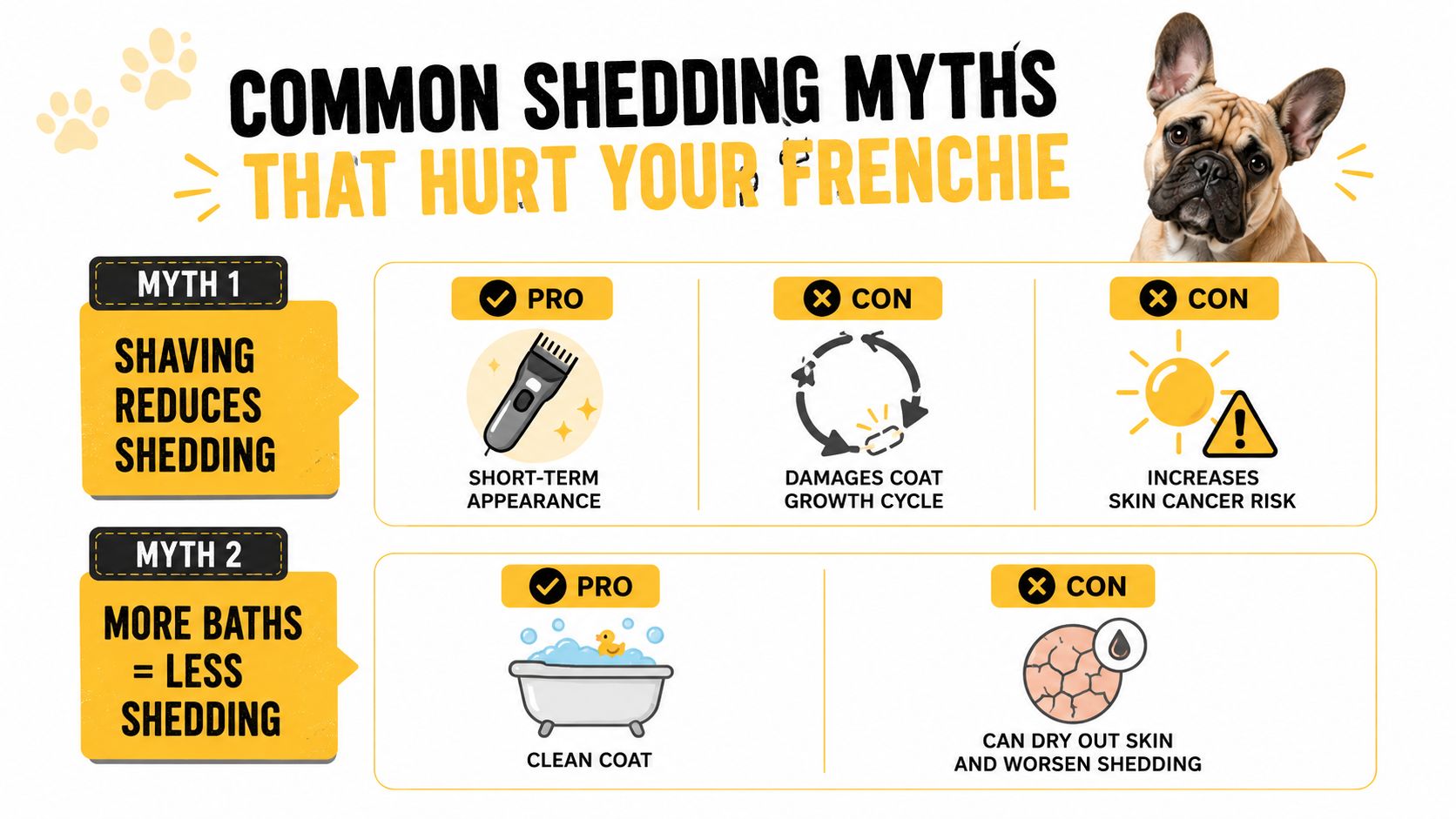
Shaving may make loose hairs less visible for a short time, but it doesn't stop the hair-growth cycle. It can also leave sensitive skin more exposed to sun and environmental irritation. A Frenchie's coat is already short, so removing it rarely offers a sensible solution to routine shedding.
Use gentle brushing instead, and investigate sudden hair loss rather than disguising it with a clipper.
Myth two, more baths mean less hair
A bath can remove loose hair from the coat, but repeated washing with drying products may disrupt the skin's comfort and increase flaking. Clean doesn't automatically mean healthy.
Choose a mild product, rinse thoroughly, and bathe according to your dog's actual needs. If the coat becomes dry, greasy, itchy, or unusually sparse, discuss the pattern with your veterinarian.
Myth three, every increase is normal
Seasonal variation and puppy coat replacement can be normal. Bald patches, sores, marked thinning, clumps, redness, and persistent scratching are not routine shedding signs. They point toward a possible skin issue that brushing, shaving, or shampoo alone can't resolve.
Frequently Asked Questions About Frenchie Shedding
Do French Bulldogs shed more as they age?
A Frenchie's shedding can change with life stage, environment, nutrition, and skin condition. Puppies may shed more visibly during the transition from puppy coat to adult coat between 6 and 12 months, while later changes should be judged against your dog's established pattern. A sudden increase with irritation or thinning needs veterinary attention.
Does spaying or neutering change shedding?
Hormonal changes can affect coat texture or the timing of hair growth in some dogs, but there isn't a reliable rule that applies to every Frenchie. Track when the change began and mention it during a veterinary appointment if it persists or appears alongside skin symptoms.
Do male and female Frenchies shed differently?
Sex alone doesn't provide a dependable way to predict household hair. Individual coat, skin health, season, diet, and environment matter more than assuming one sex will shed less.
How can I tell whether allergies are involved?
Allergy-related shedding often appears with itching, licking, redness, recurrent ear or fold problems, or localized thinning. Environmental triggers can overlap with food reactions and other skin conditions, so don't try to identify the cause from shedding alone. A veterinarian can help separate allergy, parasites, infection, and ordinary coat turnover.
If your Frenchie sheds, Pure Paw Labs offers nutrition-focused support, including a human-grade daily powder designed to combine skin and coat support with joint, gut, immune, and stress-related needs. Visit Pure Paw Labs to review the daily-care options, then pair any supplement choice with gentle grooming and veterinary guidance when your dog's shedding pattern changes.