


Your dog pauses at the stairs, takes longer to rise after a nap, or scratches more than usual. You search for a gentle option and keep seeing turmeric, curcumin, joint powders, and “natural anti-inflammatory” claims. The hard part isn't finding an ingredient. It's deciding whether the product delivers a useful form, whether it fits your dog's health history, and whether it can simplify an already crowded supplement routine.
Curcumin for dogs may have a place in a vet-guided wellness plan, especially when joint comfort or oxidative balance is the concern. But the most useful question isn't just, “Does curcumin work?” It's “Does enough active curcumin get absorbed by my dog?” The answer depends on the extract, delivery system, dose, medications, and individual risk factors.
Table of Contents
- Why Dog Parents Are Curious About Curcumin Right Now
- What Curcumin Is and How It Works in a Dog's Body
- What the Evidence Says About Benefits for Joints Skin and Gut
- Why Absorption Matters More Than Milligrams
- Dosing Safety Side Effects and When to Avoid Curcumin
- How to Choose a High Quality Curcumin Supplement for Dogs
- Fitting Curcumin Into a Simple Daily Wellness Routine
Why Dog Parents Are Curious About Curcumin Right Now
A senior dog may still want to chase a ball but hesitate before jumping into the car. A younger dog may finish a long walk and seem stiff the next morning. Another dog may have recurring skin irritation or a sensitive stomach, leaving the owner looking for something that supports overall comfort without adding another complicated medication schedule.
These situations create understandable pressure. You want to help, but you also don't want to replace a proper diagnosis with a scoop of powder. Curcumin attracts attention because it comes from turmeric and is associated with antioxidant and inflammatory-support properties. That sounds promising, yet turmeric powder, concentrated curcuminoid extracts, and enhanced-delivery formulas aren't interchangeable.
The practical starting point: Treat curcumin as a possible support ingredient, not as a diagnosis, painkiller, or substitute for veterinary care.
The evidence in dogs is encouraging in some areas, particularly joint-related comfort, but it has limitations. Some research evaluates a blend rather than curcumin alone. Some studies measure owner or veterinary assessments of comfort, while objective movement tests may tell a less decisive story. Formulation also matters because a product can contain curcumin on its label without delivering much of it into circulation.
That distinction changes how you shop and how you assess results. Instead of comparing large numbers on the front of containers, look for transparent information about the active compound, delivery format, testing, and cautions. You'll also need to consider whether your dog takes an NSAID, aspirin, or another medicine, or has gallbladder or liver concerns.
The aim is a calm, useful decision. First understand what curcumin is. Then separate the dog-specific evidence from broader claims, learn why absorption can limit results, and use a safety-first process before adding it to your dog's bowl.
What Curcumin Is and How It Works in a Dog's Body
Turmeric is the plant ingredient. Curcumin is one of its active compounds. Whole turmeric powder contains many naturally occurring substances, while a curcumin extract is designed to concentrate the curcuminoid portion. That difference matters because a spoonful of spice and a measured extract may contain very different amounts of the active material.
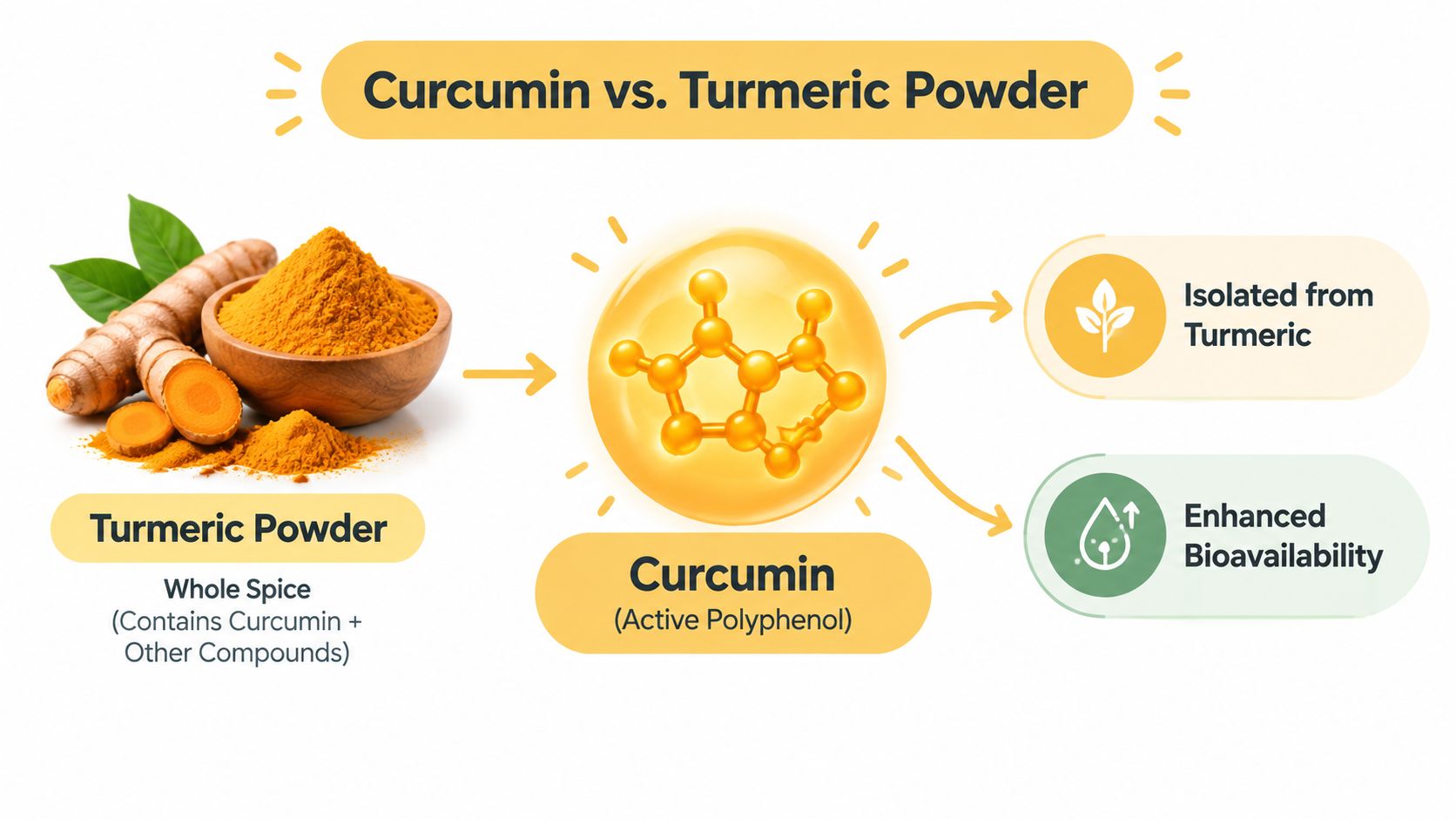
A simple way to picture curcumin
Think of inflammation as a set of volume controls rather than a single light switch. Inflammation has a useful role in healing, but persistent or excessive signaling can contribute to discomfort and tissue stress. Curcumin appears to influence several inflammatory and antioxidant pathways, which is why researchers study it as a modulating compound, not as a direct anesthetic.
A second analogy helps explain the absorption problem. Imagine curcumin as a useful item that needs to pass through a locked delivery system. If the compound dissolves poorly or is broken down quickly, only a small amount reaches the places where it might have an effect. A carefully designed formulation tries to improve that journey.
The dog-specific research supports cautious interest. In an osteoarthritis trial, a diet containing curcuminoids extract alongside hydrolyzed collagen and green tea extract was used for three months. The supplemented dogs had a significant reduction in pain on manipulation, but ground reaction forces didn't differ statistically between groups. That result suggests a meaningful pain-related signal, while also showing why one outcome shouldn't be treated as proof of broad mobility improvement. Read the controlled osteoarthritis study in dogs.
Why whole turmeric and curcumin aren't the same
Whole turmeric powder may be familiar and easy to add to food, but it doesn't automatically provide a reliably absorbed curcuminoid dose. An extract can be standardized, while a vague powder label may leave the active concentration and delivery characteristics unclear.
That leads to the central idea for this topic: the form of curcumin can matter as much as the amount listed. A label showing milligrams answers how much material is present. It doesn't necessarily answer how much your dog absorbs.
What the Evidence Says About Benefits for Joints Skin and Gut
Dog-specific research supports measured interest in curcumin, not a blanket promise. The clearest findings concern pain-related joint outcomes and antioxidant activity. Skin and gut claims remain more limited, so the practical question is whether a suitable formulation delivers enough absorbed curcumin to matter.
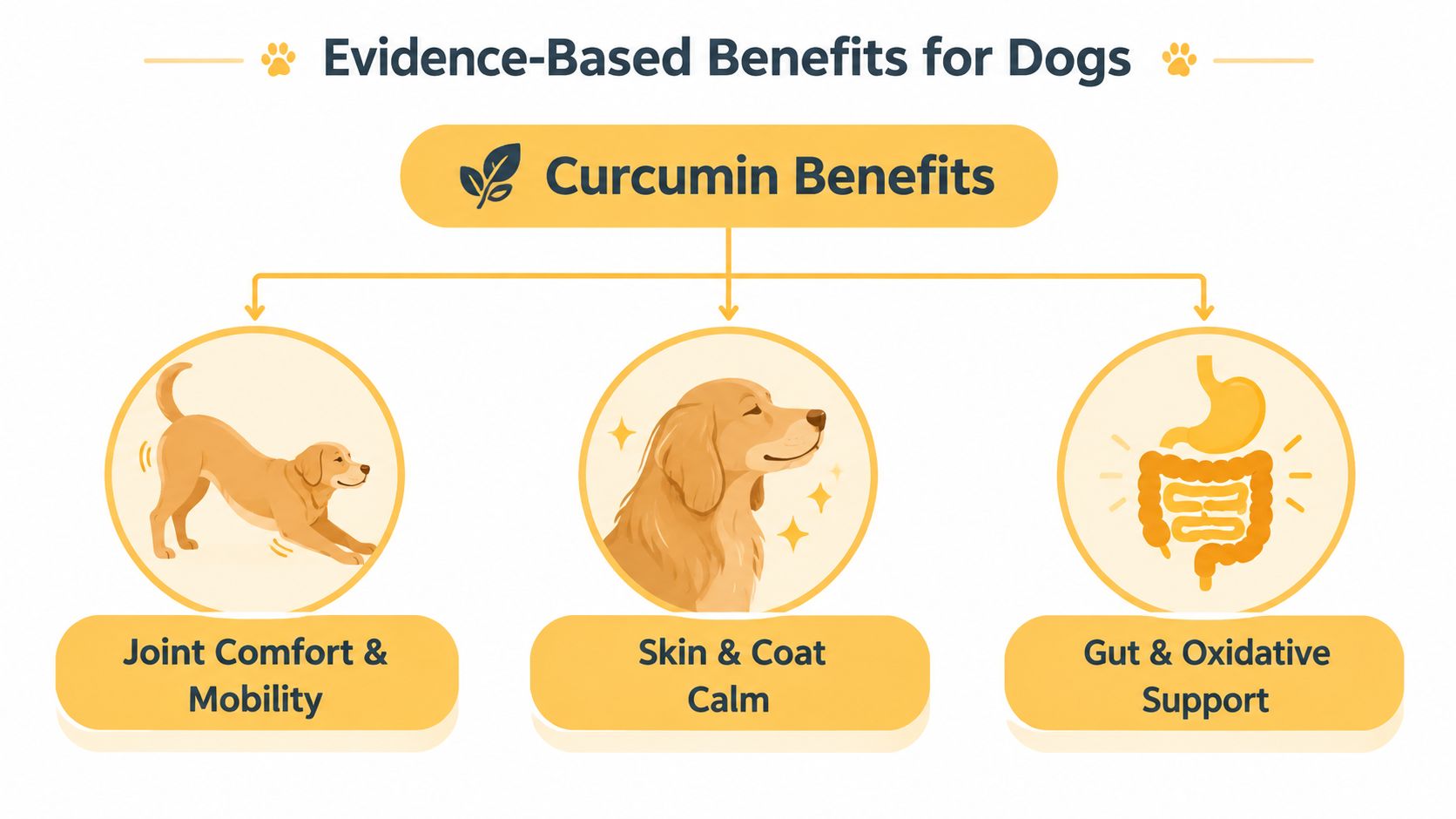
Joints and everyday movement
The strongest controlled clinical signal comes from dogs with osteoarthritis. In the randomized, double-blind, placebo-controlled diet trial described earlier, supplemented dogs had a significant reduction in pain during manipulation over three months. Ground reaction forces, an objective measure related to gait and weight bearing, did not differ statistically between groups.
In practical terms, the dogs appeared more comfortable during a hands-on assessment, while the gait measurement did not show the same change. That distinction matters. A dog may experience less discomfort without every mobility measure improving at the same time. See the full canine trial details.
A separate evaluation followed ten moderately arthritic dogs given either 95% curcumin or 95% liposomal curcumin at 500 milligrams once daily or 250 milligrams twice daily over five months. The report described lower arthritic pain and better daily activity, with no observed side effects. Its small size and lack of the same controlled design mean the findings are best used to guide a veterinary discussion, rather than as proof that one format will work for every dog. Review the canine osteoarthritis evaluation.
Owners comparing options can use this guide to dog joint supplements as a broader framework. Look beyond the ingredient name and ask how the product is formulated, what outcome it targets, and whether it can simplify an already crowded supplement routine.
Skin and coat
Curcumin's anti-inflammatory and antioxidant properties make skin support biologically plausible, particularly when irritation involves inflammatory signaling. The dog-specific evidence summarized here does not establish curcumin as a standalone treatment for allergies, infection, parasites, or other causes of itching.
Persistent itching needs a closer look. Hair loss, open sores, or repeated licking of one area can point to a problem that requires veterinary examination and targeted treatment. A supplement may support a plan, but it should not replace finding the cause.
Gut and oxidative balance
A controlled kennel study of ten dogs fed curcumin at 30 milligrams per dog per day for 30 days measured blood counts and antioxidant markers. By day 15, the curcumin group had higher erythrocyte and hematocrit counts than controls. By day 30, the dogs had lower leukocyte, neutrophil, and lymphocyte counts, along with higher plasma antioxidant capacity and enzyme activity. The authors concluded that curcumin stimulated antioxidant defenses and reduced oxidative reactions, suggesting mild anti-inflammatory effects. Examine the controlled kennel study.
These findings do not show that curcumin resolves digestive disease or improves stool quality for every dog. They show why researchers continue examining oxidative balance and inflammatory regulation in canine nutrition. A combined product such as DA-1™ Daily All-in-One - Skin/Coat, Joints, Gut Health & More is described as a human-grade powder for several wellness-support categories in one daily food topper, which may help owners reduce the number of separate products they manage.
Why Absorption Matters More Than Milligrams
A curcumin label can look impressive and still tell you very little about the amount your dog uses. Curcumin has low oral bioavailability in unmodified form, meaning the body may absorb only a limited amount before the compound is broken down or cleared.
That makes this a delivery problem first. Plain turmeric powder may contain curcuminoids, but the active material still needs to dissolve, survive digestion, cross the intestinal barrier, and remain available long enough to circulate. A formulation that improves those steps can be more relevant than a product that lists a larger raw amount.
Dog pharmacokinetic data indicate substantially higher exposure with formulated approaches such as phospholipid systems, cyclodextrin preparations, and dispersion-based products. Liposomal delivery is also clinically relevant because the canine osteoarthritis evaluation included a liposomal curcumin format and reported favorable pain and activity observations, although that small evaluation can't establish universal superiority.
Common formulation approaches
| Formulation Approach | What It Tries to Improve | Consideration for Dog Owners |
|---|---|---|
| Plain turmeric powder | Provides the whole spice, including naturally occurring compounds | The active curcuminoid content and absorbed amount may be unclear |
| Standardized curcumin extract | Concentrates and identifies the active curcuminoid portion | Check whether the label states the active content and serving |
| Piperine or black pepper pairing | May slow breakdown and support exposure | Use a measured pet-appropriate formulation, not an improvised kitchen dose. For background on curcumin with black pepper absorption, review the delivery discussion carefully |
| Phospholipid or phytosome format | Associates curcumin with lipid-based carriers | Can improve delivery, but the label should explain the actual system |
| Cyclodextrin or dispersion-based format | Attempts to improve solubility and distribution | Look for transparent formulation and testing details |
| Liposomal format | Encapsulates curcumin in a lipid-based delivery system | Product quality and stability still matter |
Fat in a meal may also affect delivery, but you shouldn't assume that adding oil automatically turns an untested powder into a clinically equivalent formulation. The exact carrier, stability, active concentration, and dog-specific tolerability all remain important.
Before comparing products, use this guide on how to read supplement labels. Look for the active curcuminoid amount, serving guidance, other ingredients, and whether the company explains how it verifies the finished product.
Dosing Safety Side Effects and When to Avoid Curcumin
A dog may seem ready for a supplement after a difficult walk, stiff morning, or recurring stomach upset. The safe response starts with a more specific question than “How much curcumin?” The appropriate amount depends on body size, age, diagnosis, diet, formulation, other supplements, medications, and organ health. A study dose cannot automatically transfer to another extract or delivery system.
The canine research shows why context matters. One controlled kennel study used 30 milligrams per dog per day for 30 days. Another evaluation gave 500 milligrams once daily or 250 milligrams twice daily over five months to moderately arthritic dogs. Those amounts came from different settings and products. As noted earlier in the canine osteoarthritis evaluation, they should not be combined into a home dosing formula.
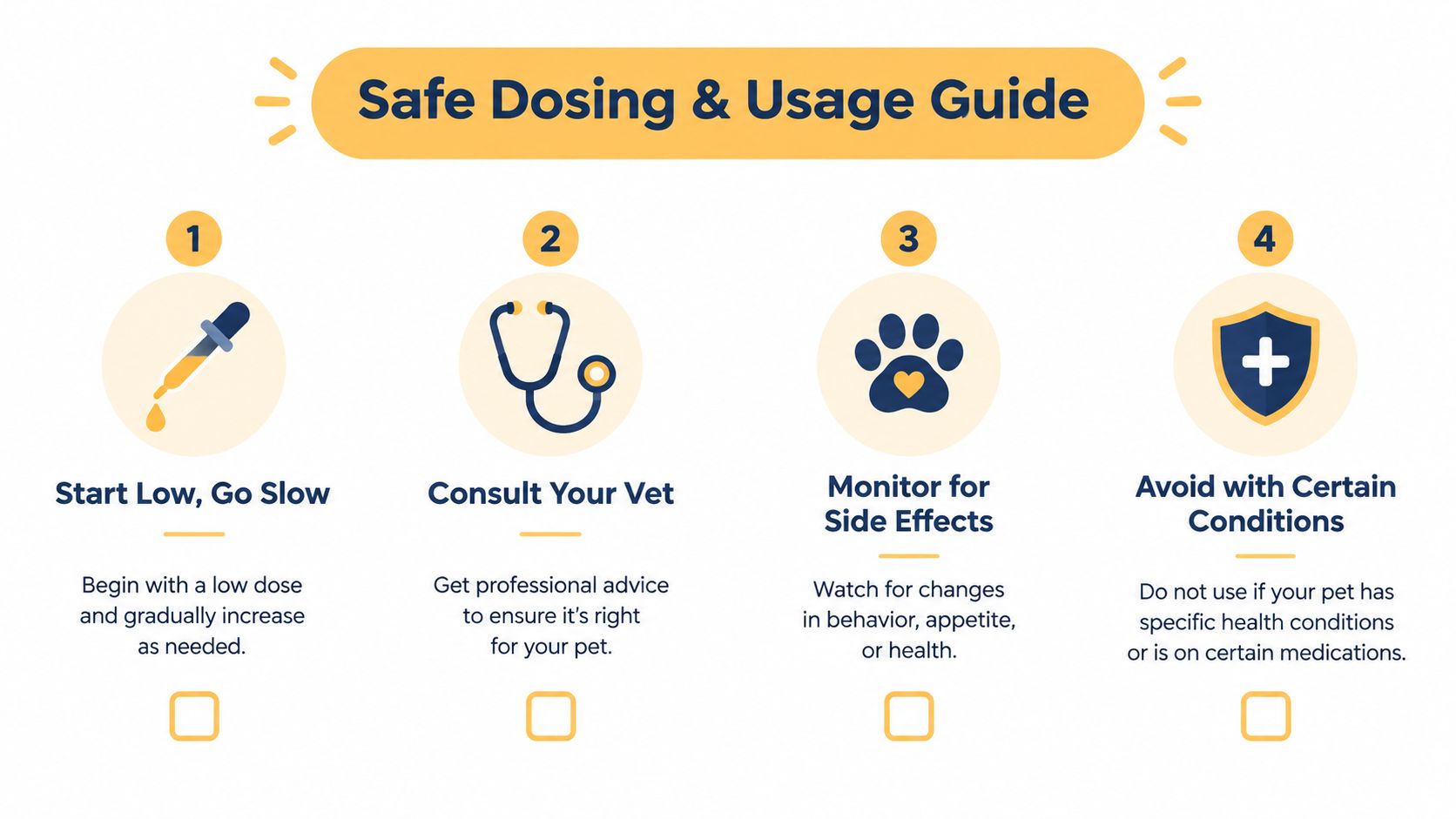
Use a vet-led titration process
A cautious process is more useful than a rigid chart:
- Confirm the reason for use. New limping, sudden pain, marked lethargy, vomiting, or appetite loss calls for veterinary attention instead of a supplement trial.
- Show the full label to your veterinarian. Include the curcuminoid concentration, delivery system, flavorings, and every supplement your dog receives.
- Begin conservatively. Follow the product's canine instructions and ask whether a gradual introduction suits your dog.
- Give it with food if advised. Food may support a consistent routine and be gentler on the stomach.
- Track specific changes. Record rising from bed, stair use, walk tolerance, scratching, appetite, and stool quality.
Dogs that need extra caution
Veterinary safety guidance identifies gallbladder disease as a possible contraindication and notes that gastrointestinal upset can occur. Dogs with liver or biliary concerns need individualized advice, particularly if the product is concentrated or intended for extended use. Review the veterinary safety discussion.
Medication review matters too. Ask your veterinarian before combining curcumin with aspirin, NSAIDs, or other anti-inflammatory medicines, since overlapping effects may alter the risk profile. Extra care is also appropriate for dogs taking chronic medication, preparing for a procedure, or living with digestive, biliary, or hepatic problems.
Stop and call your veterinarian: repeated vomiting, persistent diarrhea, refusal to eat, unusual bruising or bleeding, yellowing of the gums or eyes, or a clear worsening in pain should end the home trial until a professional reviews the situation.
Natural does not mean risk-free. A small study reporting “no observed side effects” cannot guarantee safety for a dog with a different health history. Formulation and absorption affect exposure, so simplifying a supplement routine still requires checking the complete label and the dog's individual risks.
How to Choose a High Quality Curcumin Supplement for Dogs
The best label is the one that lets you answer four questions without guessing: What is active? How much is active? How is it delivered? Who tested it?
Start with the ingredient identity. “Turmeric powder” doesn't provide the same information as a declared, standardized curcuminoid extract. If the product doesn't state the active curcuminoid content, you can't make a meaningful comparison between serving sizes.
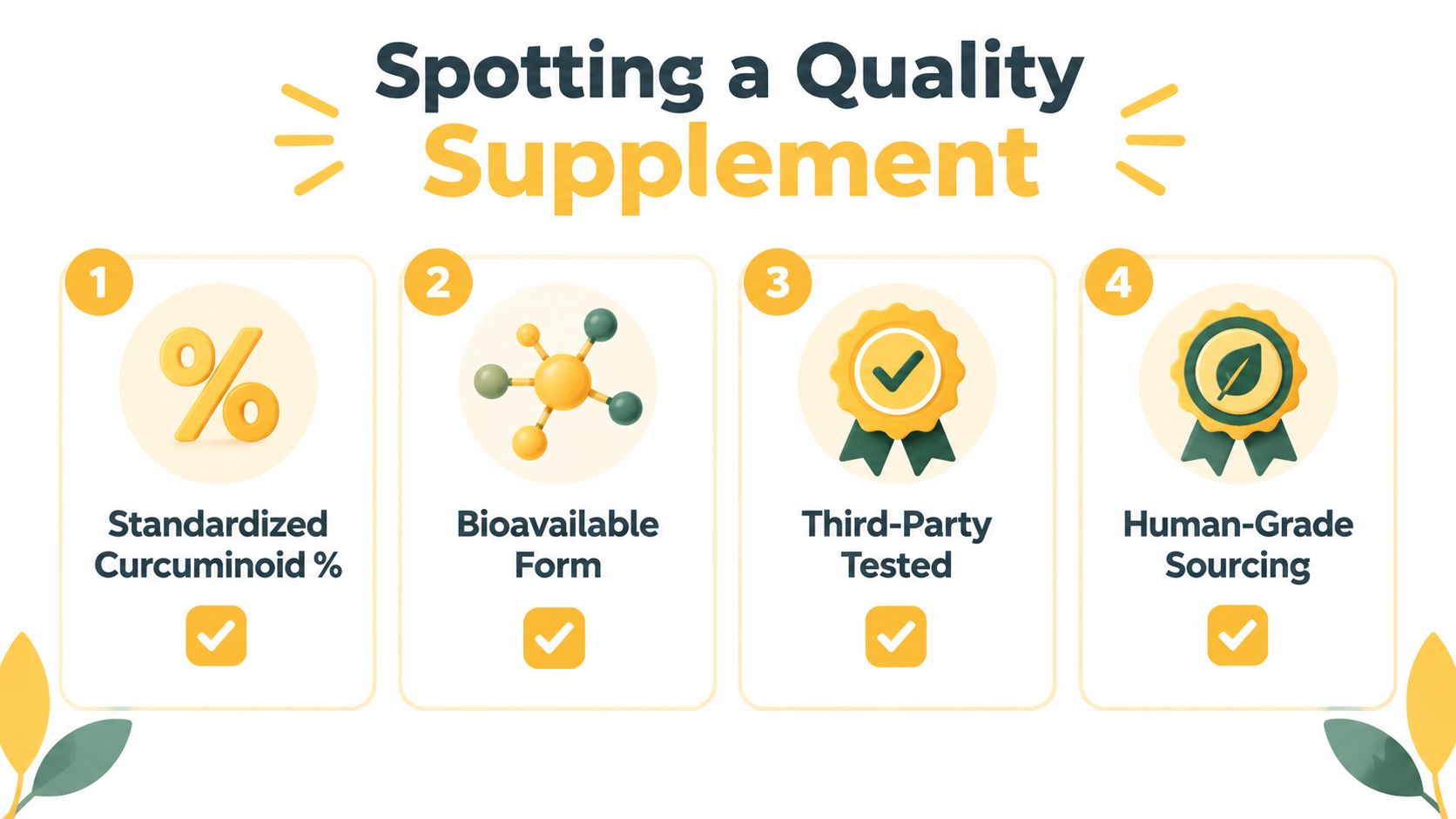
A practical label checklist
- Standardized active content: Look for a clear statement of curcuminoid concentration rather than turmeric alone.
- Bioavailable delivery: Check whether the product identifies a phospholipid, liposomal, cyclodextrin, dispersion-based, or other delivery approach.
- Dog-specific instructions: The label should explain how to use the product for dogs and identify relevant cautions.
- Testing transparency: Look for batch-level or finished-product testing information, not only broad ingredient promises.
- Manufacturing details: Human-grade sourcing and clear manufacturing information can make the supply chain easier to evaluate.
- Complete ingredient disclosure: Avoid products that hide behind a proprietary blend or don't identify inactive ingredients.
A high-quality label can't promise that every dog will respond. It can reduce uncertainty about what you're giving and make a veterinary conversation more productive.
For a closer look at why third-party lab testing matters, focus on identity, purity, contaminant screening, and whether the testing applies to the finished batch. A product that lists a specific delivery system still needs appropriate quality controls.
Finally, don't stack several products containing turmeric or curcumin without checking the combined intake. Simplifying a routine can improve consistency, but only if you know which ingredients overlap.
Fitting Curcumin Into a Simple Daily Wellness Routine
Curcumin works best as part of a measured routine, not as a frantic response to one stiff morning. After your veterinarian confirms that it fits your dog, choose one clearly labeled product, introduce it according to professional guidance, and record a few practical observations. Mobility, scratching, appetite, and stool quality are more useful than a vague impression that your dog seems “better.”

Keep the routine simple enough to follow. If your dog already receives separate products for joints, skin and coat, digestion, immunity, or stress, review the labels together before adding another ingredient. A single daily food topper may reduce missed servings, but it still needs to match your dog's medical needs and shouldn't duplicate concentrated ingredients unknowingly.
Expect gradual, subtle changes rather than immediate pain relief. If your dog worsens, develops digestive symptoms, or takes medication that raises interaction concerns, pause and contact your veterinarian. Curcumin is a possible support tool, not a replacement for diagnosis, prescribed treatment, appropriate exercise, nutrition, or weight management.
Pure Paw Labs offers DA-1™ Daily All-in-One, a human-grade powder designed as one daily scoop for joint, skin and coat, gut, immune, and stress-related support. If you're looking to simplify a multi-supplement routine while keeping your dog's daily wellness support in one food topper, visit Pure Paw Labs and review the formulation and usage information with your veterinarian.