


You can give your dog digestive enzymes, but they're only proven to help dogs diagnosed with exocrine pancreatic insufficiency, or EPI, and certain digestive disorders. Healthy dogs with normal pancreatic function generally don't benefit from routine enzyme supplementation.
That answer pushes back on one of the most popular supplement claims in pet care. Digestive enzymes are often presented as an everyday solution for gas, loose stools, aging, processed food, or a “sensitive stomach.” But the important question isn't whether enzymes sound helpful. It's whether your dog has a documented enzyme shortage that supplementation can correct.
A dog with EPI may need lifelong enzyme replacement because the pancreas can't release enough digestive enzymes into the intestine. A healthy dog usually makes its own enzymes effectively. Adding more may offer no measurable advantage, and it can distract from finding the actual cause of digestive symptoms.
Table of Contents
- The Truth About Digestive Enzymes for Healthy Dogs
- What Digestive Enzymes Are and How They Work
- Which Dogs Actually Benefit From Enzyme Supplements
- Comparing Enzyme Types Sources and Formats
- How to Introduce Digestive Enzymes Safely
- Side Effects Drug Interactions and When to See a Vet
- Your Decision Checklist for Enzyme Supplementation
The Truth About Digestive Enzymes for Healthy Dogs
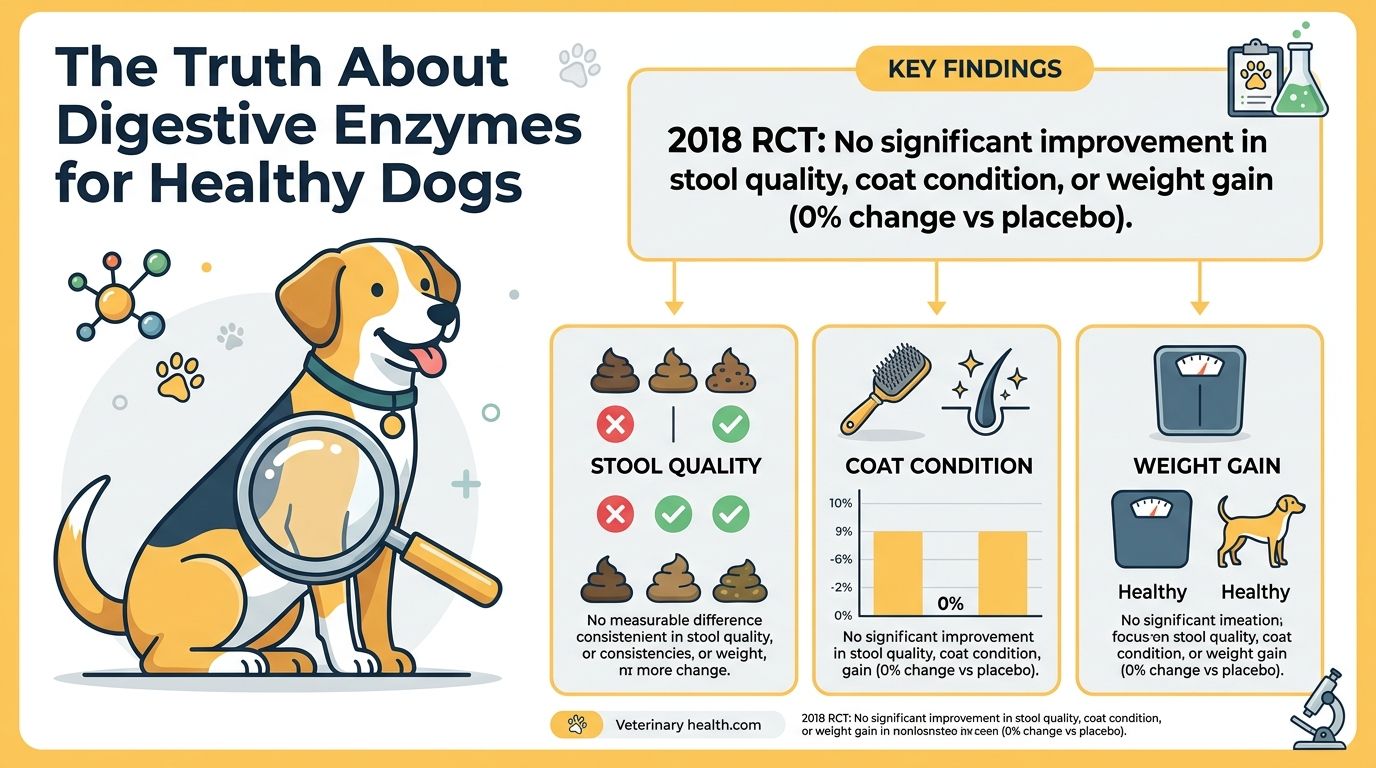
The widespread assumption that every dog needs supplemental enzymes doesn't match the available evidence. In a randomized trial of healthy adult dogs, adding exogenous enzymes to a maintenance dry diet did not significantly improve protein, fat, or energy digestibility, and serum trypsin-like immunoreactivity remained unchanged. The authors concluded that routine enzyme use isn't recommended for healthy pets. You can review the randomized canine enzyme trial for the study details.
Why more isn't automatically better
Your dog's pancreas already produces digestive enzymes in response to a meal. Those enzymes help break down food into smaller components that the small intestine can absorb. If the pancreas is functioning normally, an added enzyme product may be redundant rather than restorative.
That distinction matters because enzymes aren't like basic nutrients that the body needs in a broad, general way. They're specialized proteins with specific jobs. A protease acts on proteins, a lipase acts on fats, and an amylase acts on certain carbohydrates. Supplying extra enzymes doesn't automatically improve digestion if the dog already has enough of the relevant enzymes.
Therapeutic use versus wellness marketing
There's a meaningful difference between treating a diagnosed deficiency and taking a supplement “just in case.” In therapeutic use, a veterinarian has identified a condition that interferes with digestion, and enzyme replacement addresses that specific problem. In wellness use, the product is often recommended based on vague symptoms or broad promises rather than a confirmed need.
Gas, stool changes, itching, weight change, or low energy can have many causes. A new food, parasites, intestinal disease, pain, stress, or another medical problem may be involved. Adding enzymes before investigating those possibilities can waste money and delay appropriate care.
Practical rule: A normal appetite or an occasional bout of gas isn't proof that your dog needs digestive enzymes. The strongest reason to use them is a veterinary diagnosis showing impaired digestion.
The rest of the decision comes down to one question: is your dog unable to produce or use enough digestive enzymes? If the answer is no, routine supplementation has no established benefit for a healthy dog.
What Digestive Enzymes Are and How They Work
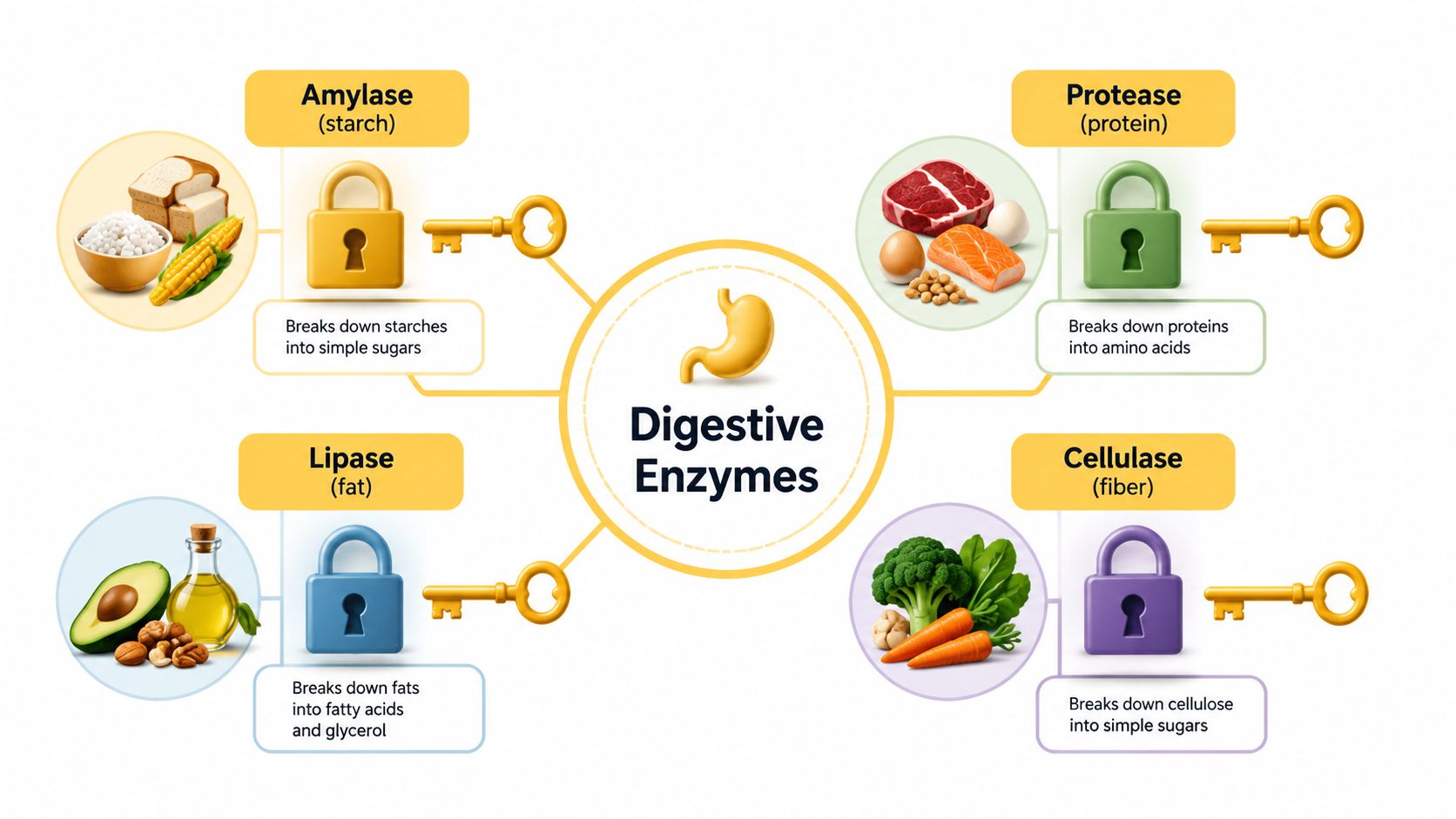
Think of digestion as a set of locks. Food contains large molecules that are too complex for the intestine to absorb directly. Each digestive enzyme acts like a key shaped for a particular lock, cutting a specific food molecule into smaller pieces.
A protease targets protein. It helps break large protein structures into smaller fragments and amino acids. A lipase acts on dietary fat, while an amylase helps break down starches and other carbohydrate components. These reactions make nutrients available for absorption rather than leaving them in a form the intestine can't use efficiently.
The main enzyme categories
- Proteases: Work on proteins. The stomach and pancreas contribute to protein digestion, with further processing occurring in the small intestine.
- Lipases: Work on fats. The pancreas is a major source, and adequate fat digestion is particularly important when a dog has pancreatic enzyme failure.
- Amylases: Work on starches and some carbohydrate structures. The pancreas supplies amylase for intestinal digestion.
- Cellulases: Target cellulose in plant fiber. Dogs don't produce cellulase themselves, and plant fiber is handled differently from digestible starches and proteins.
The useful distinction is between endogenous enzymes, which your dog's organs produce, and exogenous enzymes, which come from a supplement or another dietary source. A healthy pancreas normally supplies endogenous enzymes as food moves through the digestive tract.
Enzymes aren't probiotics
Digestive enzymes are proteins that speed up chemical reactions. They aren't living organisms, and they don't colonize the gut or behave like probiotic bacteria. Their usefulness depends on the right enzyme, the right food target, adequate activity, and delivery at the right point in digestion.
Heat, moisture, storage conditions, and stomach acid can affect enzyme activity. That's why a product's formulation and instructions matter, especially when a veterinarian prescribes pancreatic enzyme replacement. If you're reviewing broader supplement categories, DA-1™ Daily All-in-One - Senior Dog Support, Joints, Skin/Coat & More is described as a powdered, multi-system formula rather than a prescription enzyme replacement product.
The practical takeaway is simple. Enzymes don't “boost” digestion in a nonspecific way. They help break down particular nutrients when the body lacks sufficient activity or when a diagnosed condition interferes with normal digestion.
Which Dogs Actually Benefit From Enzyme Supplements
The clearest indication is exocrine pancreatic insufficiency, or EPI. In EPI, the pancreas can't produce enough digestive enzymes, so food may pass through the digestive tract without being broken down and absorbed properly. Veterinary treatment uses pancreatic enzyme replacement, generally mixed with meals so the enzymes contact the food before digestion proceeds. A 2024 veterinary review of EPI in dogs reported that about 60% to 65% of dogs respond well, 17% respond partially, and 23% respond poorly to enzyme therapy.
Those figures don't mean every dog with diarrhea should receive enzymes. They show why diagnosis matters. Treatment is most relevant when a dog lacks pancreatic enzymes, not when an owner is trying to address an unexplained symptom.
A practical comparison
| Condition | Evidence level | Typical outcome | Diagnostic test needed |
|---|---|---|---|
| Exocrine pancreatic insufficiency | Strongest established indication | Enzyme replacement can improve digestion and nutrient use | Veterinary assessment and pancreatic function testing, commonly TLI |
| Chronic pancreatic disease with documented maldigestion | Case-dependent | May require targeted nutritional and enzyme management | Veterinary evaluation and testing based on symptoms |
| Intestinal disease with confirmed malabsorption | Condition-specific | Treatment depends on the underlying disorder, not enzymes alone | Examination, laboratory work, and further testing as indicated |
| General sensitive stomach | Insufficient basis for routine enzymes | The underlying cause may remain untreated | Veterinary assessment if symptoms persist |
| Routine senior care | No established routine benefit | Added enzymes may not change digestion | No enzyme diagnosis, but age-related symptoms deserve evaluation |
| Food allergy or weight management | Enzymes aren't a primary treatment | Diet selection and medical management matter more | Veterinary diagnosis where appropriate |
Healthy dogs with normal pancreatic function generally don't need supplementation, as veterinary guidance also explains in this overview of enzymes for dogs. If your dog has persistent digestive changes, don't use a supplement to guess at the diagnosis. A veterinarian may consider a TLI blood test when EPI is a concern, alongside other tests chosen for the symptoms.
Even practical issues such as planning a clean, easy-to-monitor outdoor potty area can help you observe stool changes consistently. For local planning inspiration, see these dog potty area ideas for Austin homes. For broader digestive-support questions, this dog digestive support guide can complement, but not replace, veterinary care.
Comparing Enzyme Types Sources and Formats
Not every enzyme product serves the same purpose. Animal-derived pancreatic extracts are the category most closely associated with prescription replacement therapy for EPI. They're designed to provide meaningful pancreatic enzyme activity, but the product, dose, and administration should come from a veterinarian.
Plant- or fermentation-derived enzymes may appear in over-the-counter blends. Their activity can vary by enzyme type, formulation, and storage. They aren't automatically equivalent to prescription pancreatic replacement, especially when a dog has a documented deficiency.
Whole-food sources, such as certain raw animal tissues or fruits, are less predictable still. They may contain naturally occurring enzymes, but the amount and activity can vary, making them unsuitable as a substitute for measured therapy in a dog with EPI.
Format changes the routine
| Source or format | Potency | Best for | Key considerations |
|---|---|---|---|
| Prescription pancreatic powder | Intended for therapeutic enzyme replacement | Dogs with diagnosed EPI | Follow the veterinary product and dosing instructions closely |
| Plant or fermentation blend | Variable | General supplement use only when a veterinarian agrees it's appropriate | Label activity and quality controls matter |
| Raw whole-food source | Unpredictable | Dietary variety, not dependable treatment | Preparation, tolerance, and safety require care |
| Powder mixed with food | Practical and adjustable | Dogs needing meal-based enzyme delivery | Mix thoroughly and avoid hot food |
| Capsule | Convenient and potentially protective for some formulations | Dogs that tolerate capsules | Release characteristics and actual enzyme activity must be clear |
| Soft chew | Easy for some dogs to accept | Nonprescription convenience | Confirm the label provides meaningful enzyme activity, not just a broad ingredient list |
Look for declared activity units, such as USP units for lipase, protease, or amylase when applicable. A long ingredient list doesn't prove potency. Also check serving directions, storage requirements, inactive ingredients, and whether an enteric coating is relevant to the formulation.
A human digestive enzyme product, such as Allmax digestive enzyme capsules, shouldn't be assumed appropriate for a dog because it contains familiar enzyme names. Product design, dose, and veterinary suitability are separate questions. You can also use this guide to read supplement labels more critically, especially when the label emphasizes ingredients but doesn't clearly state enzyme activity.
How to Introduce Digestive Enzymes Safely
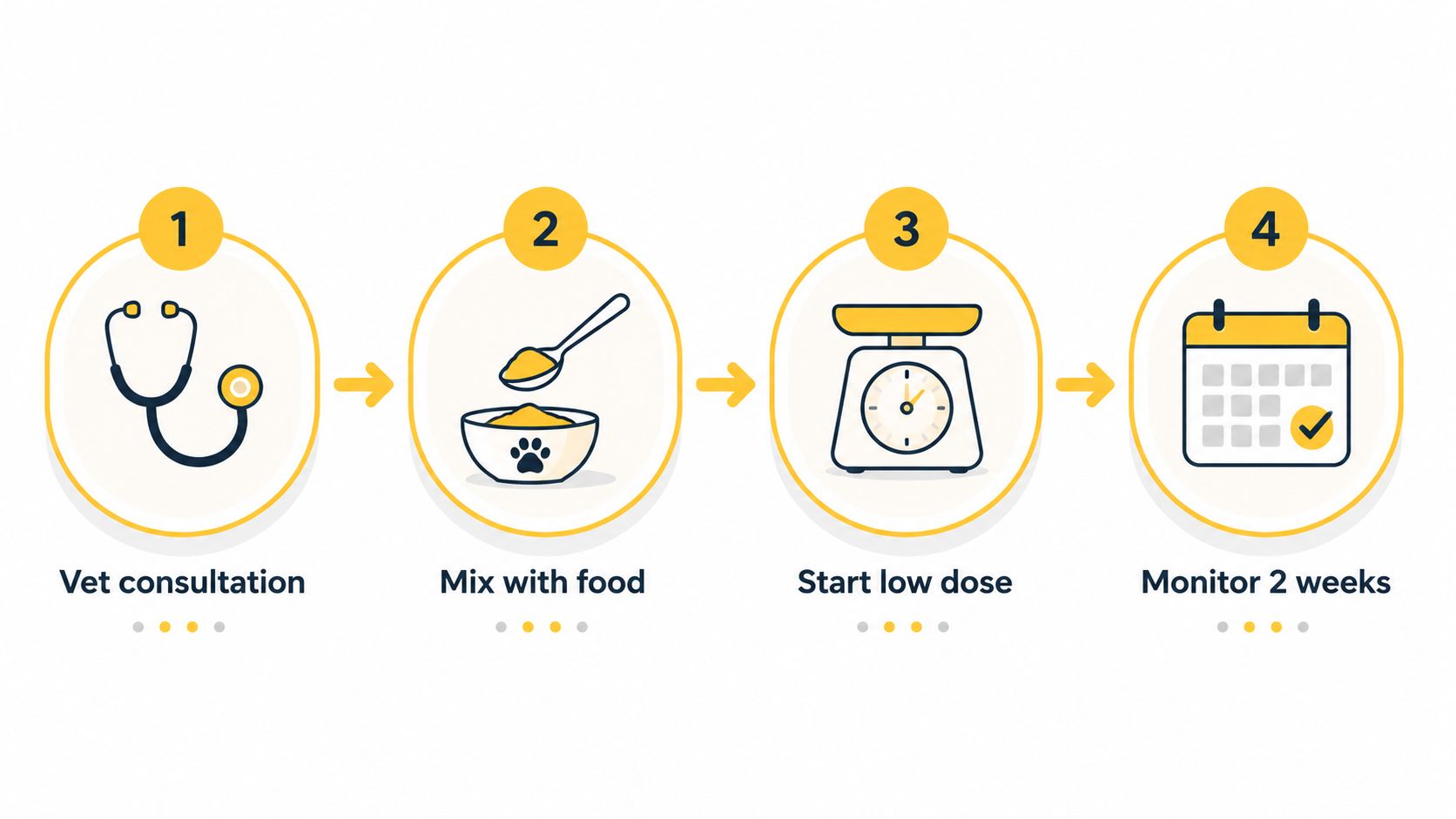
Start with the diagnosis, not the container. Ask your veterinarian whether your dog has EPI or another condition where enzyme supplementation is appropriate, which product should be used, and how it should be administered. Prescription instructions can differ from general supplement directions, so don't substitute one for the other.
A careful meal routine
For a powder intended to be mixed with food, moisten dry food if your veterinarian or product directions recommend it. Measure the dose accurately, distribute it evenly through the meal, and avoid adding it to food that's hot enough to damage proteins.
Some veterinary protocols recommend allowing the powder to contact moistened food before feeding, while others specify a different method. Follow the prescribed instructions rather than applying a universal incubation time. The central goal is consistent contact with the meal and reliable administration at every feeding.
Administration matters: Don't estimate by eye, scatter powder where your dog may inhale it, or change a prescription dose because one meal looked different.
What to track
Keep a simple daily record during the adjustment period. Note:
- Stool quality: Record whether stools are formed, loose, unusually bulky, or difficult to pass.
- Appetite: Include unusual hunger, refusal, or changes in eating speed.
- Body condition: Watch for ongoing weight loss or difficulty maintaining weight.
- Comfort: Record gas, vomiting, abdominal discomfort, or restlessness.
- Energy: A sustained change can matter more than one quiet afternoon.
If your dog refuses food containing enzyme powder, don't hide it in a large meal and hope the dose is eventually consumed. Ask the veterinarian whether the product can be administered differently or whether another formulation is suitable. If you're transitioning between products, avoid overlapping them without professional direction, because the enzyme activity and inactive ingredients may differ.
Side Effects Drug Interactions and When to See a Vet
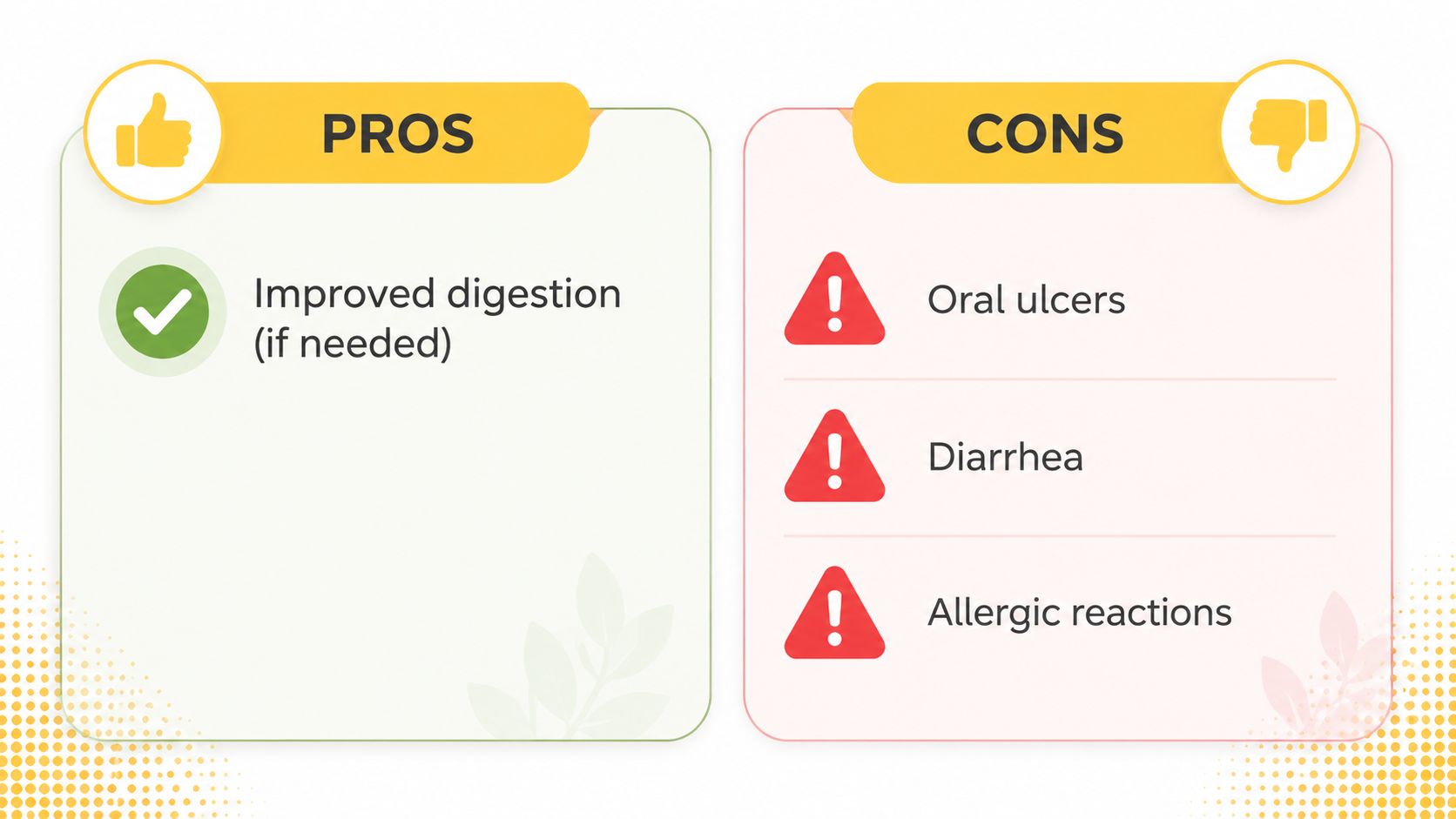
A dog can react badly to an enzyme product even when the ingredient sounds natural. Veterinary supplement guidance notes possible side effects including diarrhea, vomiting, mouth irritation, and allergic reactions, as summarized in this independent veterinary discussion of digestive enzymes.
What reactions can look like
A powder that contacts the mouth directly may irritate oral tissue. A dog receiving more than needed may develop loose stools or vomiting. An animal-derived ingredient can also trigger an allergic response in a susceptible dog.
Medication questions require individual review. A dog taking anti-inflammatory medication, insulin, antacids, or antibiotics may need a veterinary assessment before starting enzymes, because changes in digestion, stomach conditions, or nutrient absorption can affect the overall treatment plan. Don't assume that spacing products apart solves every possible interaction.
Stop and call for help when needed
Contact a veterinarian promptly for persistent vomiting, bloody stool, mouth sores, sudden weight loss, marked lethargy, or signs of abdominal pain. These signs call for investigation, not a larger supplement dose.
If symptoms worsen after starting an enzyme product, pause and contact the prescribing veterinarian before restarting it. Enzymes shouldn't replace a diagnosis, and they shouldn't mask progressive intestinal or pancreatic disease.
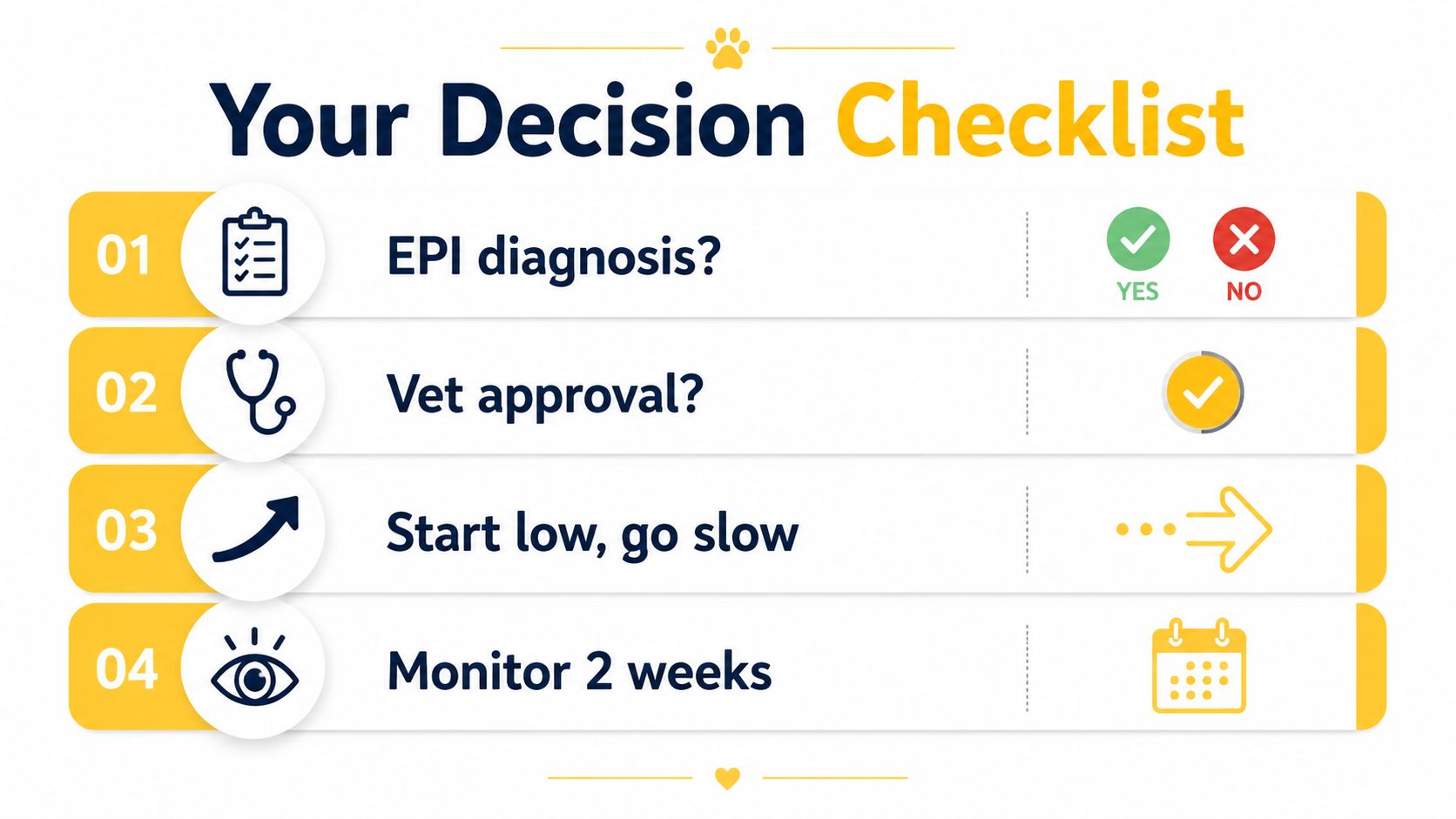
Your Decision Checklist for Enzyme Supplementation
Use this checklist before buying or continuing an enzyme product:
- Confirm the reason. Has a veterinarian diagnosed EPI or another digestive disorder where enzymes are appropriate? If not, routine supplementation isn't supported for a healthy dog with normal pancreatic function.
- Review the exact product. Ask about the enzyme source, declared activity, inactive ingredients, storage, and whether the format suits your dog's feeding routine.
- Match the administration plan. Use the prescribed dose and method. Don't improvise with hot food, unmeasured scoops, or a human product.
- Monitor the response. Track stool quality, appetite, comfort, and body condition. A supplement should have a defined medical purpose and a review plan.
Healthy dogs with ordinary digestive function may benefit more from attention to a complete diet, parasite prevention, dental care, stress, and timely veterinary examinations than from an unproven enzyme routine. If symptoms persist, the next step is diagnostic work, not supplement stacking.
For dogs receiving treatment, keep the veterinarian involved as you assess results. Record changes rather than relying on memory, and bring the log to follow-up appointments. Stop and call if you see mouth irritation, worsening diarrhea, vomiting, lethargy, weight loss, or pain.
The most useful label review starts with what the product provides, not how many ingredients appear on the front. This guide on how to read supplement labels can help you ask more precise questions before spending money.
Healthy dogs don't need digestive enzymes simply because a supplement claims to support digestion. If your dog has unexplained stool changes, weight loss, vomiting, or appetite changes, schedule a veterinary evaluation and ask whether pancreatic testing is appropriate.
If you're looking for broader daily nutritional support rather than treatment for EPI, visit Pure Paw Labs to review its human-grade, powdered DA-1™ Daily All-in-One formula. Use it as a wellness option only after confirming with your veterinarian that it fits your dog's diet and medical needs.