


You're probably here because you saw one of these dogs and had a common reaction. Is that a Boston Terrier on Corgi legs? Or a Corgi wearing a Boston Terrier face?
That double take is part of the appeal. The Boston Terrier Corgi mix, often nicknamed the Borgi, has a look that feels almost custom-designed to be memorable. Compact body, bright expression, big personality. It's easy to fall for the cute factor fast.
What's harder to find is a straight answer about what living with one is like. Many guides stop at appearance and temperament. Prospective owners need more than that. This mix can be funny, affectionate, and smart, but it can also come with serious care responsibilities, especially around spinal health, breathing, and coat management.
Table of Contents
- Meet the Charming 'Borgi' An Introduction
- The Parent Breeds Origin and Appearance
- Decoding the Borgi Temperament and Personality
- Critical Health Risks and Proactive Care
- Grooming Exercise and Nutritional Needs
- Training and Socializing Your Intelligent Borgi
- Finding Your Boston Terrier Corgi Mix
- Frequently Asked Questions
Meet the Charming 'Borgi' An Introduction
You spot a small dog trotting toward you at the park. The face has that bright, dressed-up Boston Terrier look. The body sits lower to the ground, more like a Corgi. It is easy to fall for the look in about three seconds.
Then real-life questions show up just as fast. Will this dog leave hair on your sofa year-round? Can that long-backed shape handle rough play and too many stairs? Will you get an easygoing companion, a bossy little herder, or a bit of both?
Those are the right questions to ask.
A Borgi is a Boston Terrier Corgi mix, and mixed-breed dogs do not come out of a mold. They inherit traits more like a shuffled deck of cards. One puppy may look mostly Boston with slightly shorter legs. Another may get the Corgi's longer body and heavier coat. That unpredictability is part of the appeal, but it also means smart owners focus on more than appearance.
Here is the quick snapshot.
| Trait | Details |
|---|---|
| Size | Usually a small dog, often in the low-to-mid weight range for companion breeds |
| Lifespan | Commonly in the low-to-mid teen years with good preventive care |
| Coat | Often short to medium in length, but shedding can range from moderate to heavy |
| Temperament | Commonly social, bright, playful, and sometimes pushy or vocal |
| Allergy friendliness | Not considered hypoallergenic |
The two under-discussed issues with this mix are more important than the cute nickname. First, both parent breeds can pass along body features that need careful management. A long back from the Corgi side paired with a compact, sturdy frame can put extra stress on the spine, much like carrying weight on a short bridge instead of a long, well-supported one. Second, coat genetics can clash in messy ways. Some people expect the Boston parent to keep shedding low, then end up with a dog that drops fur much more like a Corgi.
That does not make the Borgi a poor choice. It means the breed mix rewards realistic owners.
If you want a funny, affectionate, expressive dog and you are willing to stay ahead of grooming, weight control, and joint-friendly habits, a Borgi can be a terrific companion. If you want a low-maintenance dog whose health needs are predictable, this mix may surprise you in the wrong ways.
Good ownership starts with clear eyes. Cute comes first for many people. Daily care, especially for the back, coat, and body condition, is what determines whether life with a Borgi stays charming after the novelty wears off.
The Parent Breeds Origin and Appearance
A Borgi's look makes more sense once you separate the two parent dogs and study what each one tends to contribute.
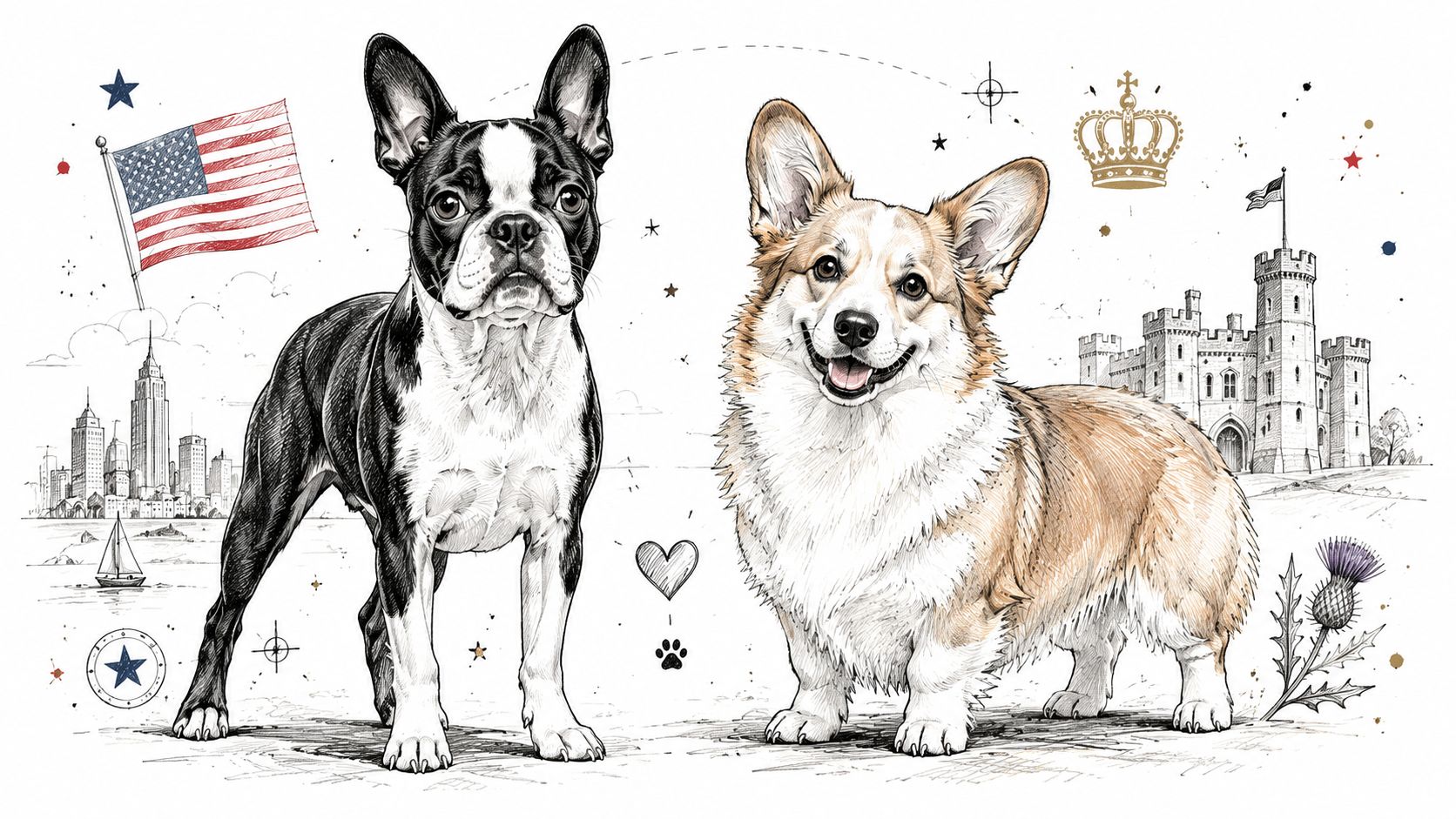
The Boston Terrier was developed in Boston in the late 1800s from early bulldog and terrier stock. That history helps explain the breed's distinctive outline. Bostons are compact, smooth-coated dogs with round, expressive eyes and a face that often reads as unusually animated. People often describe them as little gentlemen, but under that polished appearance is a sturdy, muscular frame.
The Corgi comes from a very different working background. Whether people picture the breed as a royal companion or a pasture helper, the body tells the story clearly. Corgis were built low to the ground, with short legs, upright ears, and a longer back that helped them move quickly around livestock while staying out of the way of kicking heels. They look cute, but their shape started as a job-related design, not a novelty.
How those traits combine
A Borgi can inherit a wide mix of physical features, including:
- A long, low body from the Corgi side
- A shorter muzzle or flatter face from the Boston side
- Large upright ears from either parent
- A sturdy, compact build rather than a fine-boned one
- A bright, highly expressive face that stands out immediately
The overall result often looks striking because the parent breeds bring two very recognizable silhouettes. The Corgi side adds length and low height. The Boston side often adds a neat coat, a broad chest, and facial features that catch your attention right away.
That combination is charming, but it can also confuse new owners. A dog can look small and still come with body mechanics that need careful handling.
What future owners often misread
A low-set body is not just a cosmetic trait. It affects daily care. If a Borgi inherits the Corgi's longer back, getting on and off furniture, repeated stair use, and extra body weight can place more strain on the spine over time. If the dog also inherits a shorter muzzle from the Boston side, heat and hard exertion may need more caution than owners expect.
Mixed-breed appearance is not merely random decoration. Structure works more like parts borrowed from two different machines. Sometimes the pieces fit together easily. Sometimes they create trade-offs that require smarter care at home.
Coat expectations also deserve a reality check here, even though grooming comes later in this guide. A Boston's sleek coat can make people assume lighter shedding. A Corgi's dense coat can pull in the opposite direction. Borgi puppies may grow into anything from a relatively easy wash-and-brush coat to a dog that leaves fur on clothes, floors, and furniture much more often than expected.
The visual appeal is real. So is the responsibility that comes with it. Owners who understand where the body shape and coat type come from are better prepared to protect the dog's back, manage heat sensibly, and avoid surprises once the puppy look fades.
Decoding the Borgi Temperament and Personality
You are answering emails at the kitchen table, and your Borgi is half cuddler, half neighborhood dispatcher. One minute they are pressed against your leg asking for attention. The next, they are at the window reporting a delivery truck as if home security depends on them.
That mix of warmth and watchfulness is common in a Boston Terrier Corgi mix. The Boston side often contributes sociability, playfulness, and a clownish streak. The Corgi side often contributes alertness, quick pattern recognition, and a real interest in what everyone in the house is doing.
The result is rarely a background dog.
A Borgi often wants to participate in daily life, not just observe it. Many bond closely with their people and follow them from room to room. Some are easygoing with visitors. Others greet guests nicely, then keep a close eye on every movement like an assistant manager on shift.
What owners usually notice first
Temperament in this mix often feels layered. You may get affection, humor, and sharp opinions in the same afternoon.
Common traits include:
- Close attachment to family. Many Borgis prefer being near their people and may shadow one favorite person in particular.
- Fast learning. They tend to notice routines quickly, including the routines you did not mean to teach.
- Alert barking. Door knocks, hallway sounds, and passing cars can all earn commentary.
- Bossy herding habits. Some try to direct children, cats, or moving feet.
- Playful showmanship. The Boston influence often adds expressive faces and silly behavior that make people laugh.
That intelligence can be delightful, but it also means this mix gets bored fast. A bored Borgi may invent jobs. Those jobs can include barking at windows, patrolling the fence line, or trying to organize the household on their own terms.
Smart does not always mean easy
Some prospective owners hear “intelligent” and picture effortless training. Borgis usually learn quickly, but quick learning and automatic cooperation are different things.
A better comparison is a bright student who also likes to negotiate.
If your cues are clear and rewards are consistent, many Borgis progress well. If the rules change day to day, they notice immediately. That is why short sessions, repetition, and calm follow-through usually work better than correction-heavy training. Harsh handling can make a sensitive dog shut down or make a stubborn one push back.
A Borgi often learns both the rule and the loophole.
Where personality and care overlap
Temperament also affects daily management more than new owners expect. A dog with Corgi-style vigilance may react to every sound in an apartment hallway. A dog with Boston-style sensitivity may crave closeness and dislike being left alone for long stretches. Put those together, and you may have a companion who is loving, funny, and a little too aware of everything.
That “aware of everything” quality matters in grooming season too. Owners sometimes focus on personality and get surprised by coat realities later. Some Borgis shed lightly. Others inherit more of the dense, persistent Corgi coat pattern and leave fur on furniture and clothes year-round. If skin irritation or seasonal itchiness becomes part of the picture, it helps to read up on dog supplements for allergies as one piece of a broader care discussion with your veterinarian.
Best fit for this temperament
This mix tends to do best with people who want an interactive companion.
A good match often looks like this:
- Owners who enjoy training and games
- Homes with predictable routines
- Families who supervise play with children
- People who do not expect a quiet, low-effort dog
- Households ready to redirect barking and herding early
The charm is real. So is the work.
A Borgi can be affectionate, funny, and engaging. The same dog can also be noisy, opinionated, and quick to form habits if no one gives them structure. For the right owner, that personality feels lively and rewarding. For someone hoping for a decorative couch companion, it can feel like more dog than expected.
Critical Health Risks and Proactive Care
A Boston Terrier Corgi mix can be delightful to live with, but this is the part many photo-heavy breed profiles rush past. The health picture deserves close attention because both parent breeds can pass down body structures that need careful management, especially in the back and the airway.
Those two risk areas can overlap in daily life. A dog that carries a longer back and some degree of flat-faced breathing limitation may need a different exercise plan than owners expect.
Why spinal risk is a bigger deal in this mix
The Corgi side often brings the long body and short legs people find so appealing. That body shape is also linked with intervertebral disc disease (IVDD). On the Boston Terrier side, spinal formation can be a concern too. According to Sutton Animal Hospital's Boston Terrier breed information, Boston Terriers have a higher incidence of congenital hemivertebrae, which are malformed vertebrae.
This mix can inherit a back that is asked to do more with less margin for error.
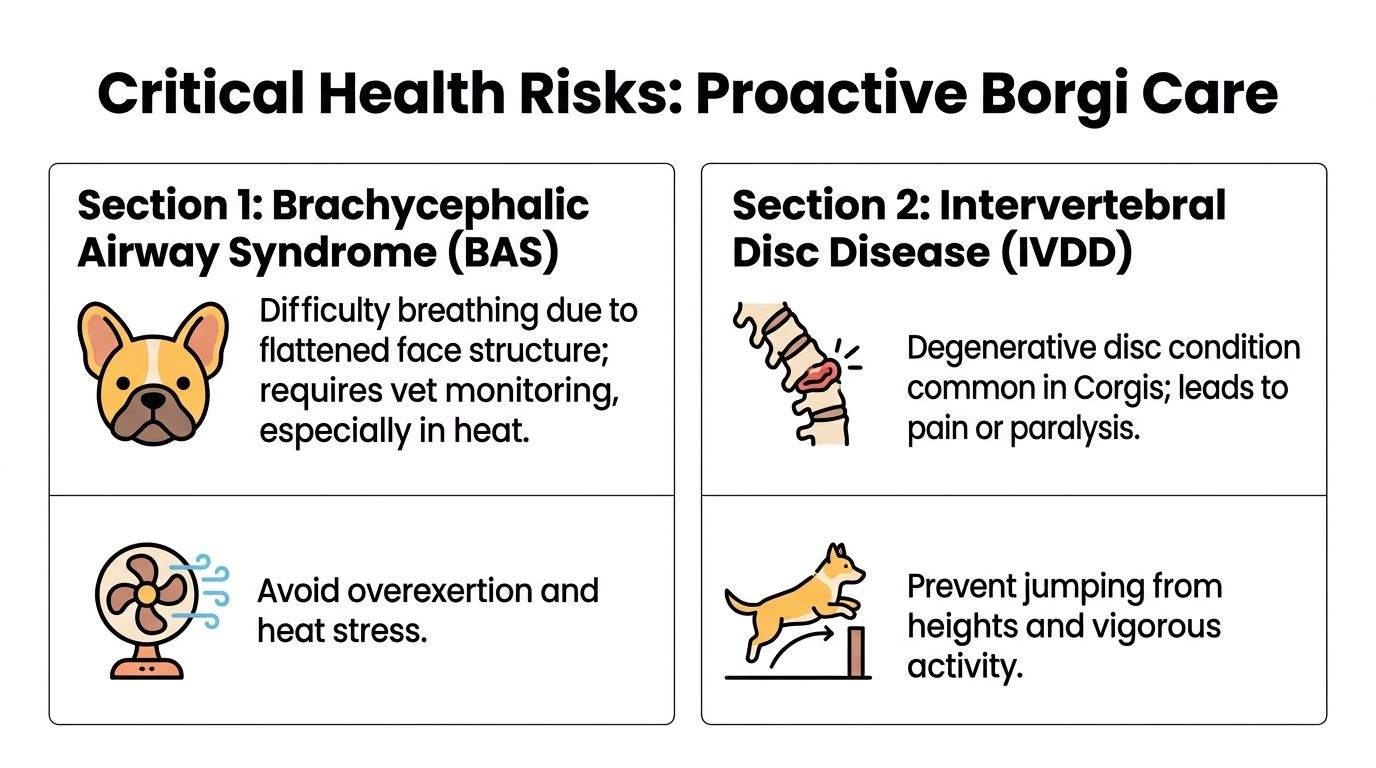
A helpful way to picture it is load and stress. A longer body has more area to support during running, jumping, twisting, and rough landings. If the vertebrae are not shaped ideally to begin with, repeated impact can become a real problem over time.
That is why prevention matters so much with a Borgi:
- Keep body weight under control, because extra pounds add pressure to the spine and joints
- Limit repeated jumping, especially off beds, couches, and stairs
- Build muscle with controlled exercise, such as steady walks rather than constant leaping and hard turns
- Watch for early warning signs, including pain, stiffness, wobbliness, dragging paws, reluctance to jump, or sudden changes in gait
- Get veterinary help quickly if back pain or weakness shows up, because delays can make spinal problems harder to treat
The airway issue can be easy to dismiss at first
The Boston Terrier parent breed is brachycephalic, which means the skull is shortened. Even if a Borgi does not look extremely flat-faced, that parentage can still affect the airway. Owners sometimes mistake snorting, noisy breathing, or slow recovery after play for “personality.” It may be a sign that the dog is working harder to move air.
Warm weather often exposes this problem first. So does excitement. A Borgi that seems fine at rest may struggle on a hot walk, during zoomies, or after intense play with other dogs.
The practical takeaway is simple. Breathing noise is information.
If your dog regularly pants hard after mild exercise, gags, snores heavily while awake, or avoids activity in heat, bring that up with your veterinarian. Those details help shape a safer exercise routine.
The under-discussed part: both risks can stack
This is the part prospective owners do not hear often enough. A Borgi does not just face a list of separate breed risks. Some of those risks can interact.
For example, extra weight does not only burden the back. It can also make breathing less efficient. Overexertion does not only tire the dog out. It can combine heat stress, airway strain, and awkward body mechanics in one bad moment. Even something as ordinary as repeated jumps off furniture can matter more in this mix than in a sturdier, more balanced build.
That is why a proactive plan works better than waiting for a problem.
A realistic proactive care plan
Good care starts early and stays boringly consistent. That is usually what works.
A practical routine includes:
- Keep your Borgi lean from puppyhood onward. This supports spinal comfort and easier breathing.
- Use ramps or lift your dog when needed. Reducing jump impact protects the back over the long term.
- Choose moderate, regular exercise. Several controlled walks are often safer than intense weekend bursts.
- Be heat-aware. Walk in cooler parts of the day and stop before breathing becomes strained.
- Schedule regular veterinary exams. Early changes in movement, posture, or breathing are easier to address than advanced problems.
- Support joints, skin, and overall condition through diet and supplements when appropriate. This mix can also inherit unpredictable coat and skin tendencies, so some owners read about dog supplements for allergies and skin support as part of a broader vet-guided care plan.
For owners who prefer one product instead of several separate supplements, DA-1™ Daily All-in-One - Senior Dog Support, Joints, Skin/Coat & More is presented by Pure Paw Labs as a multi-ingredient formula for joint, skin, coat, gut, and general senior support. It is one option to discuss with your veterinarian if your dog needs broader daily support.
The main point is not fear. It is preparation. With a Borgi, proactive care protects the parts of the body most likely to wear down first.
Grooming Exercise and Nutritional Needs
You may bring home a puppy that looks like a tidy little Boston on short Corgi legs, then realize a few weeks later that your vacuum is working overtime.
That surprise happens because coat genetics do not blend in a predictable, halfway way. One parent often brings a shorter, easier coat. The other is famous for heavy shedding and a dense undercoat. The result can swing in either direction, and some Borgis land much closer to the Corgi end than new owners expect.
The shedding conflict many owners underestimate
The Boston Terrier side often gives people a false sense of simplicity. Corgis change that math. If your Borgi inherits more of the Corgi coat structure, you may be dealing with regular loose hair, seasonal coat drops, and more brushing than the dog's small size suggests.
A past Reddit discussion about adopting this mix shows the same pattern in owner comments. People expected a low-fuss coat and ended up managing much more hair than planned, as described in this Reddit discussion on adopting a Corgi Boston Terrier mix.
That is why it helps to prepare for the higher-shedding version of the mix. If your dog sheds less, that is a nice bonus. If not, you already have the right routine.
What grooming usually looks like at home
For many Borgis, grooming is maintenance, not occasional cleanup.
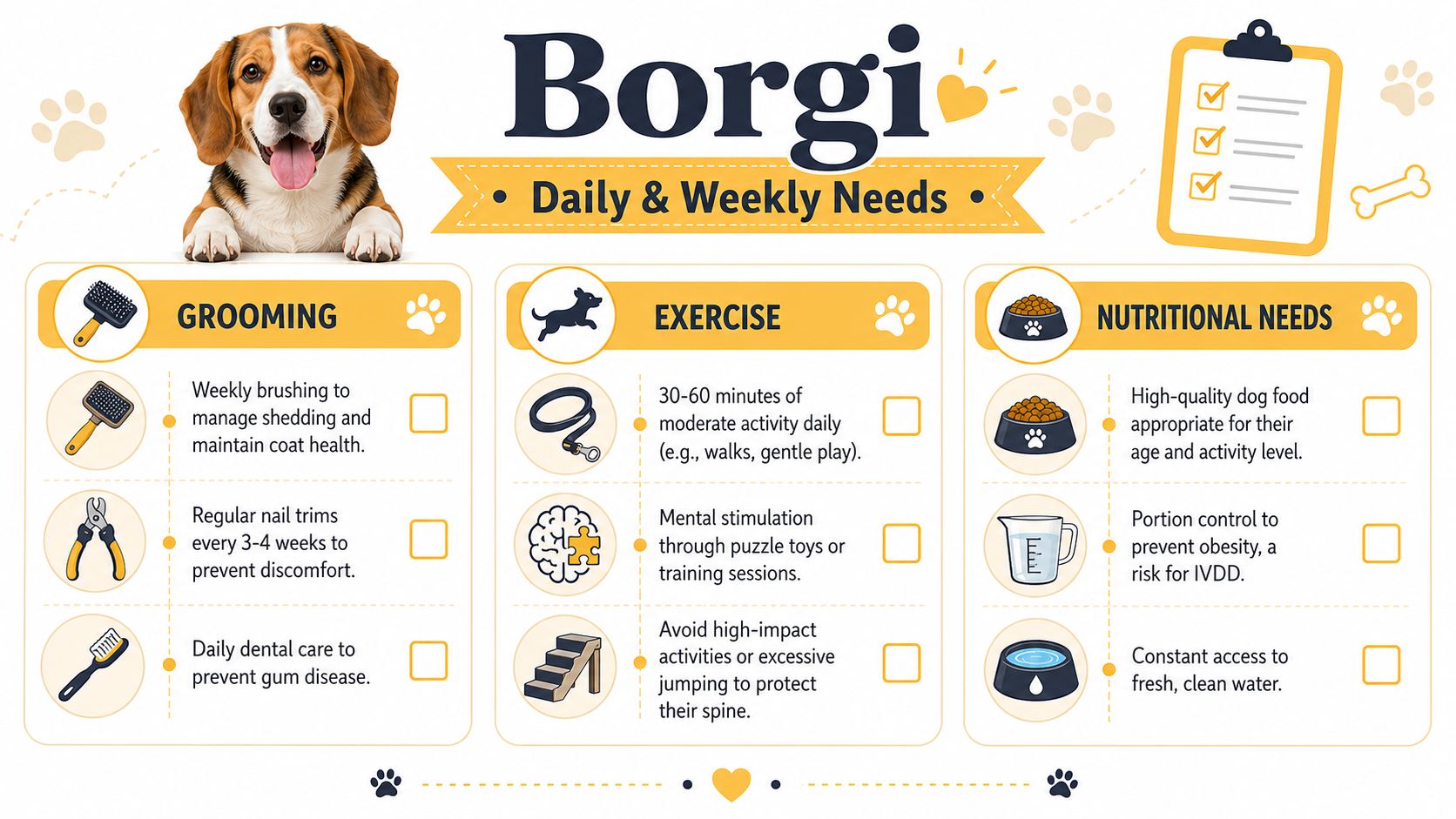
Regular brushing helps remove loose coat before it ends up on your sofa. It also gives you a chance to check the skin, which matters in a mix that can inherit both coat density changes and skin sensitivity. Pay attention to flaky spots, redness, or frequent scratching. Nails matter too. On a low-set dog, overgrown nails can subtly change foot placement and make movement less comfortable over time.
A simple routine often works best:
- Brush at least a few times per week, and more often during seasonal shedding periods
- Check the skin while brushing for irritation, dandruff, or sore spots
- Keep nails trimmed so posture and traction stay as normal as possible
- Clean ears as needed if your dog tends to trap wax or debris
- Bathe only when needed so you do not dry out the skin
Exercise should respect the body type
A Borgi can be playful, busy, and surprisingly determined. That does not mean this mix is built for hard-impact exercise.
The safest routine usually looks like steady daily movement, short play sessions, sniff walks, and training games that tire the brain as much as the body. That balance matters because this dog may inherit two competing physical tendencies at once. The Corgi side often brings a long back and short legs. The Boston side can bring less heat tolerance and noisier breathing. Put those together, and exercise needs to be measured, not extreme.
A good comparison is a compact car with a lively engine. It may love regular trips, but it is not designed for rough handling.
Watch how your dog recovers after activity. Fast panting that lingers, reluctance to keep moving, stiffness later in the day, or frequent flopping down during walks all suggest the routine needs adjusting.
Nutrition supports coat condition and day-to-day comfort
Food does more than fill the bowl. It affects body condition, skin health, coat quality, and energy level.
For this mix, consistency matters. Measured meals are usually smarter than free-feeding. Treats should count toward the daily total, especially if your Borgi is highly food-motivated. Since coat and skin can be unpredictable in this cross, some owners also read about whether dogs can have fish oil for skin and coat support before discussing options with their veterinarian.
Keep the goal practical. You want a dog with a visible waist, easy movement, and a coat that feels healthy, not greasy or brittle.
With a Borgi, grooming, exercise, and nutrition all connect. The coat may shed more than expected. The body may need more restraint than the dog's enthusiasm suggests. A realistic routine protects comfort better than wishful thinking.
Training and Socializing Your Intelligent Borgi
Training a Borgi is usually less about teaching basic skills and more about channeling a very active mind into good habits.
These dogs often learn quickly. That's the good news. The challenging part is that they may also test boundaries, especially if they inherit the Corgi habit of making their own decisions and the Boston habit of using charm as a negotiating tool.
Early priorities that matter most
Start with the basics, but don't treat them as small things.
Focus on:
- Name response and recall so the dog learns that turning toward you is always rewarding
- Leash manners because a low-bodied dog that pulls hard can put strain on itself and on you
- Settle behavior so excitement doesn't become the default mode at home
- Gentle mouth habits if any heel-nipping or herding behavior appears early
Short sessions usually work better than long ones. Smart dogs can get bored fast, and boredom often looks like stubbornness.
Socialization with a purpose
Good socialization isn't just meeting lots of people. It's learning that the world is safe, manageable, and not something that needs constant commentary.
Expose your Borgi calmly to:
- Different surfaces and sounds
- Friendly, well-mannered dogs
- Visitors entering the home
- Children who understand dog boundaries
If the dog starts to herd moving ankles, interrupt early and redirect to a toy, cue, or short training task. Don't laugh it off every time. Rehearsed behavior becomes default behavior.
Reward the dog you want to live with, not just the tricks you want to show off.
What works best
Positive reinforcement fits this mix well. Clear marker words, food rewards, repetition, and consistency usually get better results than force. A Borgi that feels confused or pressured may shut down, argue back, or invent its own activity.
The sweet spot is structure with warmth. They tend to thrive when training feels like teamwork, not a contest.
Finding Your Boston Terrier Corgi Mix
A Boston Terrier Corgi mix fits best with someone who wants a small dog with a lot of personality and is willing to manage structure-related health risks with care.
This dog may not be the right choice if you want a low-maintenance coat, a silent apartment companion, or a pet that can handle careless jumping and rough physical routines. It often is a good fit for people who like interactive dogs, value preventive care, and don't mind brushing, training, and supervising daily habits.
How to search responsibly
If you're buying from a breeder, ask specific questions about health screening, parent temperament, and how puppies are raised. A responsible breeder should be comfortable discussing breathing concerns, spine-related issues, and realistic coat expectations.
Red flags include:
- Pressure to reserve quickly
- No discussion of parent health
- No willingness to show where dogs are raised
- Marketing focused only on rarity or cuteness
Adoption is also worth serious consideration. Shelters and rescue groups sometimes have mixes that need informed homes. If you want to compare another low-rider mix with its own quirks, Pure Paw Labs has a related guide on the Shih Tzu Corgi mix.
The best source is the one that treats the dog like a lifetime responsibility, not a trendy product.
Frequently Asked Questions
Are Borgis good with kids and other pets
They often do well in family homes if introductions are calm and adults set clear rules early.
The catch is instinct. A Borgi can inherit the Corgi's habit of managing motion, a little like a hall monitor who did not get the memo that children and cats are allowed to run. That can show up as circling, barking, or heel-nipping during exciting moments. Supervision, gentle redirection, and teaching kids how to handle the dog respectfully make a big difference.
Are they expensive to buy or adopt
The purchase or adoption fee is only one part of the budget.
A more useful question is whether you are ready for the long-term costs this mix can bring. Coat care may be heavier than expected because shedding genetics can pull in different directions, and preventive vet care matters if your dog inherits the compact face of the Boston Terrier and the long-backed, low-riding build seen in Corgis. In plain terms, you are not just paying for a cute small dog. You may be paying for a dog that benefits from thoughtful grooming and proactive body support over time.
Are they very vocal
Many Borgis are alert little commentators. They may bark at the door, the window, hallway noise, or a change in routine.
That does not mean every Borgi is noisy all day, but quiet should not be your default expectation. Early training helps. So does giving them enough mental work, because an under-stimulated intelligent dog often finds its own job, and barking is a common one.
Can they handle long hikes or hot weather
Some can enjoy longer outings, but this is not a mix I would treat like an all-weather endurance dog.
Body design matters here. If your Borgi inherits a shorter muzzle, heat can become a problem faster than many owners expect. If the dog also inherits a longer back with short legs, repeated impact from steep climbs, big jumps, or overexertion can put extra strain on the spine. It helps to picture the body as a compact car with two separate pressure points. The airway may struggle in heat, and the back may struggle with pounding activity.
Moderate walks, cooler parts of the day, water breaks, and common-sense limits are usually a better plan than long hot hikes.
If you're caring for a dog with a big personality and a body that benefits from thoughtful daily support, Pure Paw Labs offers educational resources and daily supplement options for joints, skin and coat, digestion, and whole-body wellness.