


Your dog has finally stopped vomiting, but now you're standing in the kitchen with boiled chicken, white rice, and a dozen unanswered questions. How much should you feed? Is “bland” the same as low-fat? When can normal food return?
I've seen dogs recover well with a carefully controlled bland phase, but I've also seen chicken-and-rice cause problems when owners treat it as a complete diet or advance too quickly. Modern feeding for pancreatitis is more precise. The focus is low fat, high digestibility, small meals, and a measured return to complete nutrition, always under veterinary direction.
Table of Contents
- What a Bland Diet Actually Does for a Dog With Pancreatitis
- Safe Foods and the Fat Numbers Behind the Choices
- Two Simple Recipes You Can Prep at Home
- Portioning, Feeding Schedule, and Transition Plan
- Red Flags and When to Call the Vet
- Where Digestive Supplements Fit Into Recovery
- A Vet-Inspired Plan You Can Start Today
What a Bland Diet Actually Does for a Dog With Pancreatitis
When Buster, a 9-year-old Miniature Schnauzer, was cleared to eat after a severe flare, he still looked nauseated and had little interest in food. We started with tiny portions of a tightly controlled bland diet. Over roughly 72 hours, his appetite and tolerance improved. The food supported recovery, but it did not treat or cure pancreatitis.
For a dog with pancreatitis, bland diet describes a short-term feeding protocol, not just a bowl of boiled chicken and rice. The working goals are:
- Low in fat, to limit digestive stimulation while the pancreas is inflamed.
- Highly digestible, so the stomach and intestines can process food with less effort.
- Simple and consistent, making tolerance, vomiting, stool quality, and appetite easier to monitor.
- Temporary, because homemade mixtures usually do not provide complete nutrition for extended feeding.
Fat control requires more precision than removing chicken skin. Veterinary nutrition guidance has long supported lower-fat diets for dogs with pancreatitis. A 2016 summary from the American College of Veterinary Nutrition described a practical starting point of less than 30 grams of fat per 1,000 kcal, adjusted according to the individual dog's response. Some home-prepared and therapeutic plans also target roughly less than 10% fat on a dry-matter basis, as discussed in the clinical review of acute pancreatitis nutrition.
Why fat matters during a flare
The pancreas produces digestive enzymes, including those used to break down fat. During inflammation, a heavy fat load can increase digestive stimulation and make nausea, abdominal discomfort, or food refusal harder to control. Skin, grease, fatty meat, cheese, and rich treats therefore stay out of the acute recovery diet.
“Plain” only describes preparation. It does not describe fat content. Plain fatty beef remains fatty, while a measured lean protein paired with a low-fat starch may fit the recovery plan much better.
The three practical goals
The first goal is to reduce unnecessary pancreatic stimulation while inflammation settles. The second is to support hydration and energy intake, since prolonged food refusal can complicate recovery. The third is to give the stomach and intestines a predictable routine while nausea and stool changes improve.
Current veterinary practice has moved away from automatically withholding food for prolonged periods. Early nutrition, strict low-fat feeding, and gradual calorie advancement are now common parts of recovery when the dog can tolerate them. Some dogs may need strict low-fat and low-protein feeding long term to reduce recurrence risk, based on their medical history and veterinary assessment.
Once appetite, vomiting, stool quality, and comfort are stable, the bland phase should end through a measured transition to complete nutrition. For general information about supporting digestion outside an acute flare, review this guide to digestive support for dogs.
Safe Foods and the Fat Numbers Behind the Choices
A dog may accept plain chicken and rice, yet that meal can still miss the fat target if the meat includes skin, dark cuts, drippings, or added oil. Choose ingredients that are lean, plainly prepared, and easy to measure. Use the table as a kitchen reference, not as a replacement for your veterinarian's discharge instructions.
| Food | Approx. Fat % (dry matter) | Use During Recovery | Notes |
|---|---|---|---|
| Skinless chicken breast | Low, verify with your vet | Short-term protein | Remove all skin and visible fat. Boil or bake without oil. |
| White fish, such as cod or tilapia | Low, verify with your vet | Alternative protein | Cook plain and check carefully for bones. |
| Lean ground turkey | Depends on the product | Possible rotation protein | Choose the leanest available option and drain thoroughly. |
| White rice | Very low | Digestible starch | Cook until soft. Don't add butter, oil, or seasoning. |
| Plain cooked potato | Low when prepared plain | Starch alternative | Serve peeled and cooked, without dairy or fat. |
| Plain pumpkin puree | Low | Small stool-supporting addition | Use plain pumpkin, not pie filling. |
| Egg white | Very low | Small protein addition | Avoid adding the yolk during strict fat restriction. |
| Skimmed bone broth | Variable | Hydration or moisture | Use only if it's salt-free and fully skimmed of fat. |
The table uses qualitative fat descriptions because values change with the cut, preparation, and product. A general clinical benchmark is less than 30 grams of fat per 1,000 kcal, but your veterinarian may set a stricter limit for your dog. Low-to-moderate-fat, highly digestible food is generally preferred to an unrestricted bland diet, as described in the AVMA Journal clinical approach.
Dry matter is the number that matters
Food labels commonly list fat on an “as fed” basis, which includes the food's water. That figure can make two foods appear similar even when their fat concentration differs. For packaged food, ask your veterinarian or the manufacturer for fat content on a dry-matter or energy basis. Words such as “light,” “sensitive,” or “low fat” do not establish that the food meets your dog's target.
Chicken breast is usually selected over dark meat because it has less visible and intramuscular fat. Skin, thighs, gravy, drippings, and cooking oil can change the meal substantially. Drain cooking liquid and remove any fat that rises to the surface before serving.
What stays out
During the acute phase, leave out bacon grease, cheese, fatty cuts, sausage, butter, fried foods, rich treats, and foods with an unclear fat profile. A small extra serving can disrupt an otherwise controlled plan, particularly when several people offer food throughout the day.
These choices are for a controlled recovery phase, not a permanent feeding pattern. Once vomiting, appetite, stool quality, and comfort are stable, follow the planned calorie increases and transition schedule rather than extending chicken and rice indefinitely. For background on its temporary use and limitations, read this guide to rice and chicken for dogs with diarrhea.
Two Simple Recipes You Can Prep at Home
Home cooking can make the first recovery days easier, especially when a dog refuses a prescription texture or needs a very simple food while nausea settles. These recipes are short-term bridges, not permanent diets. Confirm the ingredients and portions with your veterinarian, particularly if your dog has diabetes, kidney disease, liver disease, or repeated pancreatitis.
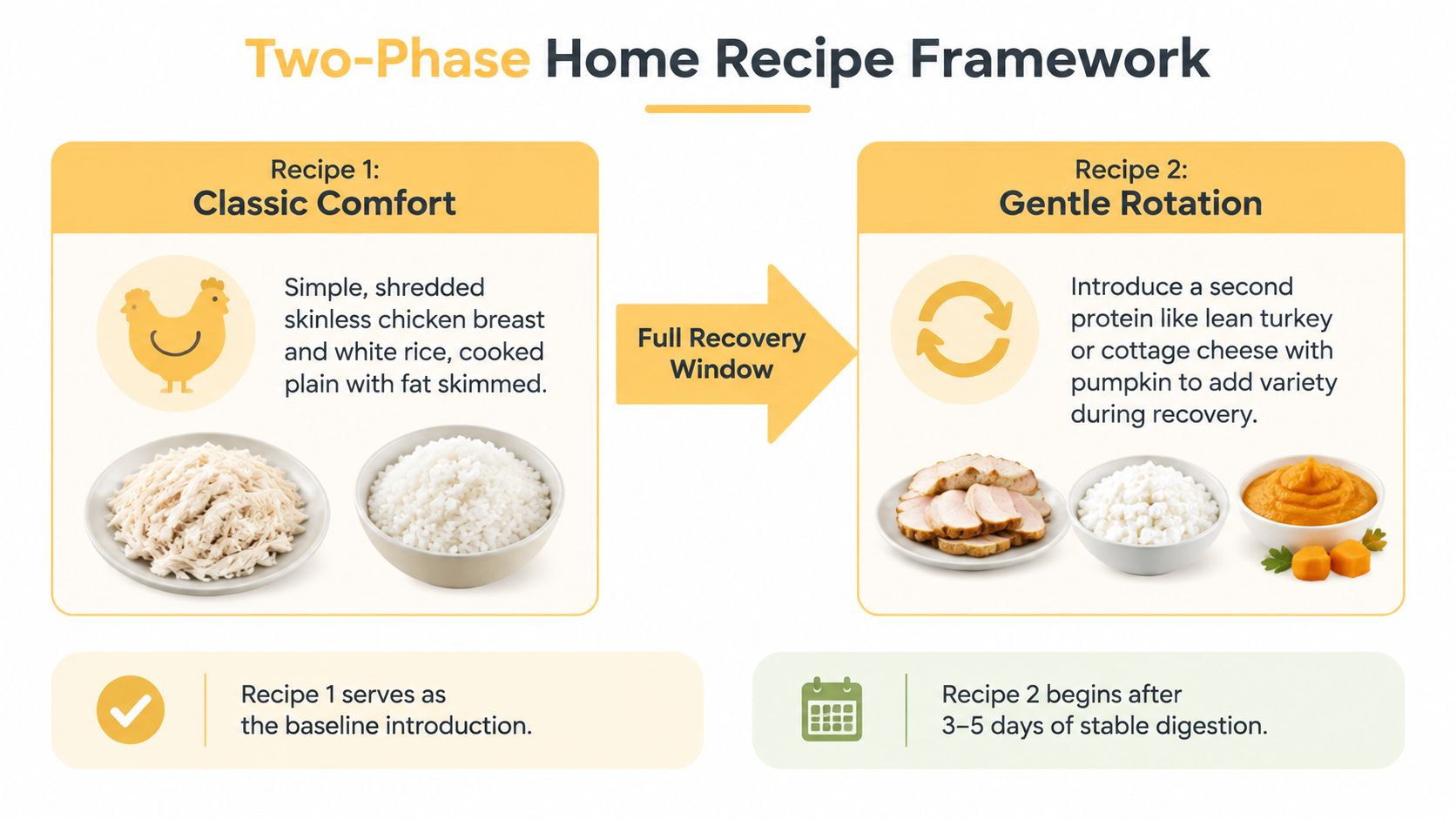
Recipe one with chicken and rice
Use skinless chicken breast and plain white rice. A practical short-term ratio is approximately two parts cooked rice to one part cooked chicken by volume, with the mixture divided into several small meals.
- Simmer the chicken in plain water until thoroughly cooked.
- Cook white rice separately until soft.
- Drain the chicken and discard the liquid, or refrigerate it and skim away every visible layer of fat.
- Cool the ingredients before mixing.
- Shred the chicken finely and combine it with the rice.
- Portion the mixture into daily containers.
A rough starting guide is about one cup of cooked mixture per 20 pounds of body weight per day, divided into four meals. This is only a starting estimate, not a calorie prescription. Dogs vary in energy needs, and a recovering dog may initially need less than a full daily amount before advancing.
Recipe two with white fish
For dogs that refuse chicken, use plain cod or tilapia with cooked white rice and a small amount of plain canned pumpkin. Cook the fish by poaching or baking without oil, then cool it, check carefully for bones, and flake it into the rice. Add one tablespoon of plain pumpkin only if your veterinarian agrees that the extra fiber is appropriate.
Don't add salt, oil, garlic, onion, butter, herbs, seasoning blends, or gravy. Pumpkin pie filling isn't interchangeable with plain pumpkin.
Keep prepared food refrigerated for up to 3 days, or freeze daily portions for up to 3 weeks. Thaw food in the refrigerator, warm it gently if needed, and never serve it hot. If your dog vomits after a meal, stop advancing the plan and call the clinic rather than repeatedly experimenting with new ingredients.
The second recipe should come only after the first food is being tolerated. Variety can help with acceptance, but frequent changes during active nausea make it harder to identify what caused a setback.
Portioning, Feeding Schedule, and Transition Plan
Picture a dog that keeps breakfast down, then refuses lunch. Portion size and timing can determine whether feeding supports recovery or triggers another setback. Use your veterinarian's calorie calculation, usually based on resting energy requirement, instead of the amount your dog normally eats freely. The goal is early nutrition with controlled, gradual increases.
A three-day feeding ramp
A published clinical approach starts at approximately one-third of resting energy requirement on day one and advances toward full resting energy requirement by day three, provided the dog tolerates the food. Cornell nutrition guidance describes a similar progression, beginning at 25% to 33% of resting energy requirement and increasing by approximately 25% every 24 hours when tolerated.
| Dog Weight | Day 1, 1/3 calories | Day 2, 2/3 calories | Day 3, full calories | Meals per Day |
|---|---|---|---|---|
| 10 pounds | One-third of the vet-calculated daily amount | Two-thirds of the calculated amount | Full calculated amount | Four to six |
| 30 pounds | One-third of the vet-calculated daily amount | Two-thirds of the calculated amount | Full calculated amount | Four to six |
The table shows the progression, not a substitute for an individual calorie plan. Cups are not interchangeable with calories. Chicken-and-rice mixtures vary in moisture and density, so a cup-based estimate can misrepresent intake. Dogs that are underweight, obese, elderly, or unusually inactive may need a substantially different amount.
Feed small portions every four to six hours during the early phase if your veterinarian recommends that schedule. Four to six meals can make the total daily amount easier to tolerate. A late-evening and early-morning meal may reduce a long overnight gap, but do not wake a comfortable, sleeping dog without a clinical reason.
Moving beyond the bland phase
Once your dog is comfortable, eating willingly, and has had several symptom-free days, start replacing the bland mixture with a complete low-fat maintenance food under your veterinarian's direction. Change one portion at a time, hold the new ratio long enough to assess tolerance, and advance only while appetite, stool, and comfort remain stable.
A practical transition commonly takes about one to two weeks. Severity and recurrence risk determine the appropriate pace. If vomiting, abdominal discomfort, or soft stool returns, stop advancing and contact the clinic. Avoid compensating with treats or repeatedly changing foods, since that can make the setback harder to interpret. The bland phase is a controlled bridge, not a complete long-term diet.
Red Flags and When to Call the Vet
A dog can look better at breakfast and deteriorate by evening. Diet supports recovery, but it can't control pain, dehydration, persistent nausea, or complications from pancreatitis. If your dog is actively vomiting, weak, painful, or unable to keep water down, home feeding isn't the next step. Veterinary assessment is.
Appetite changes that deserve attention
Suppose your dog has eaten normally for several days, then suddenly turns away from the bland food. Lip-licking, repeated swallowing, sniffing food and backing away, or refusing more than two consecutive meals can signal nausea or pain rather than pickiness.
Don't tempt a dog with cheese, meat drippings, or other rich foods to “get something in.” Call the veterinary team and describe what happened, including the last meal kept down and any medication given.
Stool and vomiting signs
Fresh blood in stool, black tarry stool, persistent watery diarrhea, or vomiting that returns after a quiet period should prompt a call. Repeated vomiting can quickly interfere with hydration and may mean the diet needs to stop while the dog receives nausea control and examination.
A single soft stool isn't automatically an emergency, but the trend matters. Tell the clinic if stool quality worsens, your dog becomes less responsive, or the symptoms occur alongside poor appetite.
Call immediately: A distended abdomen, pale gums, collapse, or a combination of vomiting, weakness, and obvious pain warrants urgent veterinary attention.
Posture and pain
The classic prayer position, with the chest lowered and the rear raised, can indicate abdominal discomfort. Other concerning signs include a tucked abdomen, hunched walking, reluctance to lie down, trembling, panting at rest, hiding, or reacting defensively when the abdomen is handled.
Don't repeatedly press the belly to “test” pain. Keep your dog quiet, remove food unless the veterinary team advises otherwise, and phone the clinic. Even uncertainty during the bland phase is a reasonable reason to ask for guidance, especially if the dog has a previous pancreatitis diagnosis.
Where Digestive Supplements Fit Into Recovery
Supplements are adjuncts, not treatment for pancreatitis. During an active flare, vomiting and intestinal inflammation can make products poorly tolerated, and adding several ingredients at once makes it difficult to identify the source of a setback. The prescription diet, fluids, nausea control, pain management, and monitoring plan come first.
Wait until vomiting has stopped and your dog is keeping meals down before discussing additions with the prescribing veterinarian. Some clinicians consider targeted probiotic support after medication exposure or gastrointestinal disruption, but the choice of organism, product quality, and timing matter. The evidence base for nutrition in canine pancreatitis remains limited, and the review of enteral nutrition evidence describes the overall quality as low.
What may have a role
Plain pumpkin can sometimes help stool consistency, but it adds fiber and isn't appropriate for every vomiting dog. A small amount may be reasonable once your veterinarian approves it, but pumpkin shouldn't be used to mask worsening diarrhea.
Pancreatic enzyme powders are generally not a default requirement in uncomplicated pancreatitis. They're used for specific medical indications, so starting them without veterinary direction can create unnecessary irritation or confusion.
Omega-3 oils also deserve caution. Although they're often discussed for general health, oil is still fat. Keep them out of the acute feeding plan unless the treating veterinarian specifically includes them after full maintenance feeding resumes.
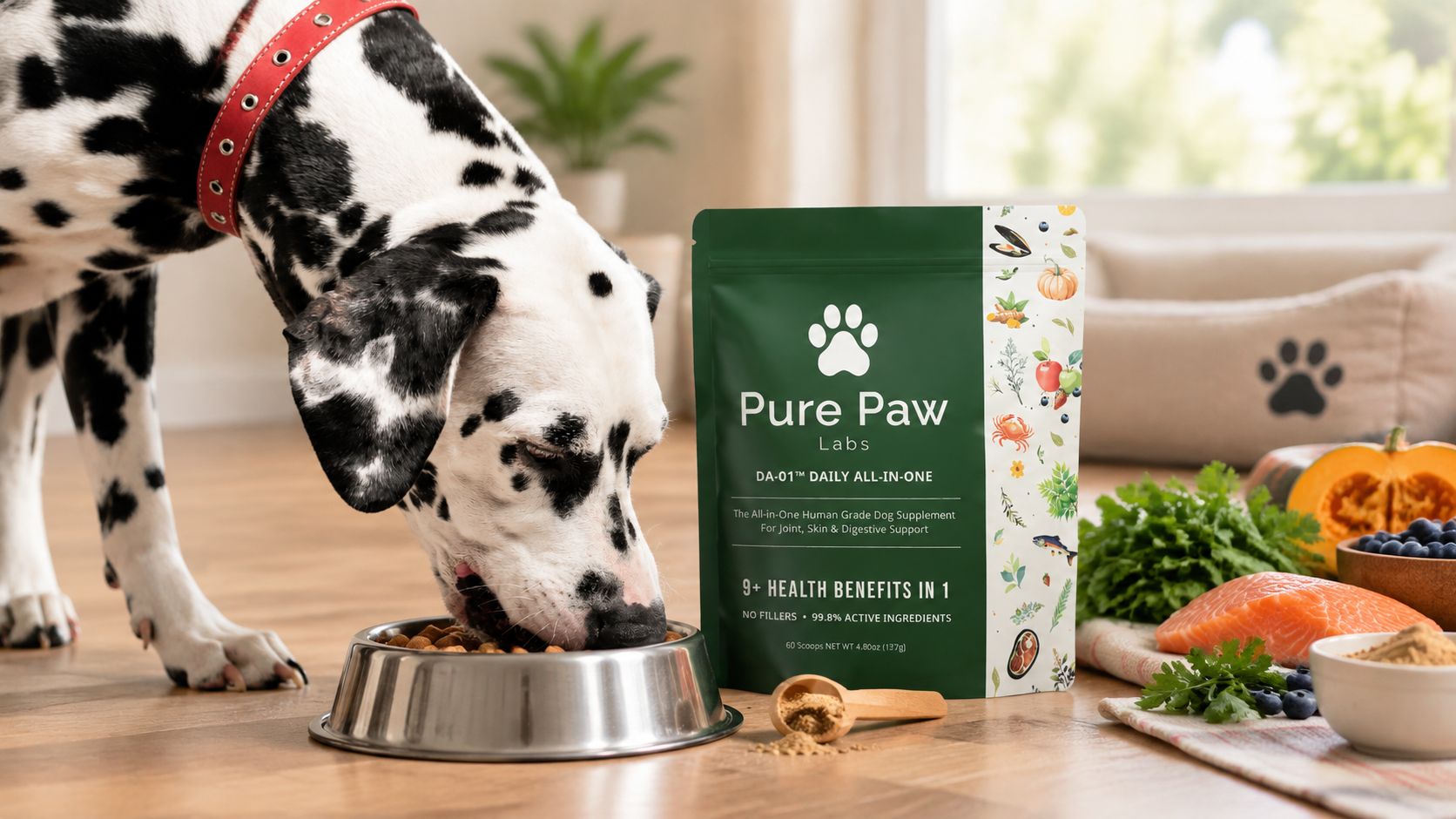
A general wellness product such as DA-1™ Daily All-in-One - Senior Dog Support, Joints, Skin/Coat & More isn't a pancreatitis treatment or a replacement for a therapeutic diet. The catalog description identifies it as a powdered, multi-system formula with 18 human-grade ingredients intended to support cells, gut, and joints, so ask your veterinarian whether its full ingredient and fat profile fits your dog's recovery plan before use.
For general context on choosing digestive products, this dog digestive supplements guide can help you prepare questions for your clinic. Don't introduce a supplement because the label says “digestive.” Read the ingredients, account for calories and fat, and add only one change at a time.
A Vet-Inspired Plan You Can Start Today
The most useful plan has three habits.
First, feed to a measurable fat ceiling. During a flare, many veterinary plans use a very low-fat target, with some home-prepared or prescription approaches aiming for less than 10% fat on a dry-matter basis. The longer-term target depends on recurrence risk, bloodwork, body condition, and concurrent disease. Don't assume a food is suitable because it's described as bland.
Second, advance calories instead of free-feeding. Begin with the portion your veterinarian recommends, divide it into small meals, and increase gradually across the next few days if vomiting and discomfort don't return. The pancreatitis nutrition guide can be useful as a planning reference, but it shouldn't override your veterinarian's calorie calculation or discharge instructions.
Third, schedule a recheck before liberalizing the diet. Your veterinarian may recommend pancreatic lipase testing, including cPL or spec cPL, alongside a physical examination and assessment of appetite, stool, weight, and pain. A dog that looks normal isn't automatically ready for fatty treats or an unrestricted diet.
A practical first-week outline
- Days one and two: Feed the approved bland or therapeutic low-fat food in small portions. Focus on tolerance, hydration, and nausea control.
- Days three through five: Increase toward the veterinary calorie target if meals remain down and stool is acceptable. Keep ingredients and meal timing consistent.
- Days six and seven: Begin introducing the complete low-fat maintenance food only if your veterinarian agrees and the dog has remained stable. Increase slowly rather than replacing the entire meal at once.
Home-cooked food is a recovery tool, not automatically a permanent diet. Chicken and rice can lack the balance of protein, vitamins, minerals, and essential fatty acids needed for long-term feeding. If your dog needs home-prepared nutrition beyond the short recovery window, ask for a diet formulated for that individual dog.
Important questions remain unresolved. Veterinary literature continues to describe limited comparisons among diet types in chronic pancreatitis, and it's still unclear which recovered dogs can safely tolerate broader diets or whether strict restriction prevents recurrence in every case. The roles of omega-3 dosing, medium-chain triglycerides, and microbiome support also need better evidence. Recalculate energy needs with your veterinarian at the follow-up interval, particularly if body weight or activity changes.
Pure Paw Labs offers human-grade powdered supplements designed to consolidate routine support for areas such as gut, joints, skin and coat, immunity, and stress. Because a recovering pancreatitis dog may need strict control of every ingredient and calorie, review the product details with your veterinarian first, then visit Pure Paw Labs if it fits your dog's broader wellness plan.